
Context!
If you’ve never heard of Ray Harryhausen, you may well have seen some of his work. If you haven’t seen any of his films, you’ve definitely, absolutely seen something influenced by him. Or maybe you’ve just seen snippets in the Malcolm in the Middle intro.
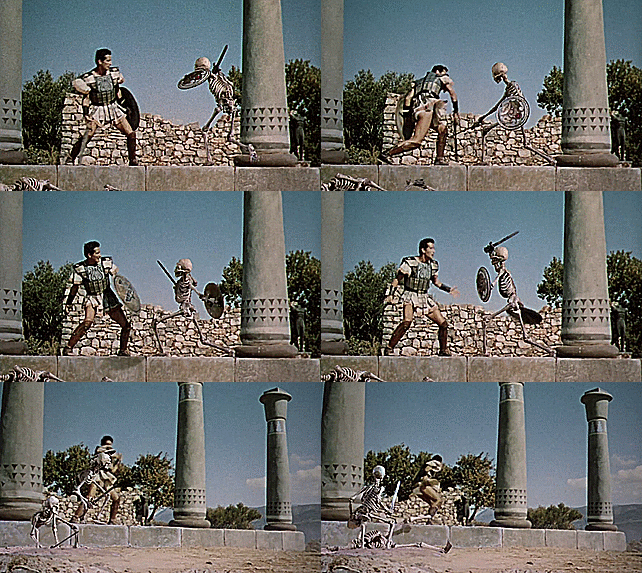
Ray Harryhausen wasn’t an actor, writer or director – he was a special effects artist, who made a name for himself producing stop motion effects for films for over four decades. His most famous film, Jason and the Argonauts, is probably his best, including probably his most well known scene – a group of warrior skeletons fighting Greek warriors in the film’s final. Harryhausen animated this entire scene, with no CGI. By himself.
Harryhausen worked in Hollywood for several decades – some of his creations have stayed in the cultural zeitgeist more than others, like the dinosaurs from One Million Years BC or the Kraken from Clash of the Titans. His fans include George Lucas, Tom Hanks, Guillermo del Toro and essentially every other famous person in film making. Even the exhibit’s audio commentary is done by John Landis.
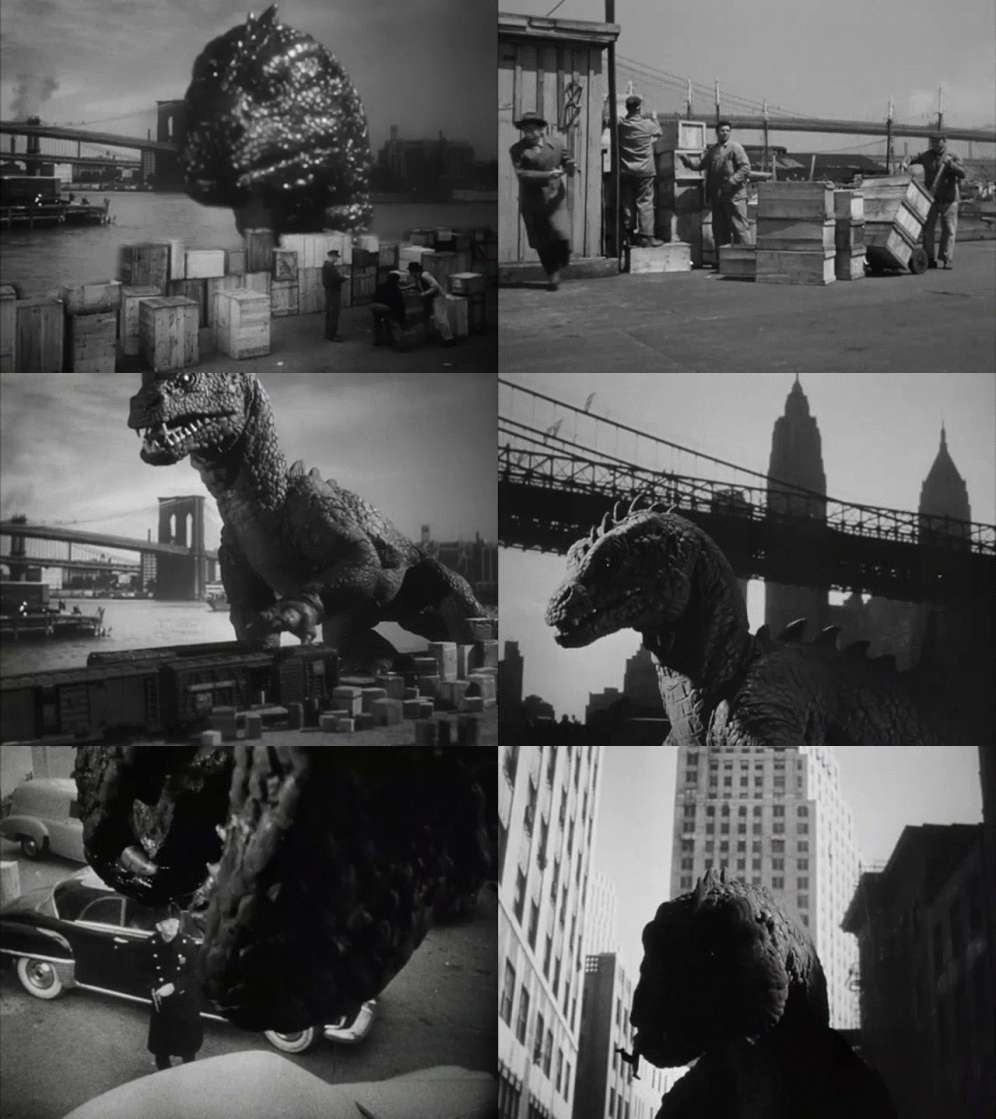
Beast from 50,000 Fathoms (1953) 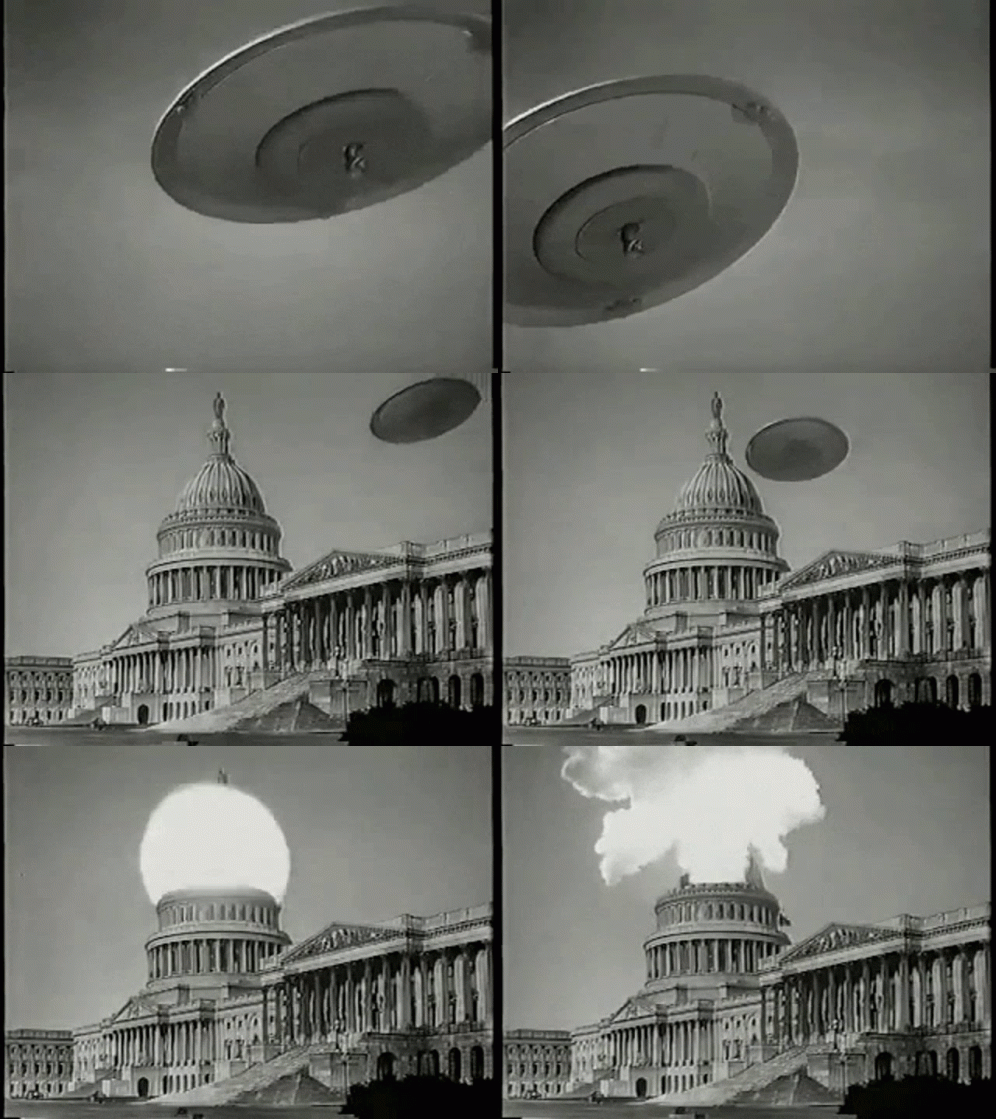
Earth Vs The Flying Saucers (1956) 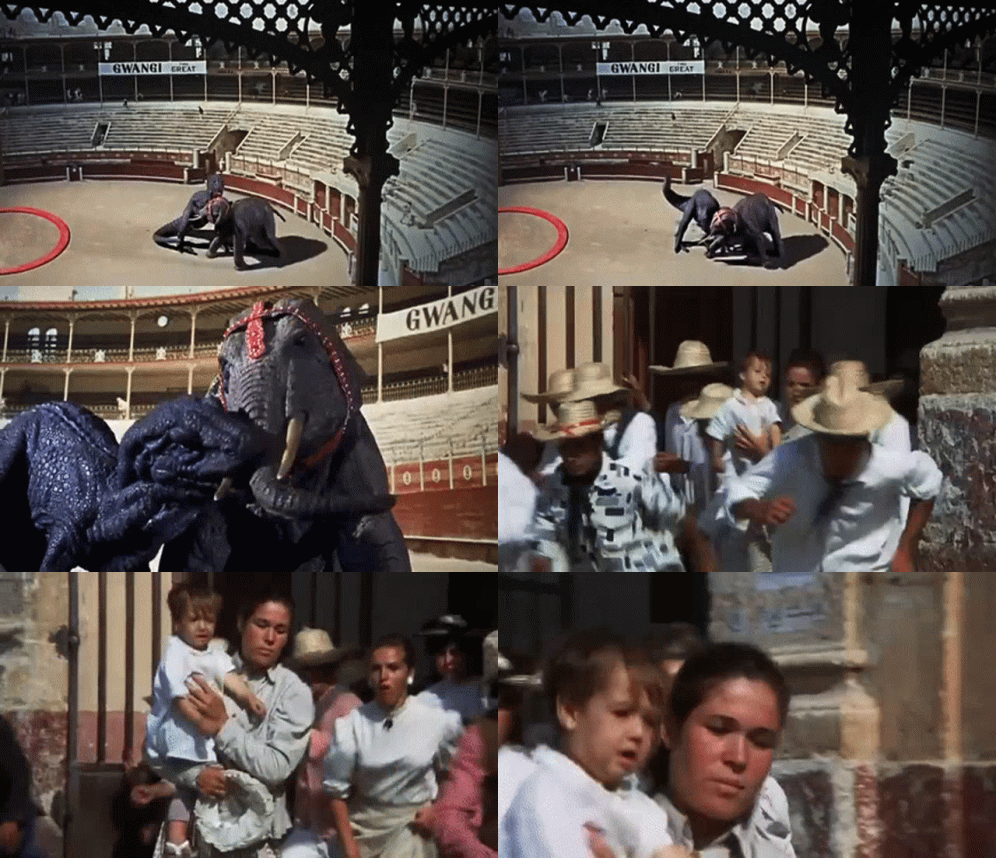
The Valley of Gwangi (1969) 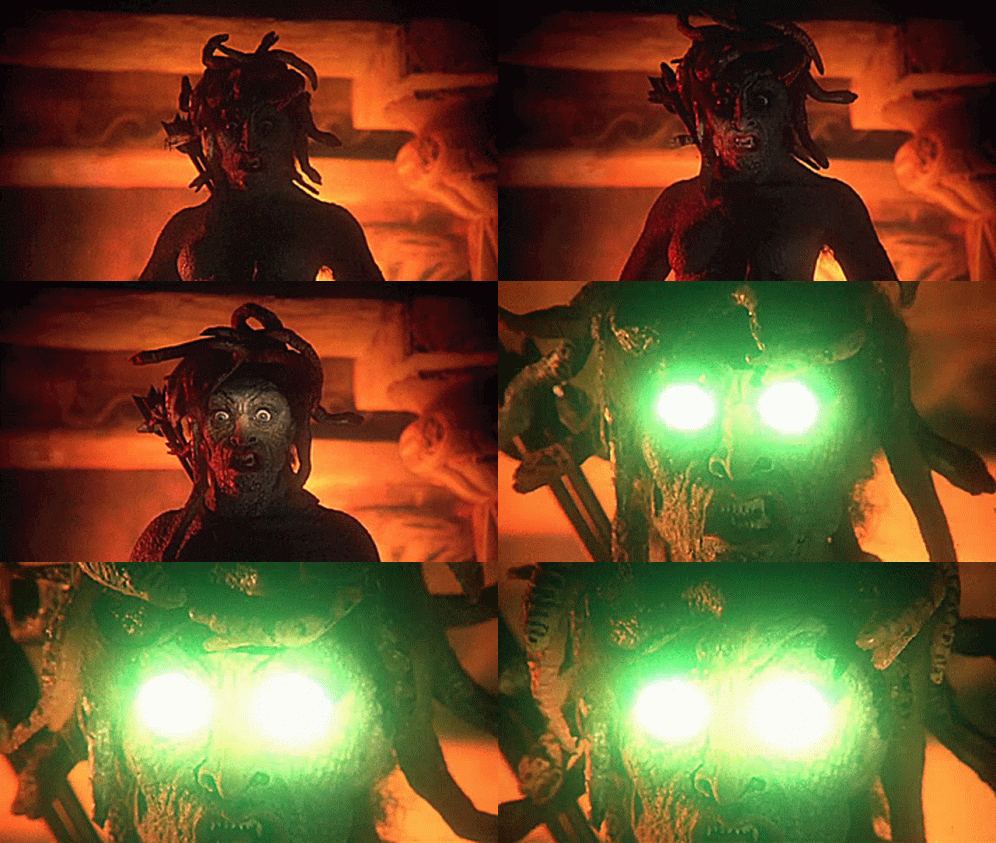
Clash of the Titans (1981)
By the time he died in 2013, Ray had set up a foundation with his wife, Diana, with the express purpose of preserving the many, many models Ray created over his career. Some haven’t aged well – in fact most of the oldest models have disintegrated entirely – but many of his creations are in excellent shape, and occasionally go on display.
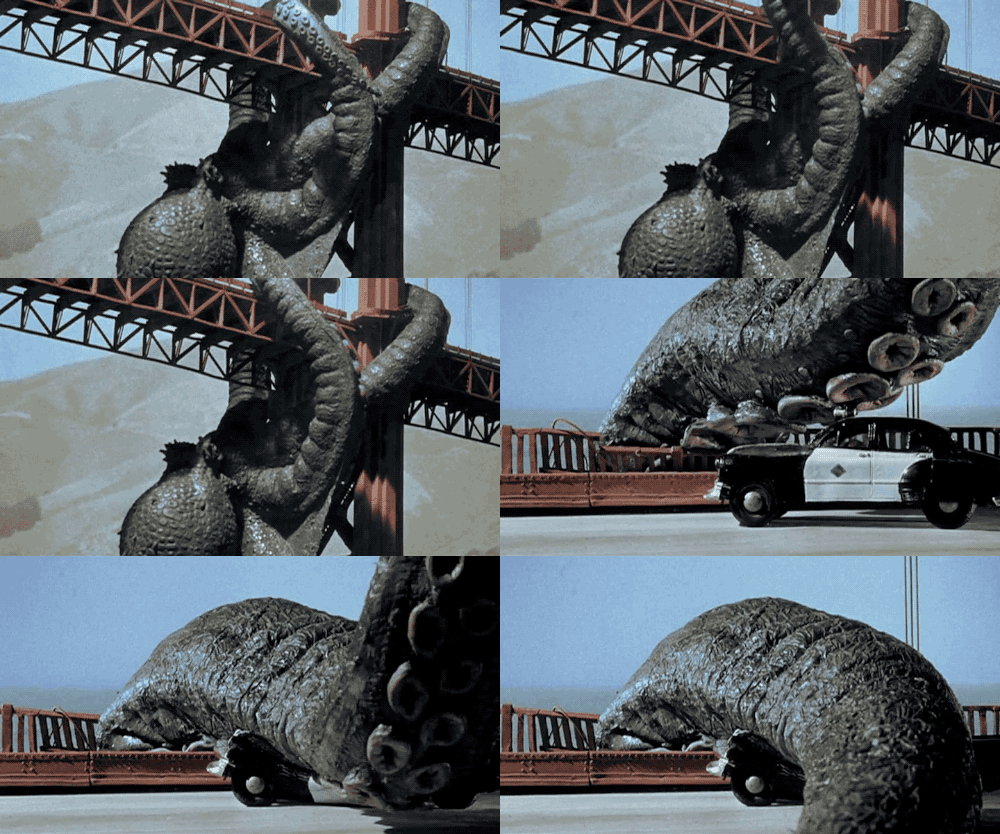
The exhibition “Ray Harryhausen – Titan of Cinema” is currently on at the Modern Two museum in Edinburgh, and (after visiting the zoo) was my top priority on arriving at the Scottish capital. And honestly, it’s absolutely incredible.
The Experience
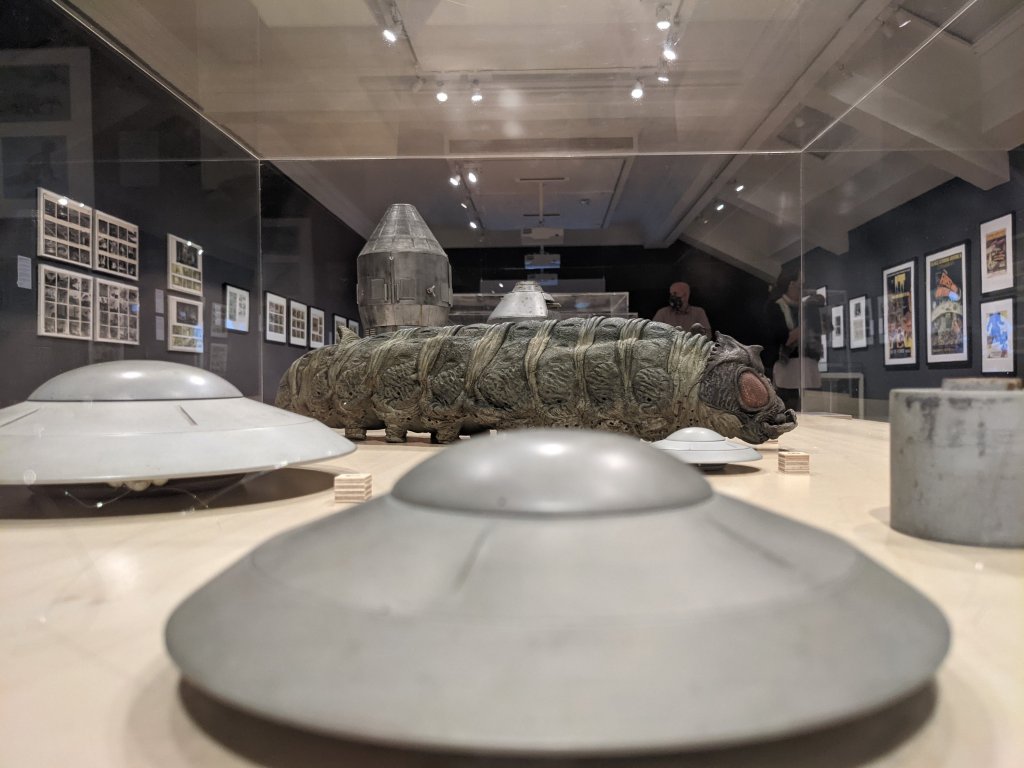
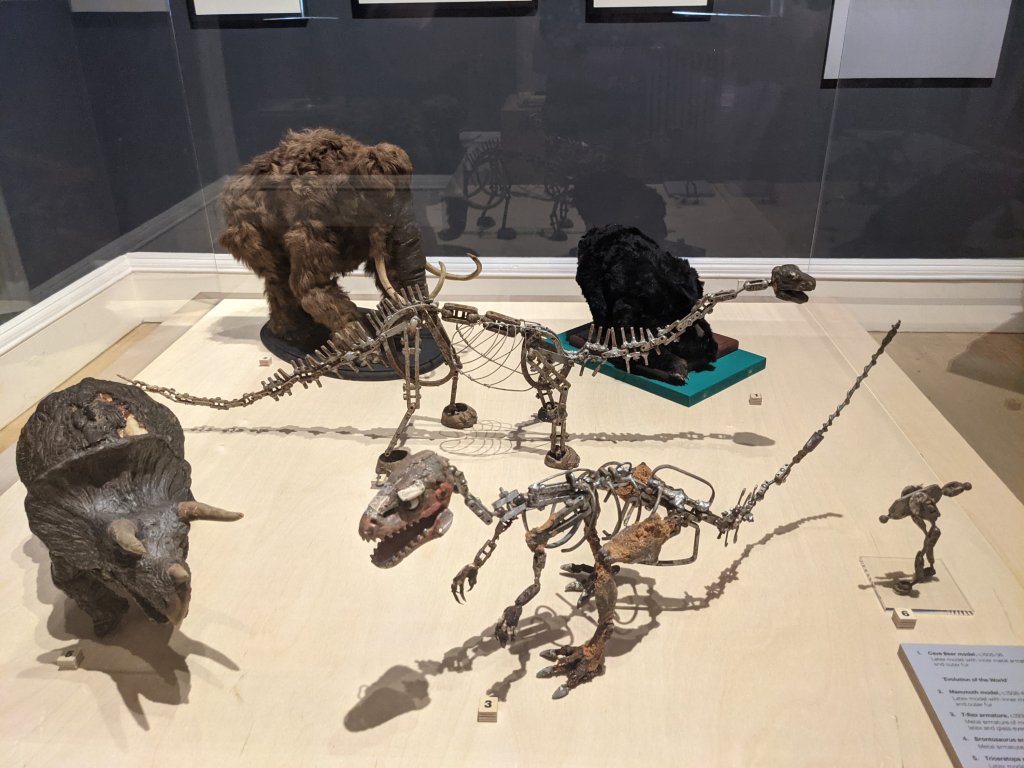
‘Ray Harryhausen – Titan of Cinema’ chronicles Harryhausen’s entire career, covering both his most famous films – there’s an entire display just dedicated to Jason and the Argonauts – and some of his earlier, lesser known projects. The first room covers his earliest experiments with stop motion. There’s even a cave bear model Ray constructed out of his mother’s fur coat, which miraculously has survived since the 1930s.
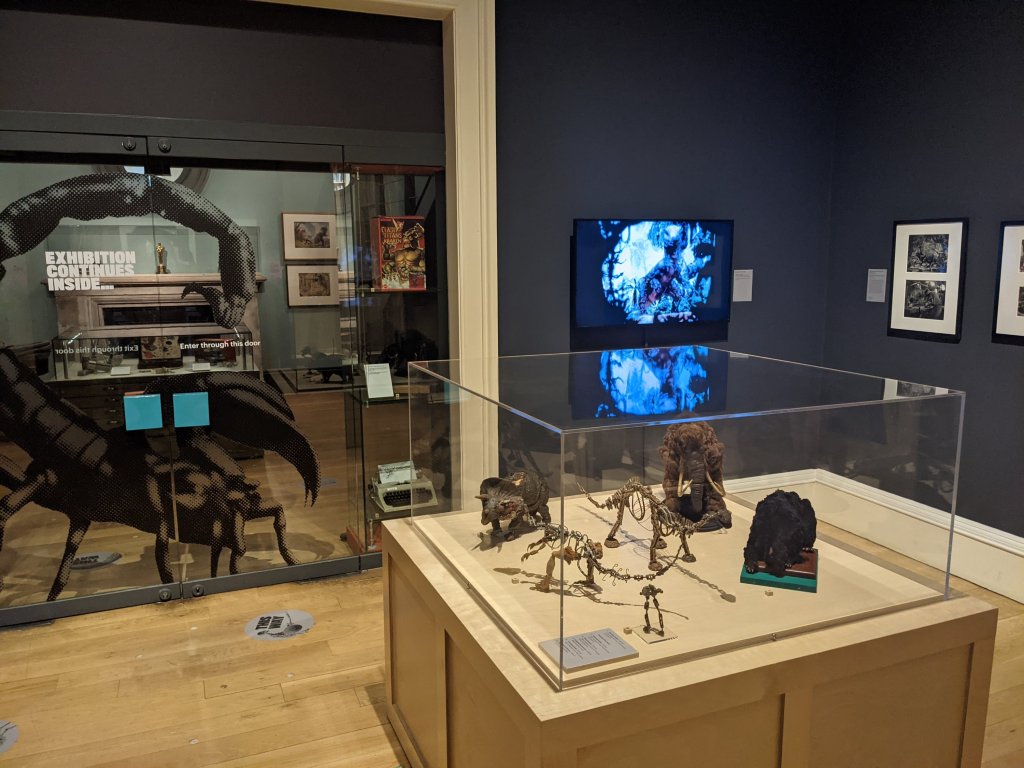
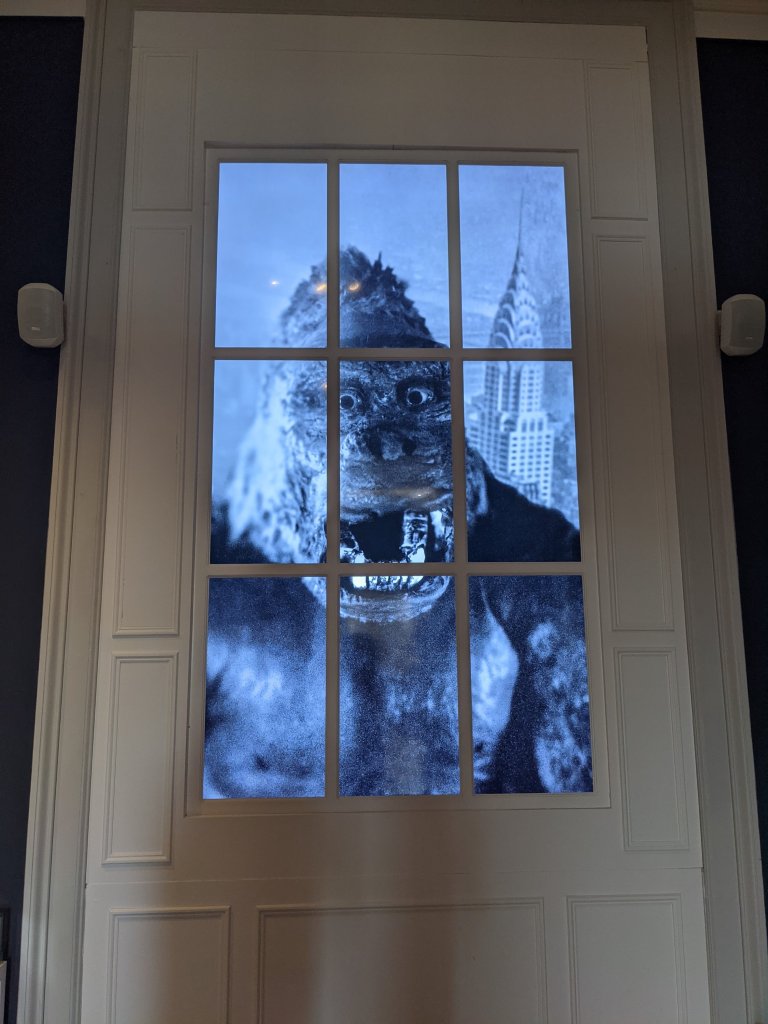
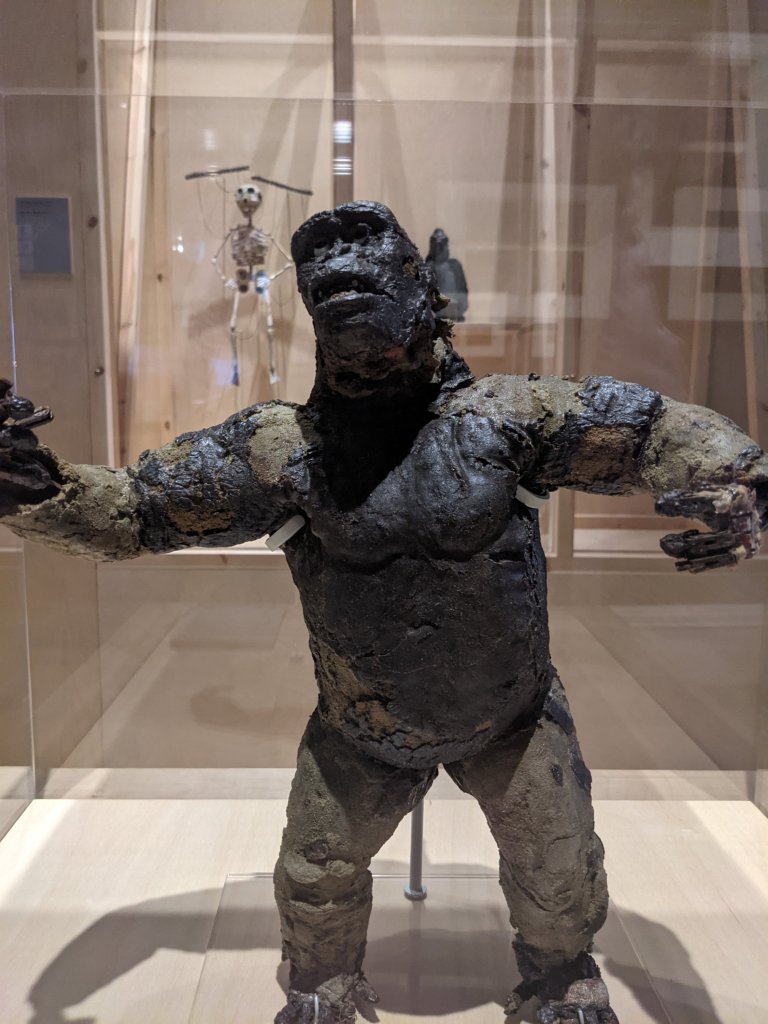
The exhibition also covers Harryhausen’s influences, in particular King Kong. There’s a huge fake window showing the famous primate himself peaking in at visitors – it’s a really cool touch.
There’s also video clips of Harryhausen’s work to watch – as I said earlier, because it’s stop motion, you really need to see the figures in action to genuinely appreciate them. The first room, which covers his earliest work, shows his first experiments with stop motion dinosaurs he made as a high school student.
The first floor of the gallery has the meat of the exhibition – the second room discusses Ray’s animation techniques and how they evolved over time. Did you know, for example, that his earliest paid work was creating short films based on fairy tales? They’re so different to his later catalogue of live action science fiction and fantasy films.
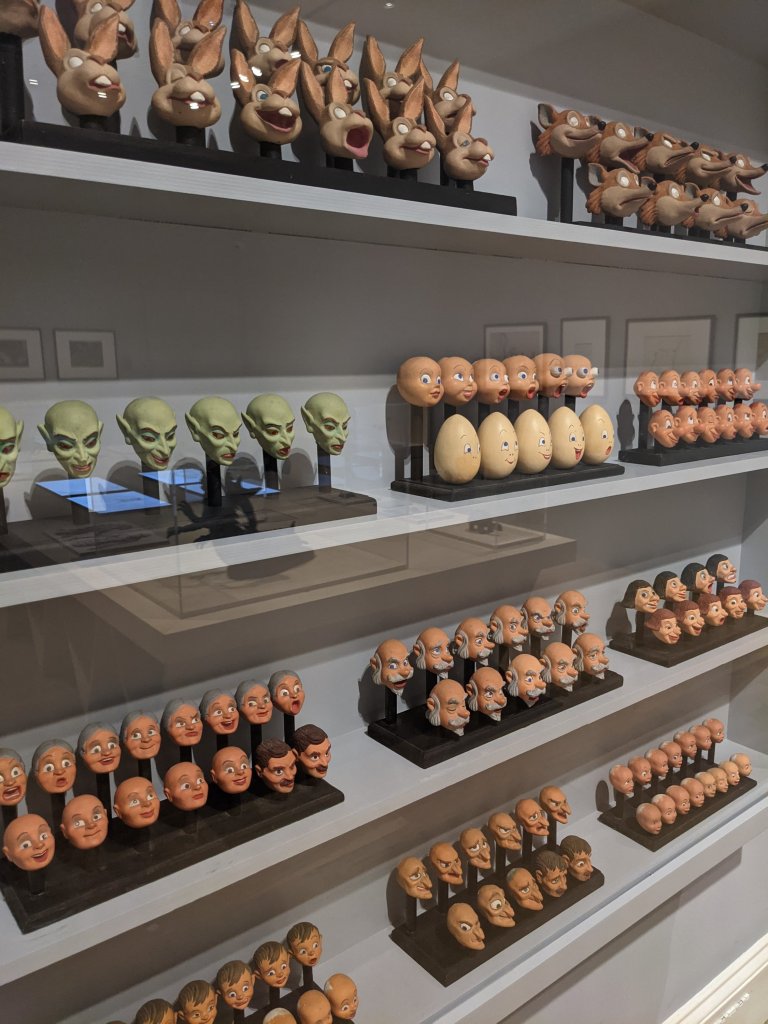
I was really impressed that the exhibition focused on his lesser known efforts. They could have just focused on his most famous films, but there’s a lot of attention given to his nursery rhyme figures and the propaganda films he made during the Second World War. Whoever curated this exhibition had a real passion for Ray’s work.
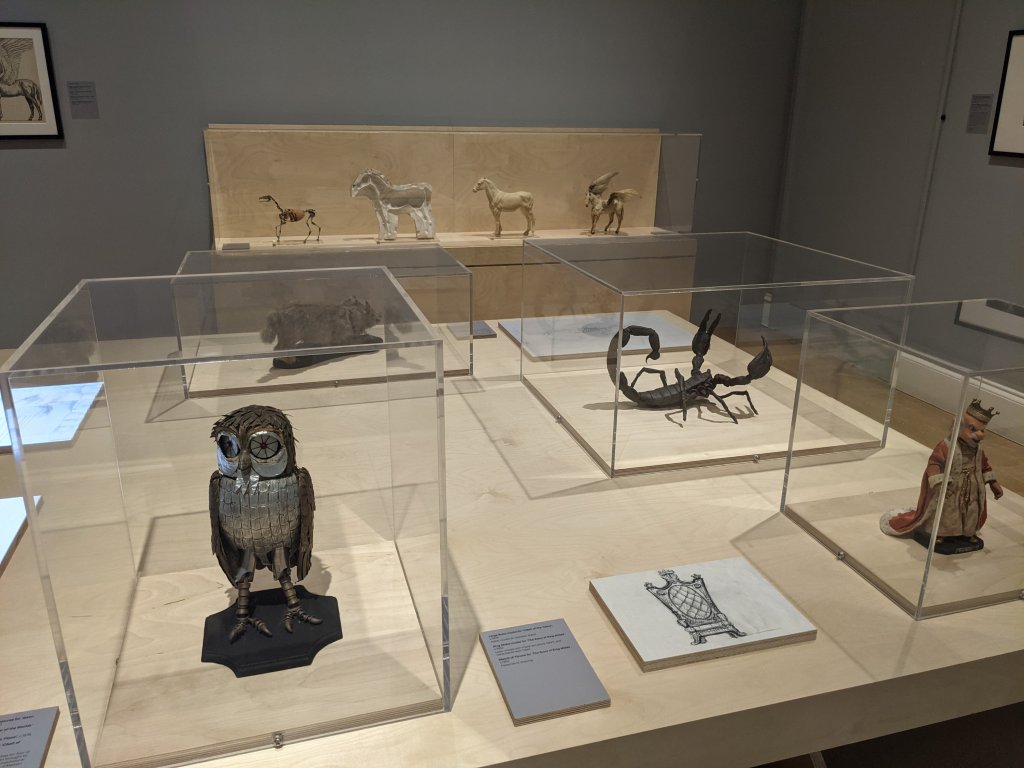
The third room displaying a short film about how Harryhausen’s effects influenced generations of film makers – it’s alright but I wouldn’t call it essential. But then there’s the fourth, final room – and here’s where things get really cool.
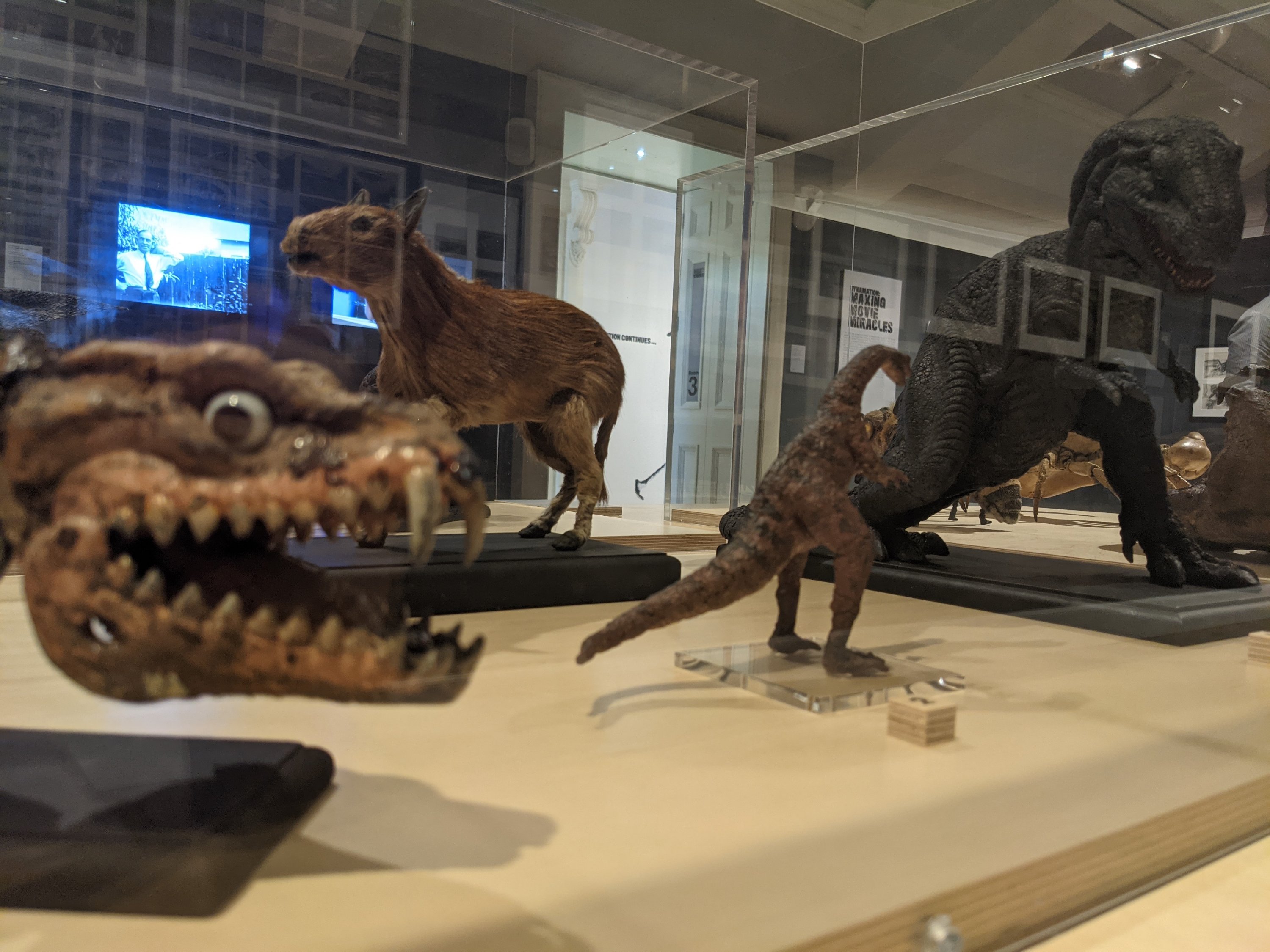
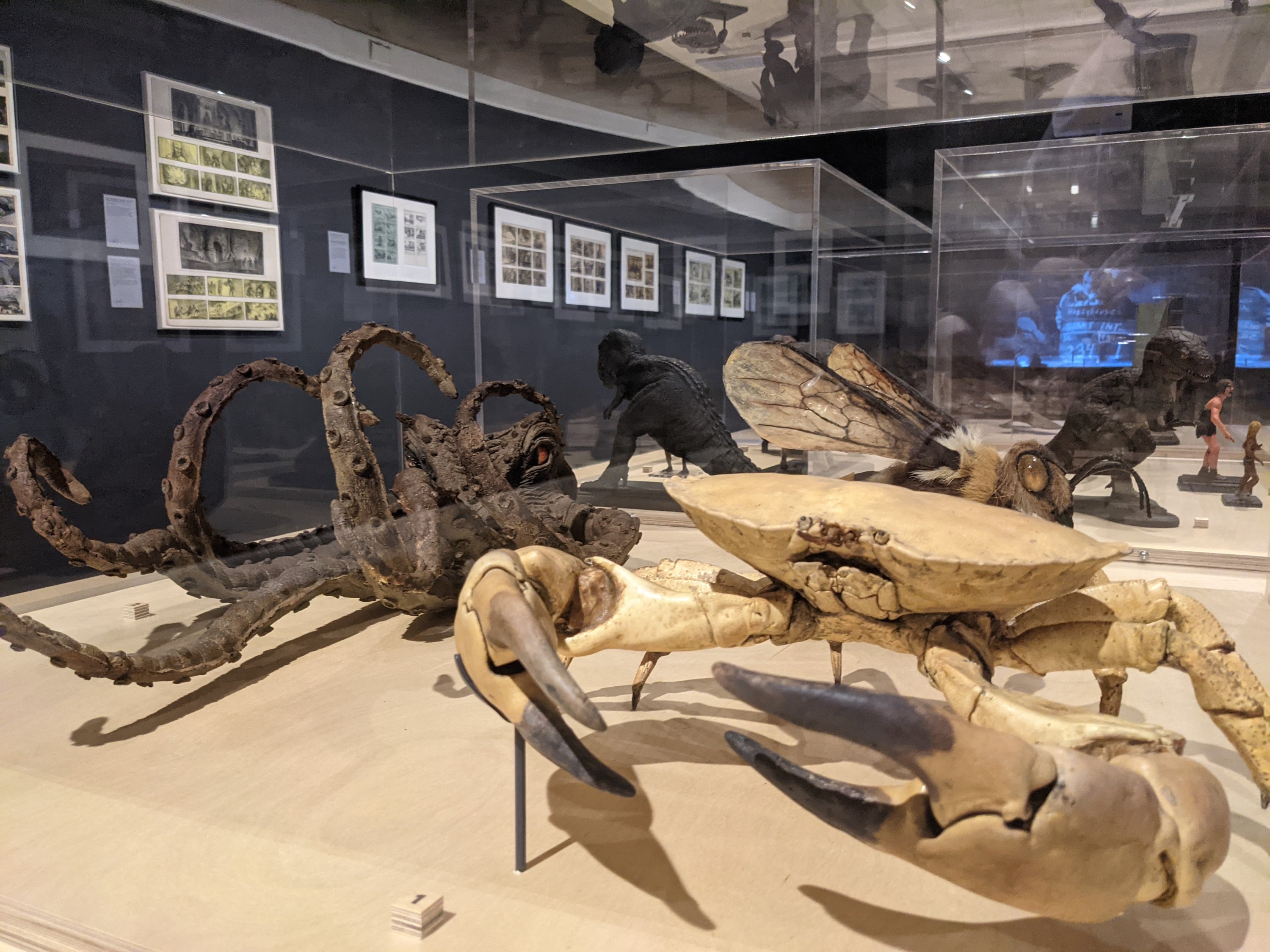
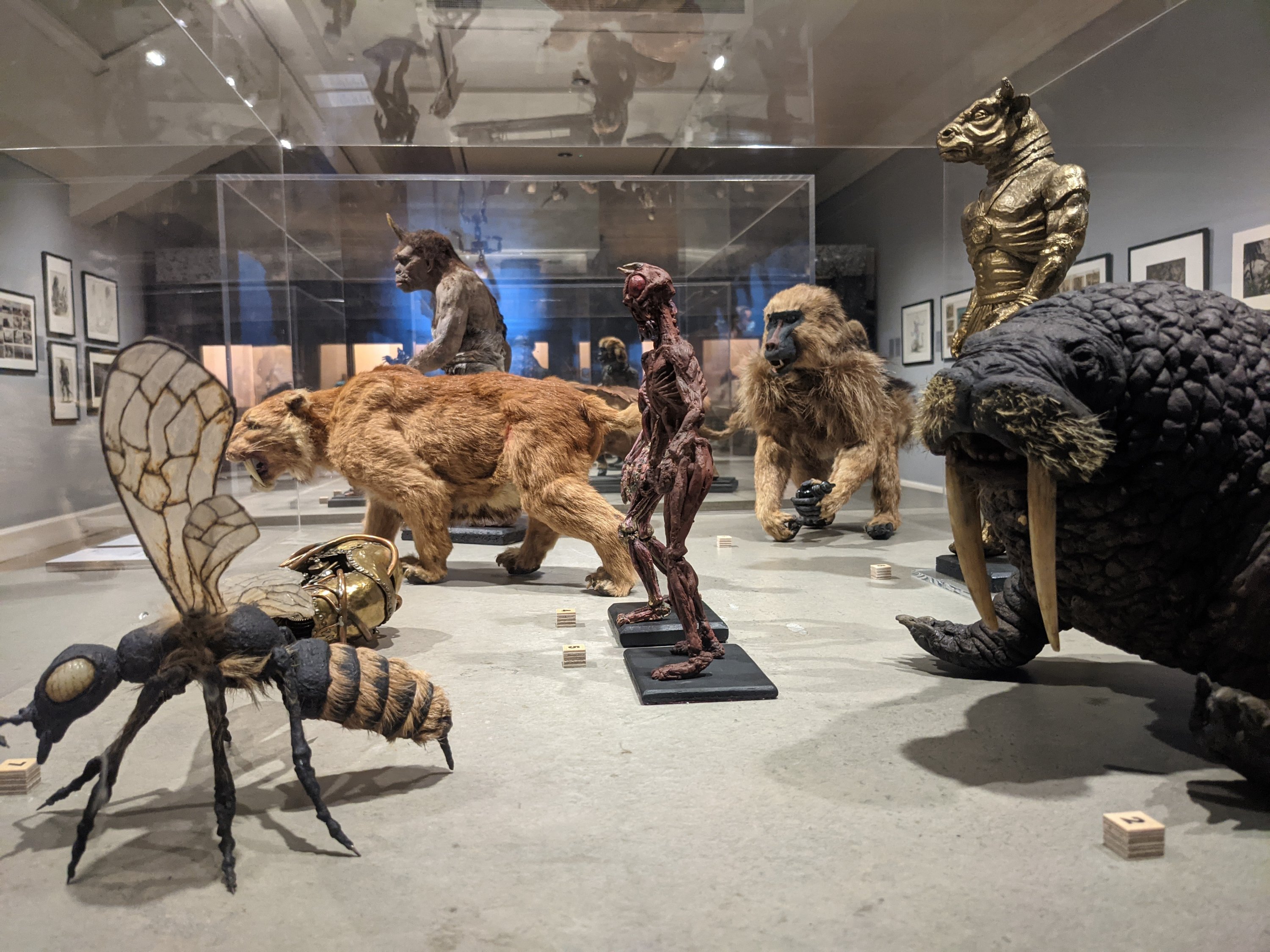
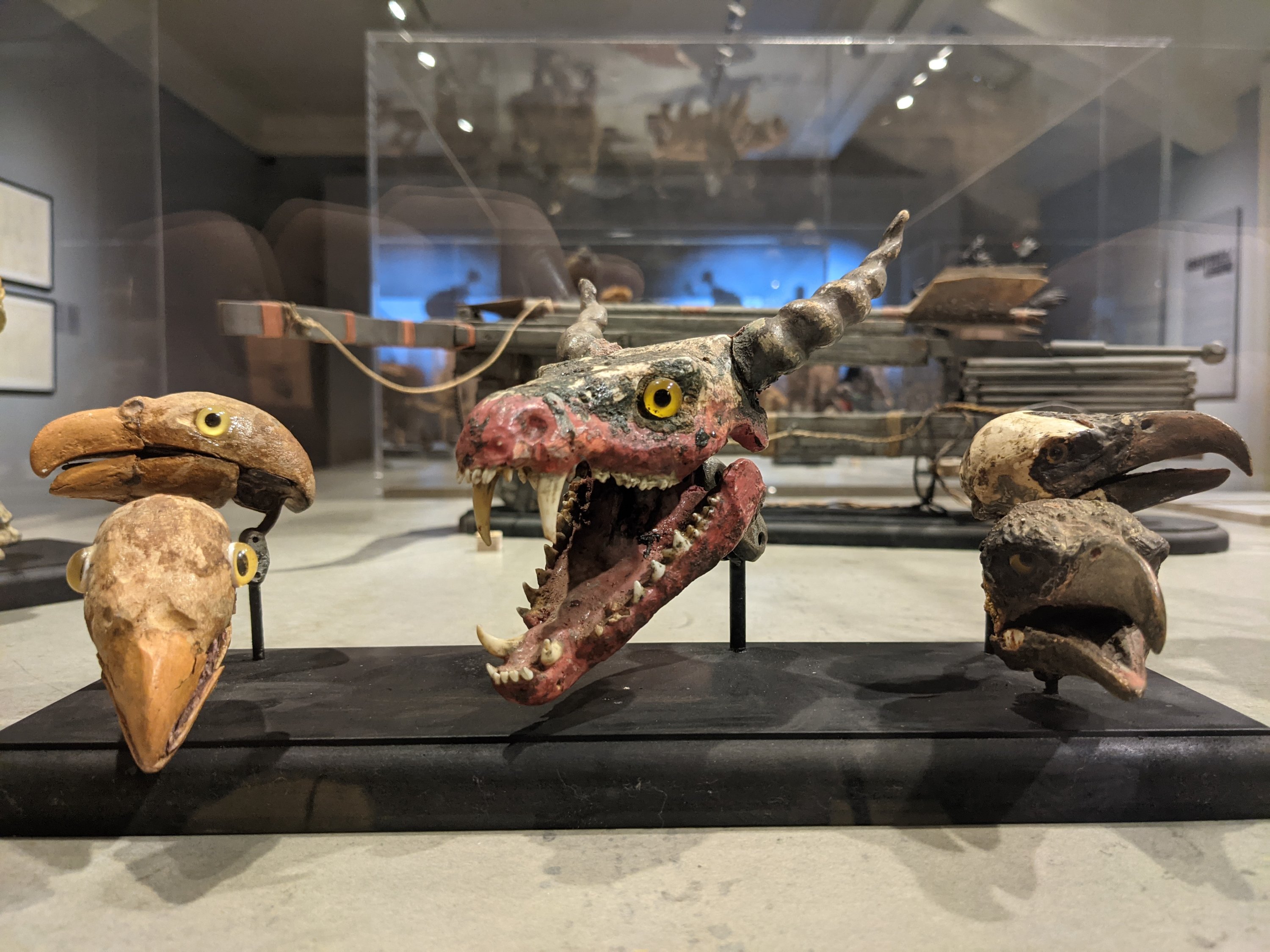
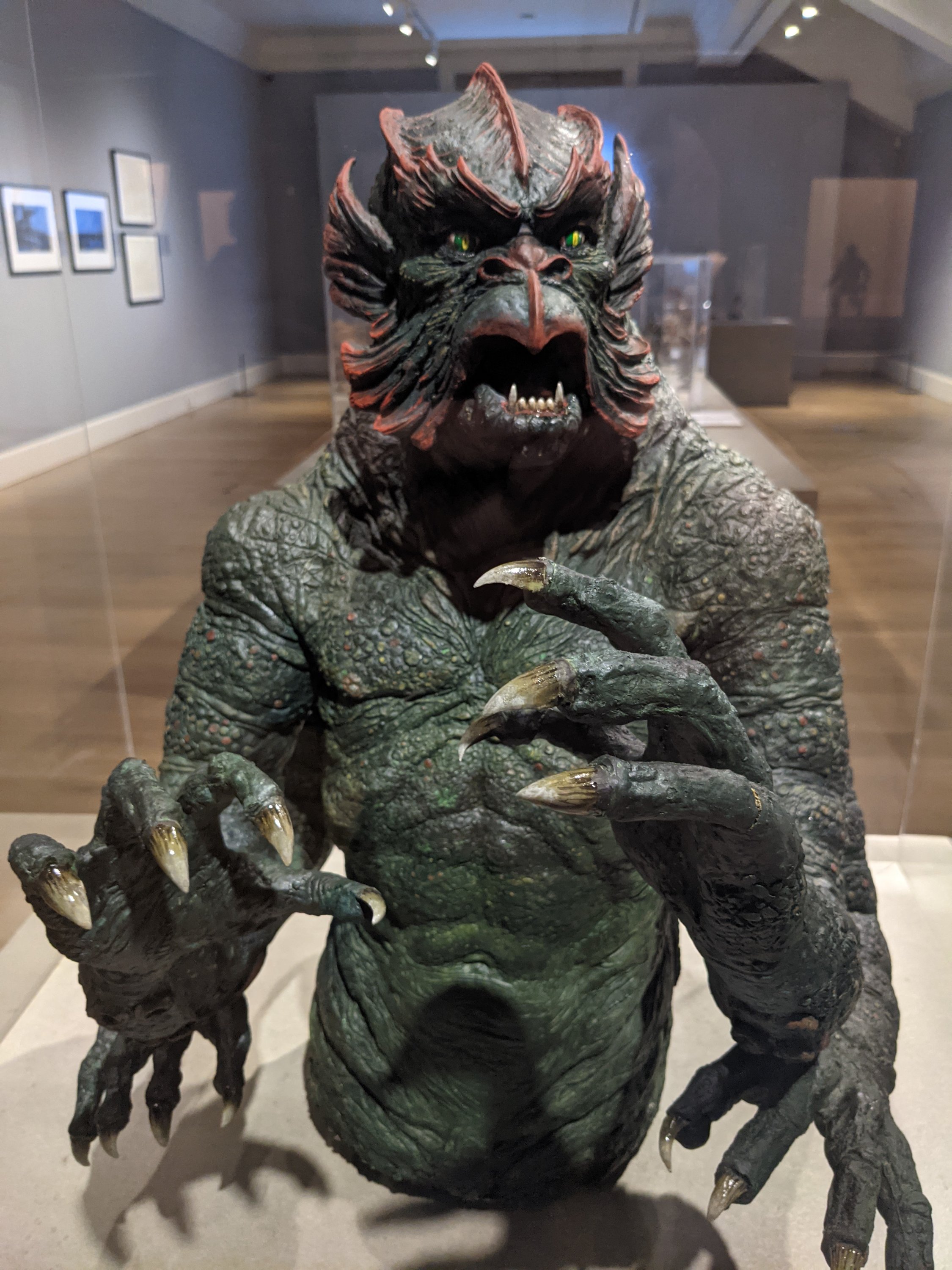
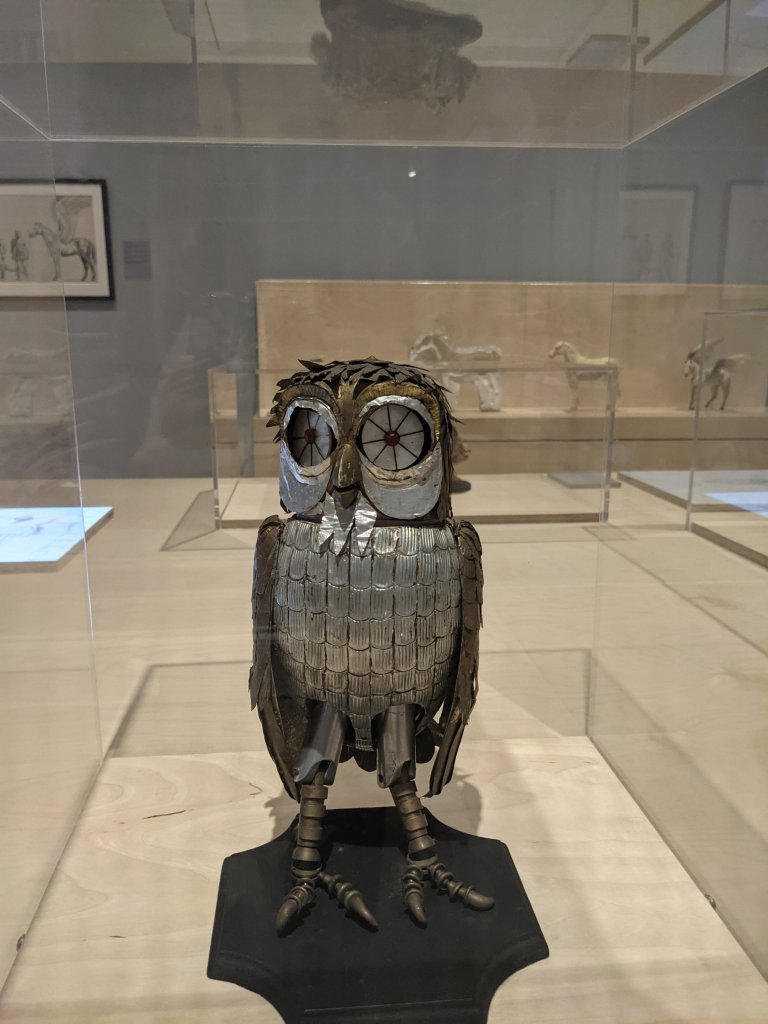
I spent nearly an hour in this room alone because there’s SO much to take in. Harryhausen’s entire bestiary is on full display here – everything from the dinosaurs from One Million Years BC to the giant crab from Mysterious Island. The audio tour discusses the story behind every single film represented and it’s absolutely fantastic.
Two films in particular are given particular attention. Clash of the Titans – Harryhausen’s final film – has its most famous creatures at the back. The full size Kraken model must be seen to be believed, it’s like looking at a really ugly toddler.
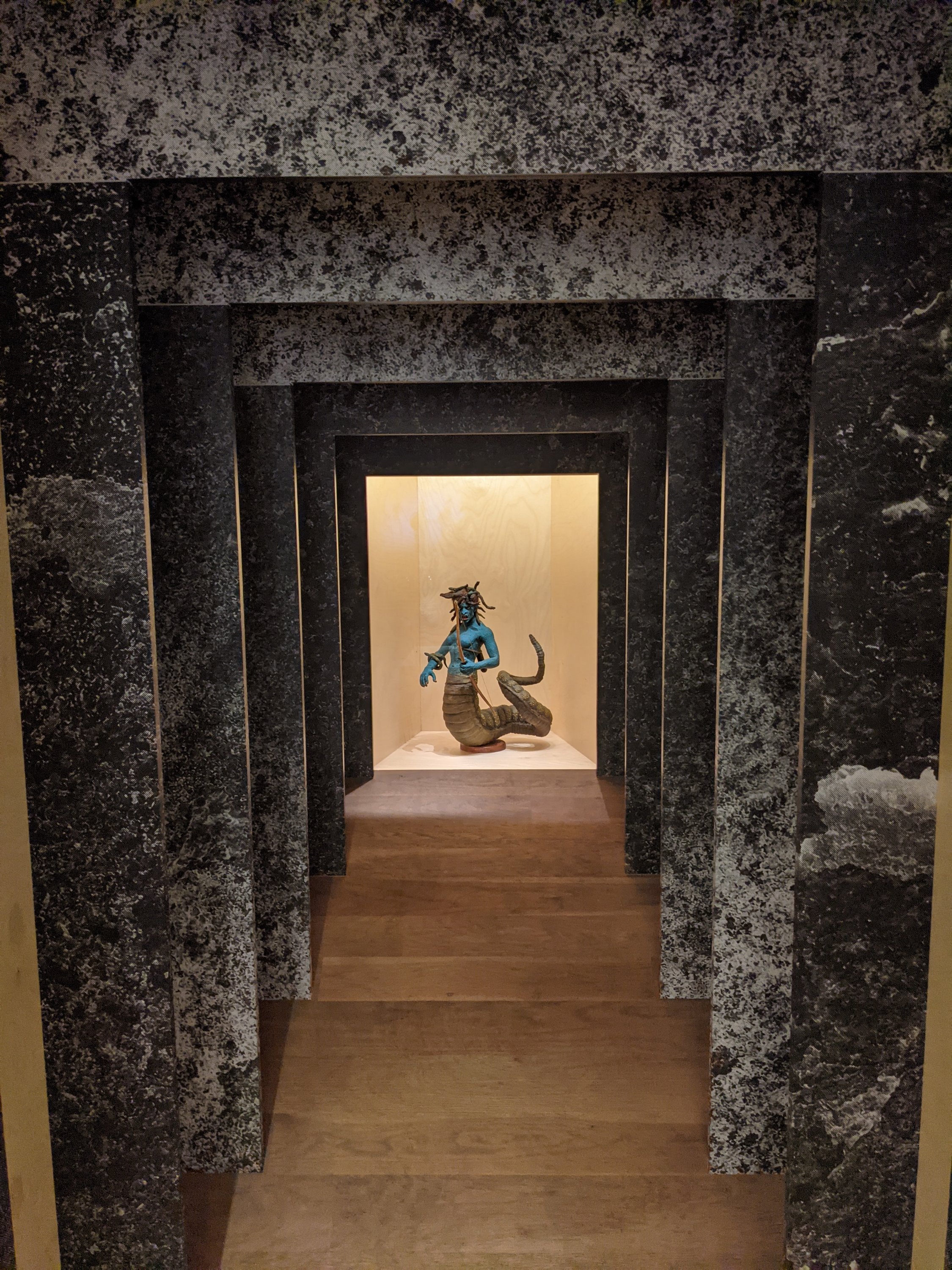
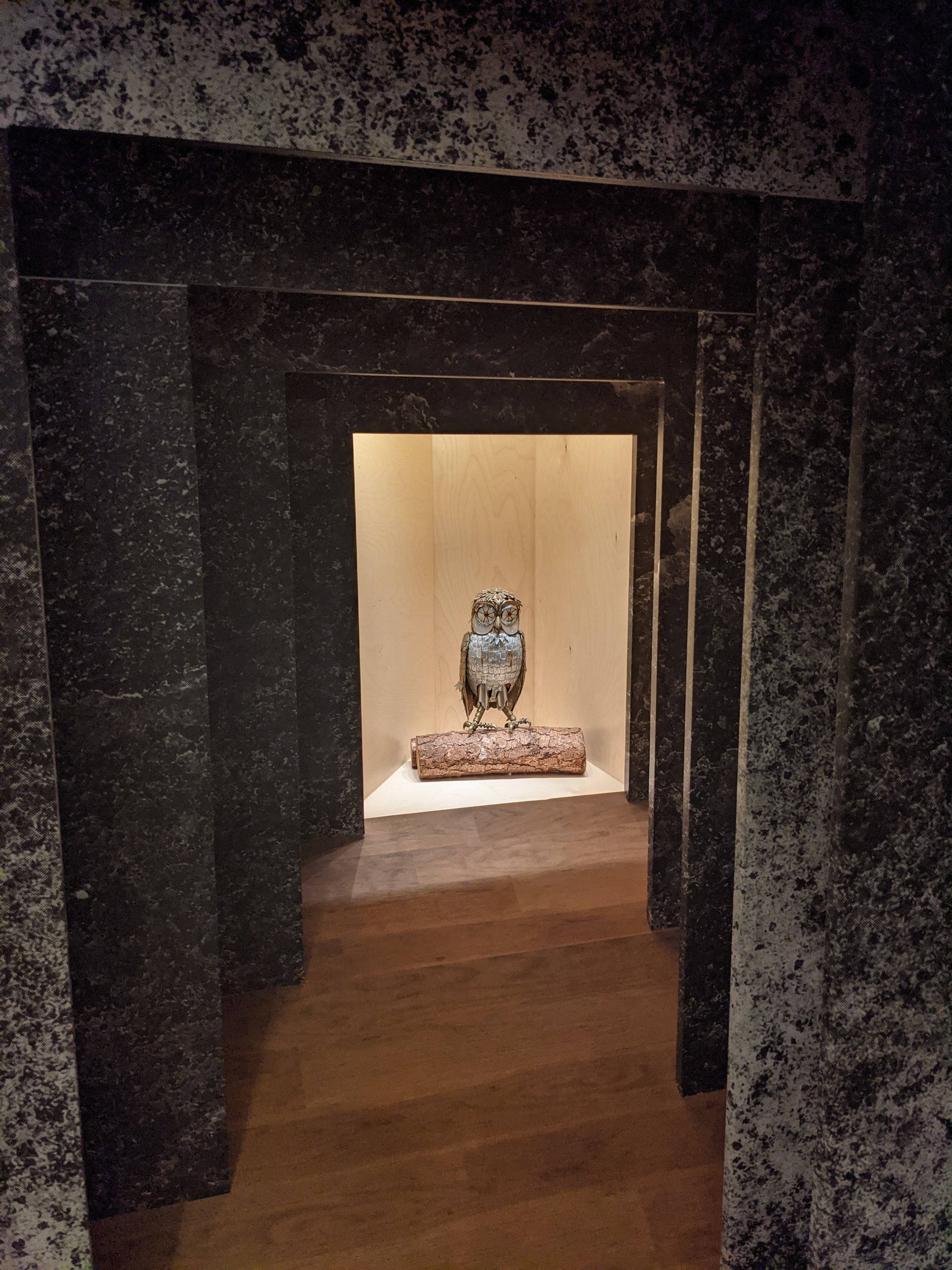
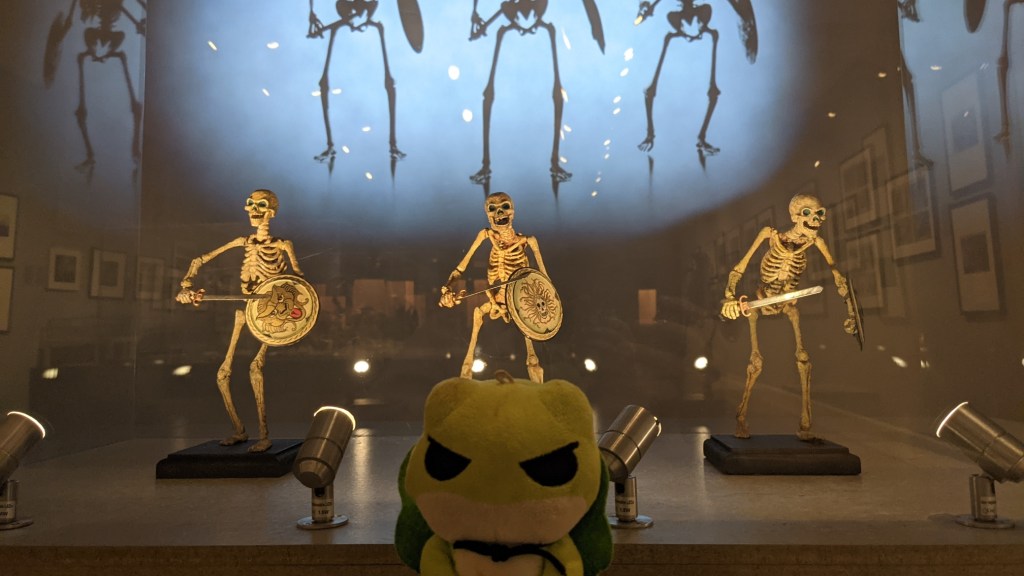
And, of course, Jason and the Argonauts has its own display at the front of the room – each model is lit up in turn, while a projection in the background shows its silhouette in action.
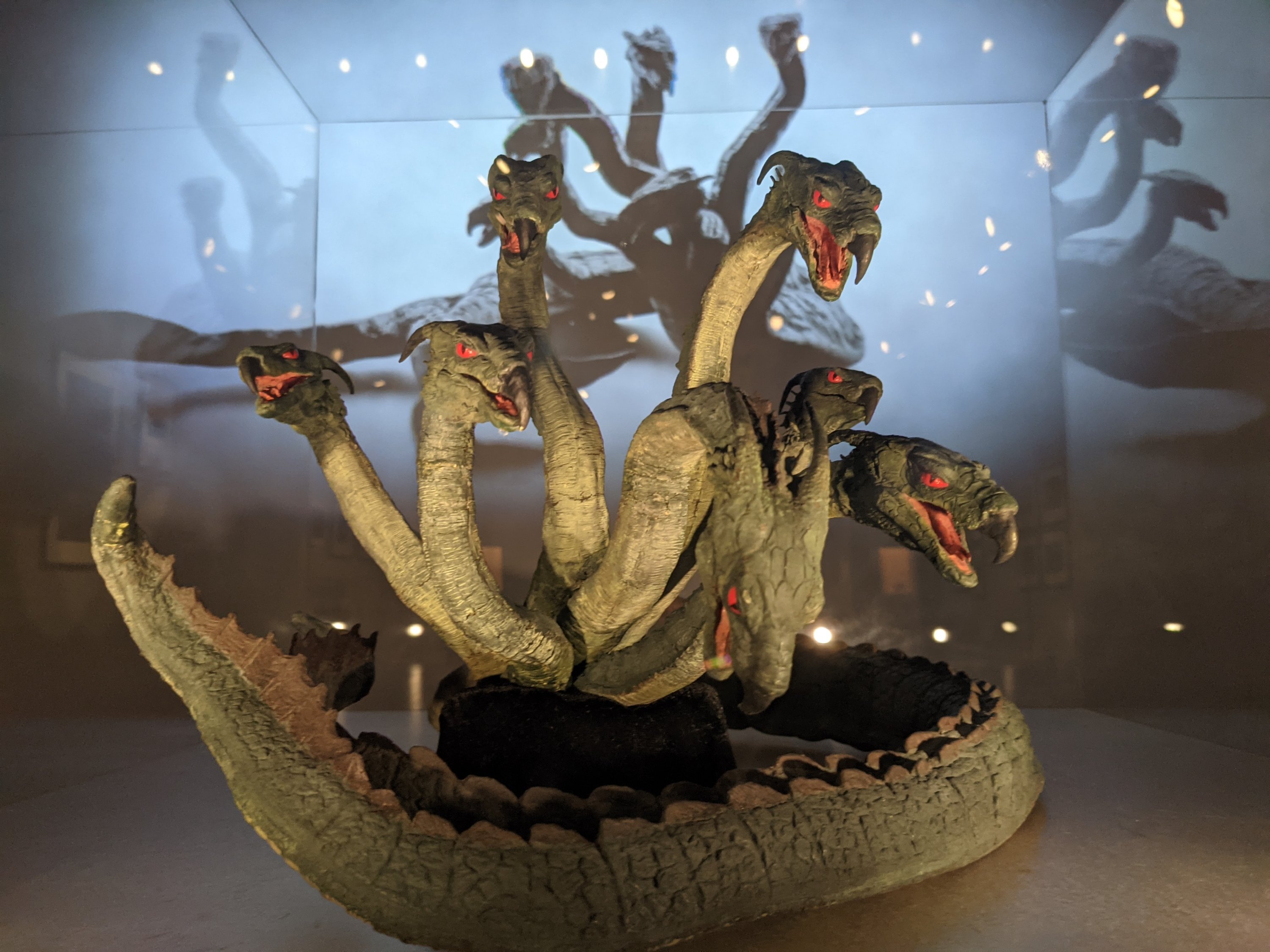
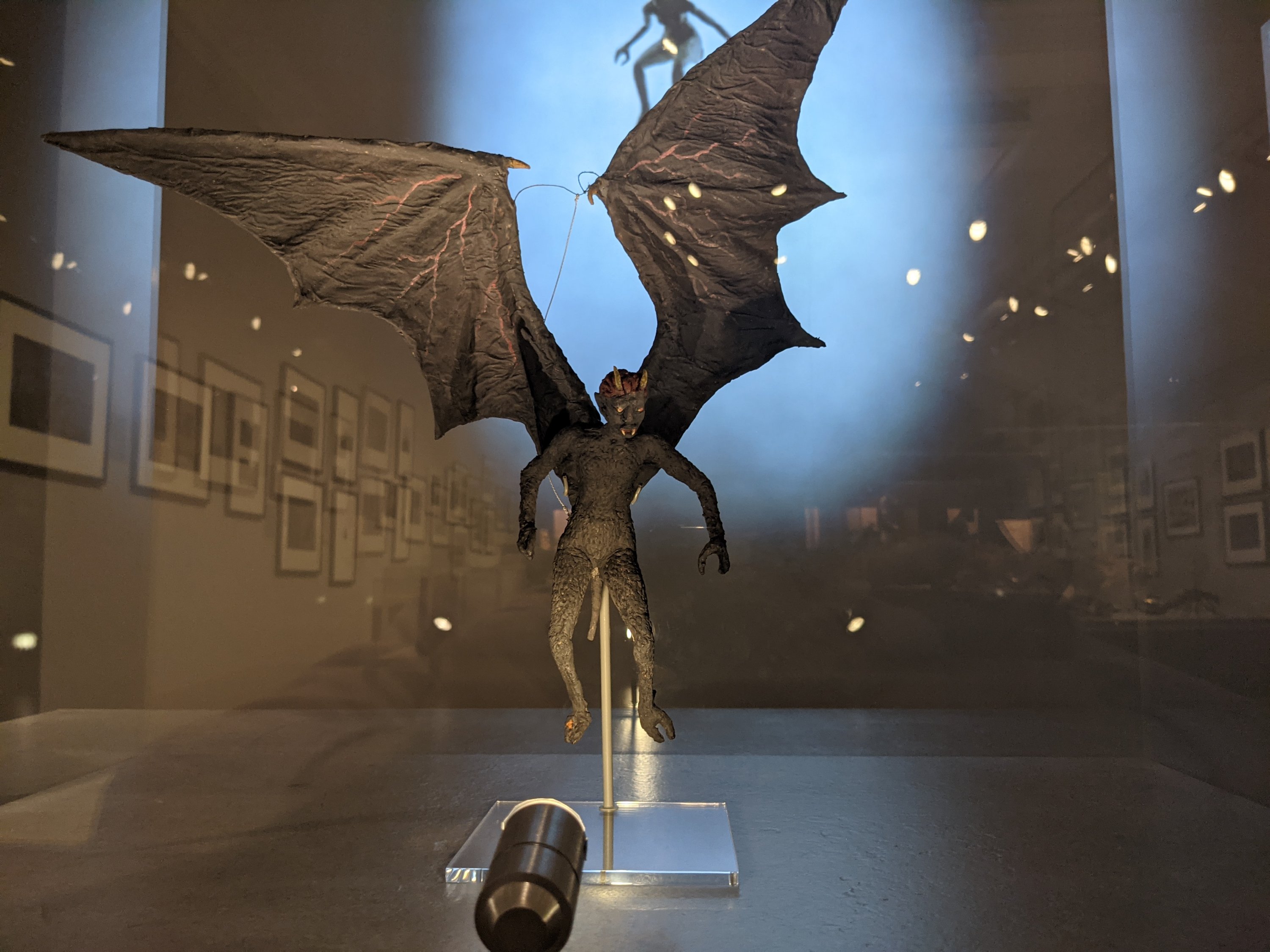
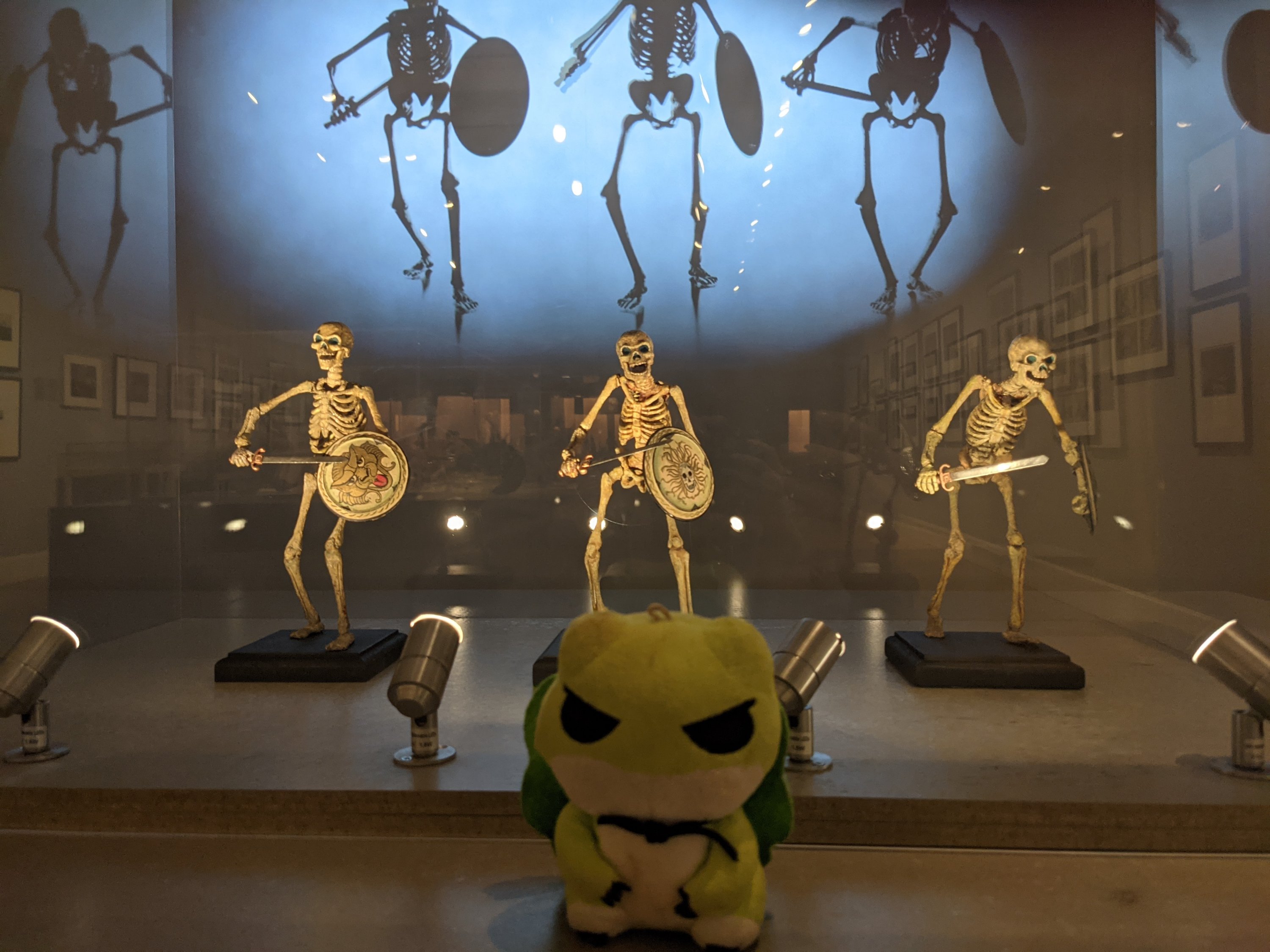
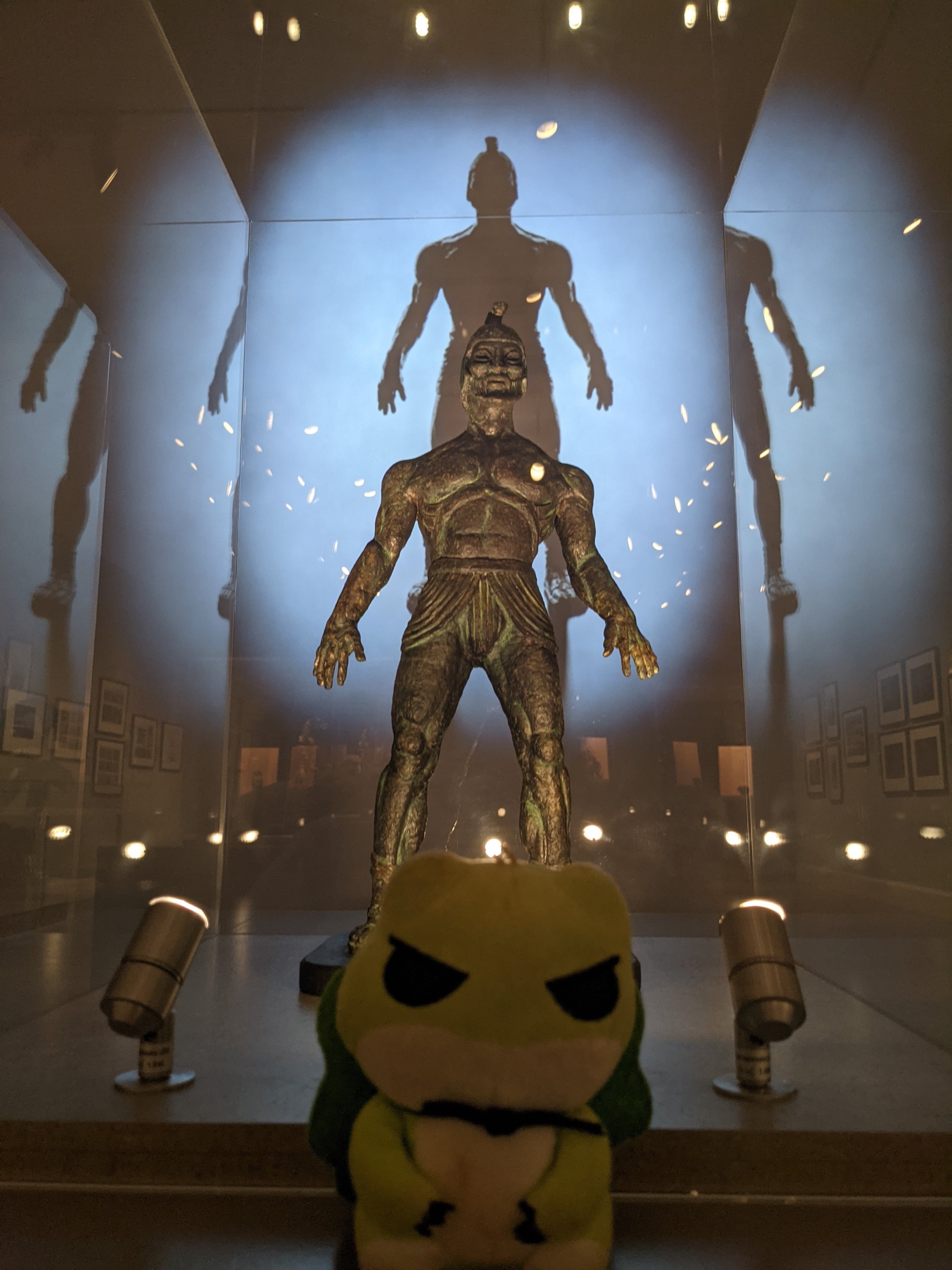
There’s also concept art and original film posters to gawp at. I didn’t want to leave this room. I doubt I’ll ever see a temporary exhibition this cool ever again. Everything is so overwhelming that it’s hard to drag yourself away.
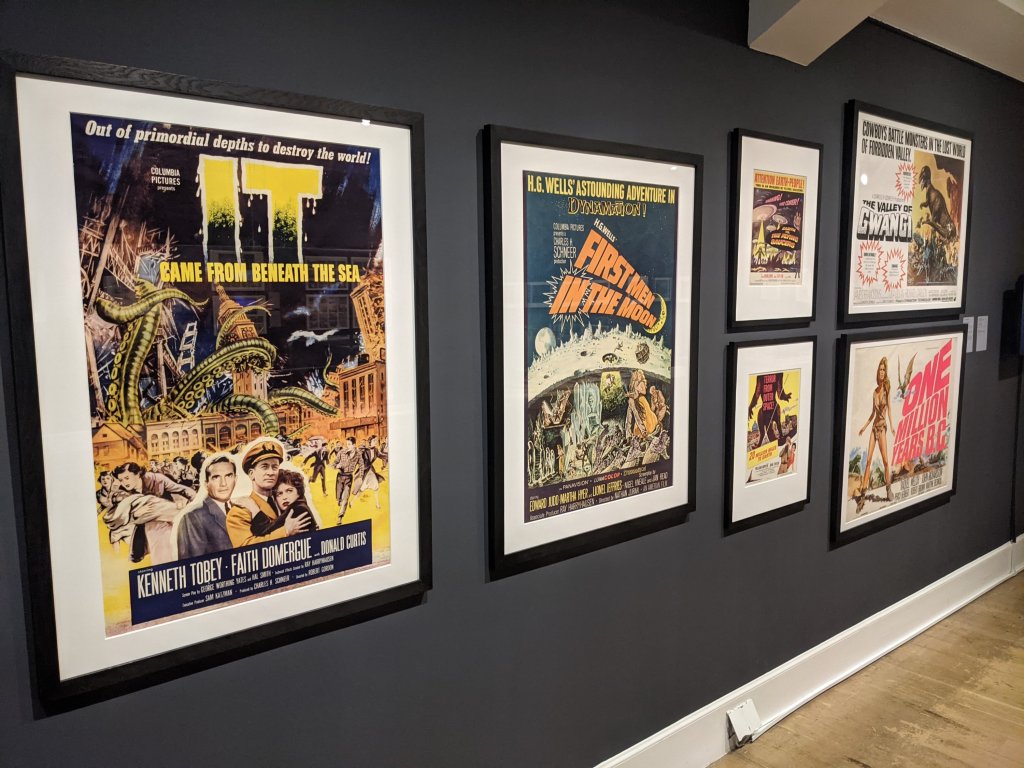
After drooling so hard that I ruined my new fleece and getting some concerned looks from museum security, I excused myself and headed out to the gift shop.
How was it?
I was really excited for this exhibition – in fact it’s actually the main reason I still came up to Scotland, after I realised that the long visit to Loch Ness I’d planned on couldn’t go ahead after all. I was incredibly excited about seeing Harryhausen’s figures in person, and I can safely say that they don’t disappoint.
As far as I’m aware, virtually every film is represented here in some fashion – although some of the earlier films, like It Came From Beneath the Sea, only have a couple of props on display, as the material Ray used to make the giant tentacles eventually disintegrated over time. However most of the creatures from Voyage of Sinbad onwards have held up really well.
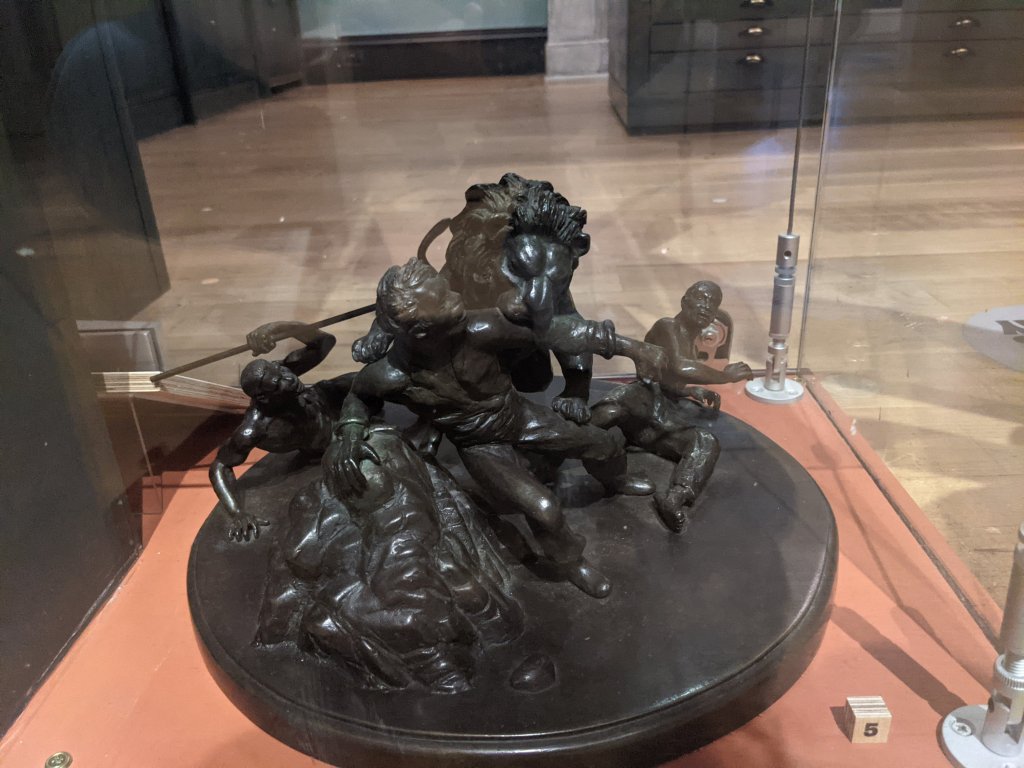
One small thing I found a bit… odd, though, was how whoever wrote the exhibition signage kept making a point of noting problematic aspects of Harryhausen’s work and his influences – for example a Victorian novel that contains racist depictions of Native Americans, or how the female characters in his films are often poorly depicted. This is true, of course, but… the social commentary just ends there. It’s not elaborated on at all.
I say this is a problem because there’s probably an interesting conversation to be had about how, say, the Sinbad films are a terrible portrayal of the Middle East and might have affected how audiences later viewed people from the region. But simply pointing out that a film from the 1970s doesn’t reflect modern norms about representation isn’t insightful or meaningful at this point. It’s 2021! We need something more! Stranger still, none of this is reflected in the audio commentary or any of the videos either. It almost feels like a disclaimer, tacked on at the last minute.
But it’s a minor issue, almost more of a nitpick. That aside, I can’t think of any real flaws about the experience. Maybe the gift shop could have done some little replicas of the models – they would have looked amazing on my desk at work.
So, in summary, I absolutely loved the ‘Titan of Cinema‘ exhibition. I’d strongly recommend it for anyone with even a passing interest in special effects. The exhibition is running until the 20th February 2022 – alternatively, if you can’t make it up to Scotland, there’s also a (paid) virtual exhibition experience which looks pretty good!
RATING: 5 giant octopi out of 5
🐙🐙🐙🐙🐙
Helpful Information
- Tickets are about £10-11. I’d advise to book online, but it seems like you can just walk up and buy them at the till if you prefer – although they still need to book a specific time slot for you. There’s a small student discount available.
- The gallery is a bit out the way but it’s not too bad a walk. I had to get a tram to the West End stop, then walk for about fifteen minutes.
- There’s a gift shop with a decent number of Harryhausen things to buy. The books, which do look really cool, are unfortunately really expensive, but I picked up some cool postcards and a fridge magnet for my collection.
- There’s free toilets but no specific gender neutral ones.
- The gallery café is currently closed but there’s a coffee van outside that does a few snacks and a decent latte.
 ☕🐸Coffee Frog Travel Blog🐸☕
Leave a comment