This was originally going to be a small part of my Bulgaria roundup post, but the story got long enough that I’ve turned it into a separate blog entry. I hope you enjoy!
Context!
Unless you’re a complete sociopath you probably like dinosaurs – there’s something about skeletons of massive, long extinct animals that brings joy to people across the world. For this reason, most big cities I’ve been to have had some sort of museum with these skeletons inside – be it a natural history museum, a geological museum or (best of all) an entire palaeontology museum.
I’d noticed that Sofia had one – or more accurately the “Sofia University Museum of Paleontology and Historical Geology” – but it seemed pretty small and we weren’t in the capital for long, so we prioritised other places instead. However, before I headed to the Bulgarian Military Museum I found myself near the University of Sofia campus, so having a little time to kill I quickly went inside. But not to find dinosaur bones. Oh no, I was there to find a little slice of Antarctica.
I beg your pardon 🧐
Yes, really! You see, a surprising amount of countries have research bases in Antarctica – about thirty at last count. Some are obvious – the USA, Chile, Australia – but I was quite surprised to find that Bulgaria has had an Antarctic base since 1988.
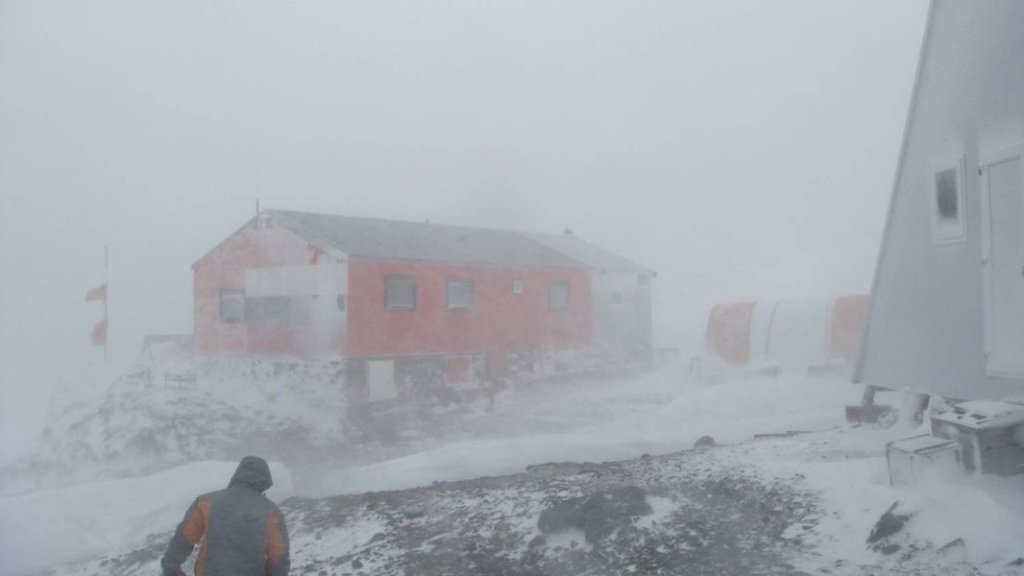
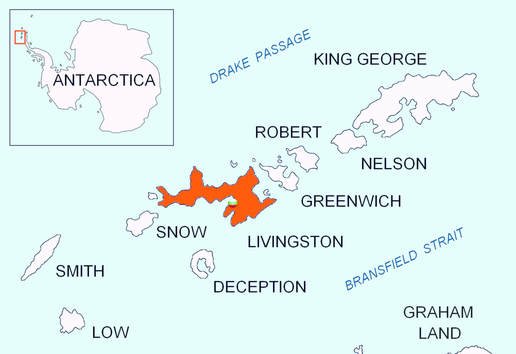
The tiny “St. Kliment Ohridski Base” is named after a famous Bulgarian Saint. There’s even a tiny Orthodox chapel made out of tin to worship at – one of the most southerly faith centres in the world. The base itself is essentially a collection of shacks that can host about fifteen scientists at any one time. It’s actually based on the South Shetland Islands, not the main continent itself, but it’s close enough that I think it’s fair to call it an Antarctic base.
I found about St. Ohridski base and thought it was pretty amusing – the idea of a small Balkans country having its own base in Antarctica of all places – but it was in the back of my mind until we visited the Plovdiv Natural History Museum. At one point we came across a display of specimens from the frozen continent, which turned out to be donations from scientists working on the base!
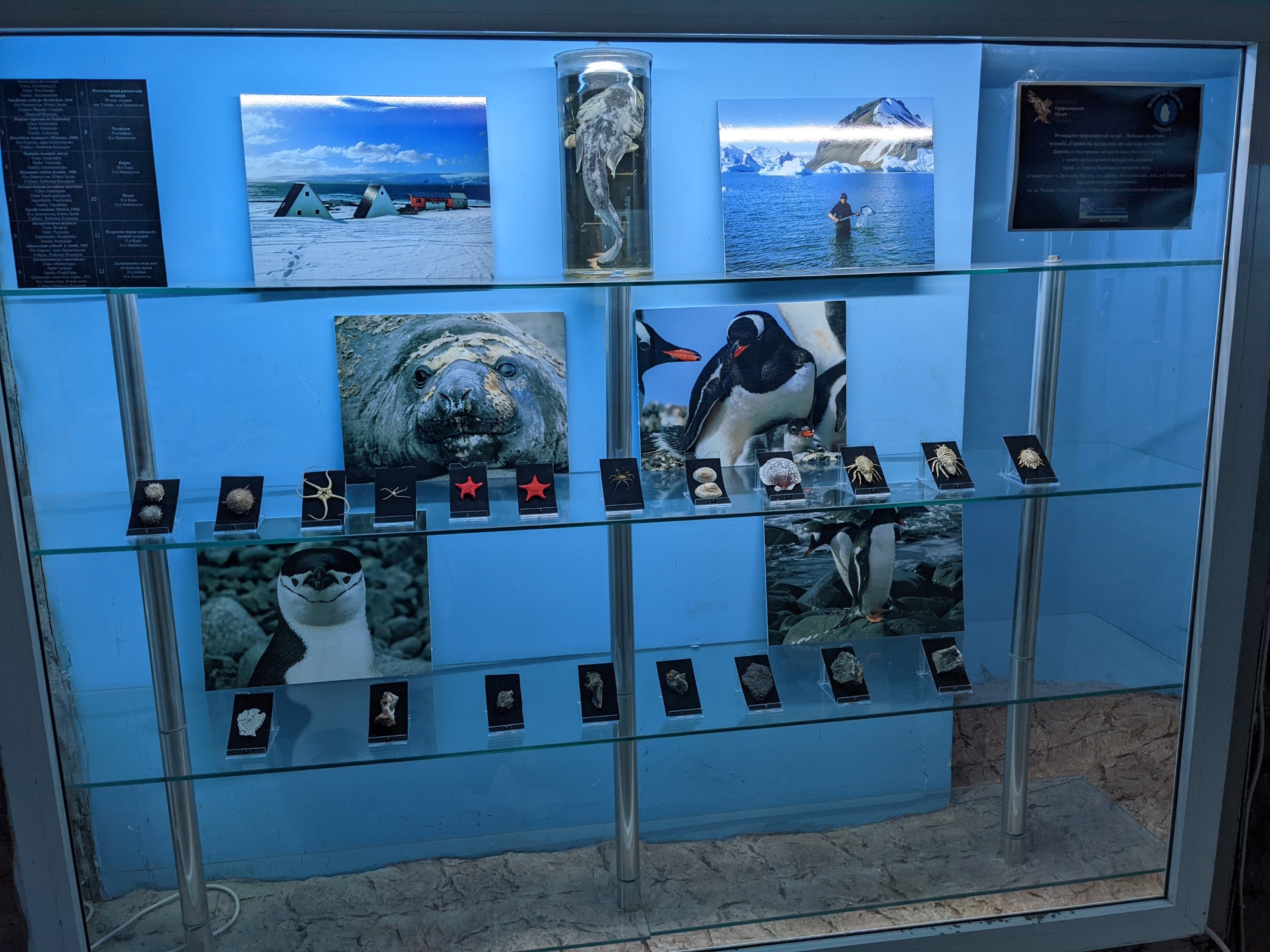
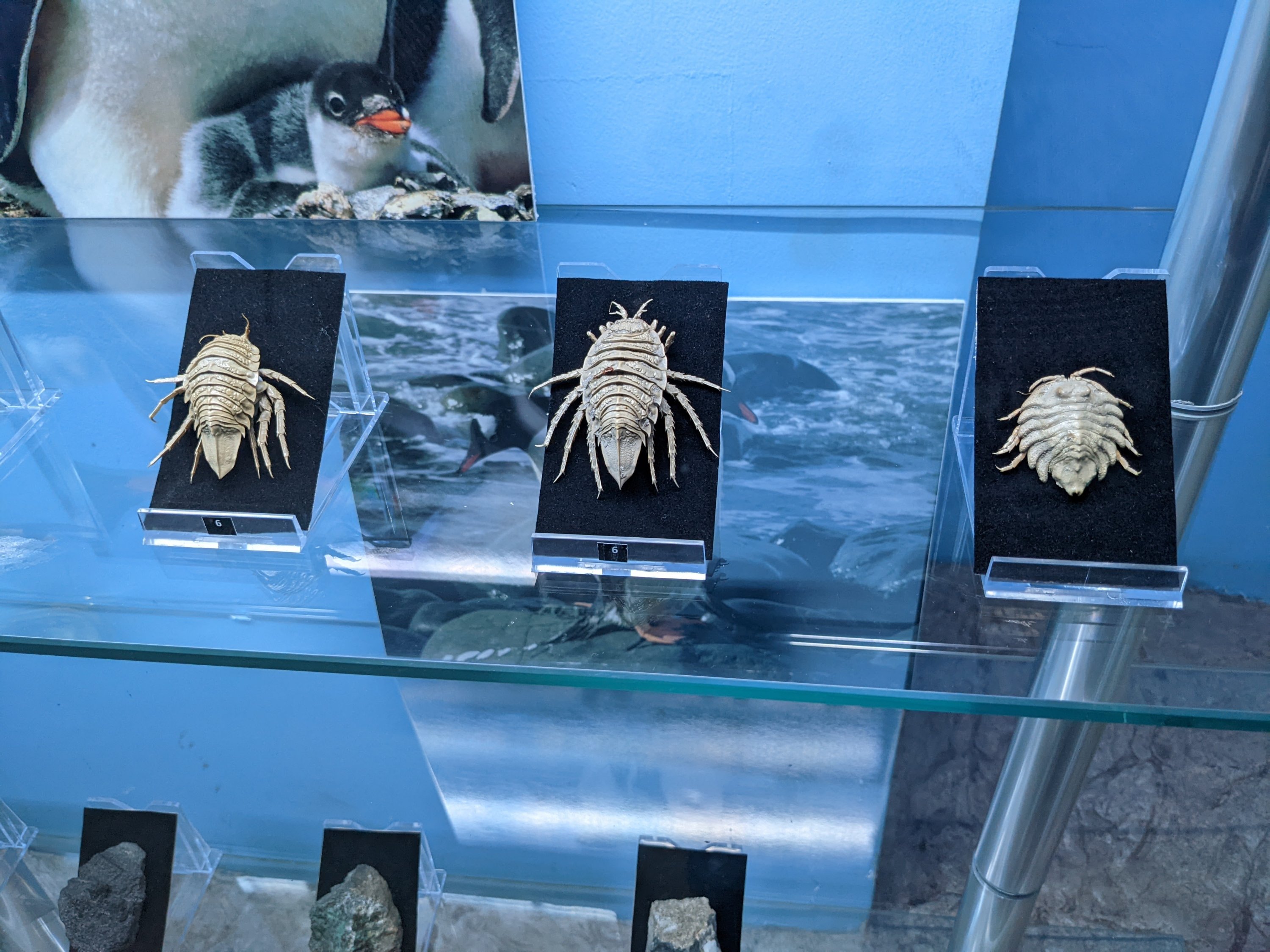
We were heading to Sofia the day afterwards, so I did some research and found that while there isn’t a dedicated Polar Museum in Bulgaria, the University of Sofia did have an exhibit on Sat Ohridski… somewhere. This had to be the University’s Museum of Paleontology and Geology, right? Once we arrived at the capital, while my friend was off looking at historic churches, I instead headed to the main campus to try and find out more.
Breaking into Sofia University 🥷
Finding the University of Sofia is easy enough – it’s right next to the St. Alexander Nevsky Cathedral – but there’s no signage about any museum. I walked onto campus, and after failing to find any sign of a museum entrance, I found a door and just… walked in.
The University of Sofia is quite grand inside and a little spooky. It was oddly quiet – I was there on a weekday but there was only a handful of students and staff walking around. I wandered through endless hallways, unmolested by security, until I came across a grand rotunda with… paintings of penguins. I was on the right track!
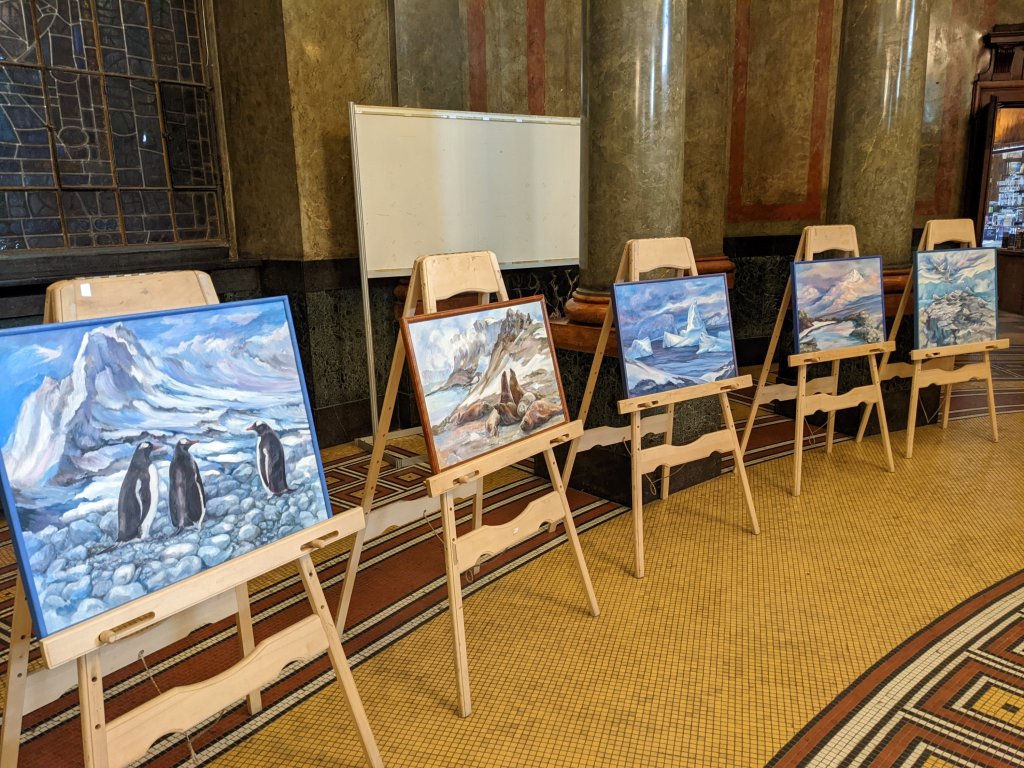
It turned out to be a display put on by the Bulgarian Antarctic team, celebrating a particular anniversary that I’ve since forgotten. Spirits raised, I found a quiet place to hide and gathered my bearings. I checked Google on my phone, I found an old website mentioning that the University’s Paleontology Museum was on the fifth floor of the North section.
Assuming any polar exhibit would be nearby, so I walked through more endless corridors until I came across some grand stairs. I thought that the lifts required an ID card that I obviously didn’t have, so instead I hoofed it up five flights of stairs. At the tip I found… a painting of a mammoth?
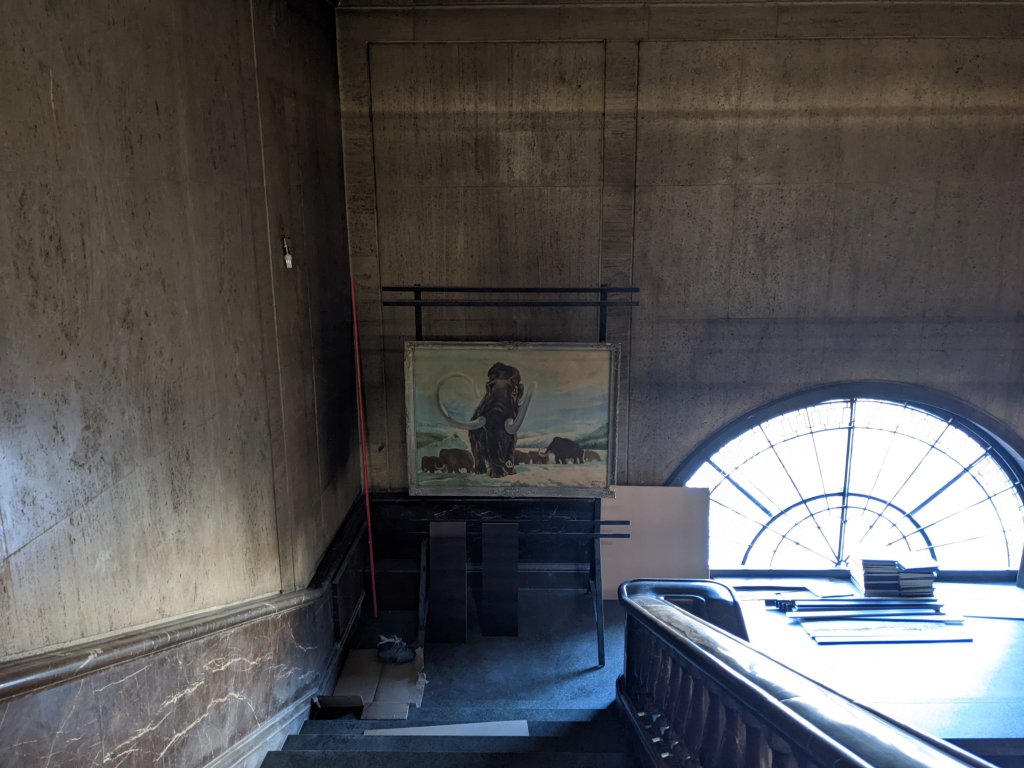
I turned around and saw the museum I’d been looking for – but nobody was inside. Fortunately the gate was unlocked so I just walked in and pretended I knew what I was doing. At this point my attention was immediately drawn to… this door.
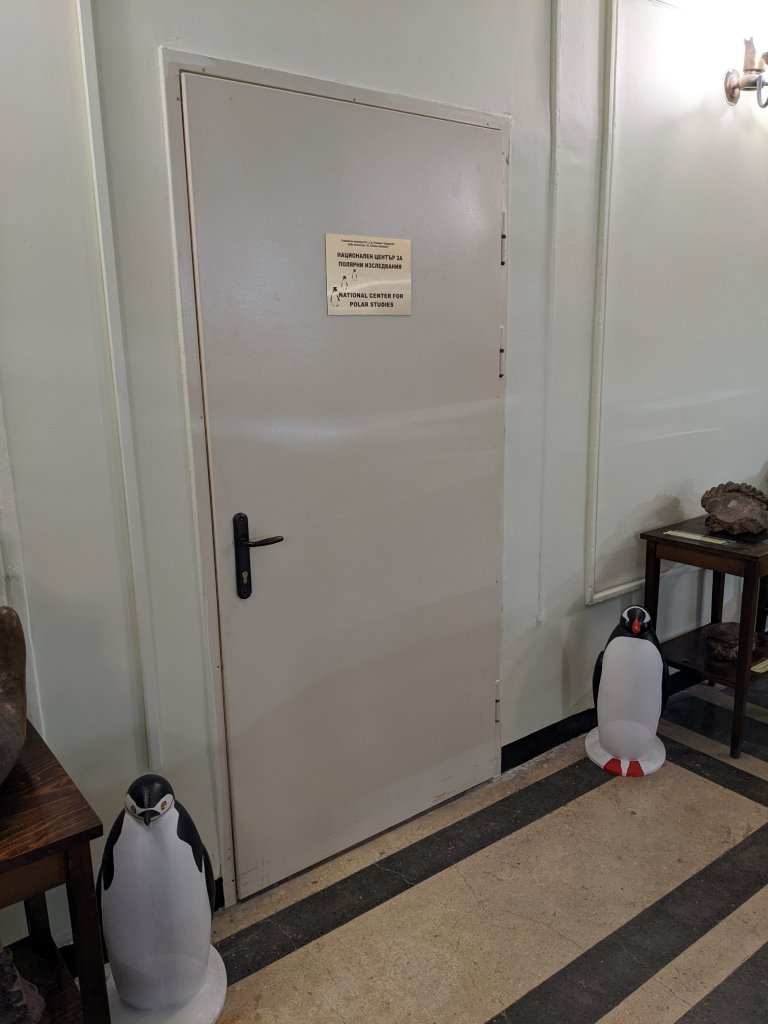
The Gate of Two Penguins 🐧
Well, I’d definitely found it, right? This had to be the exhibition on the Bulgarian Antarctic Institute. At this point I was pretty tired so I just burst through the doors, and found… an office. With people. And a dead end. Having briskly walked to the other end of the room, I turned around to leave when people started asking who I was.
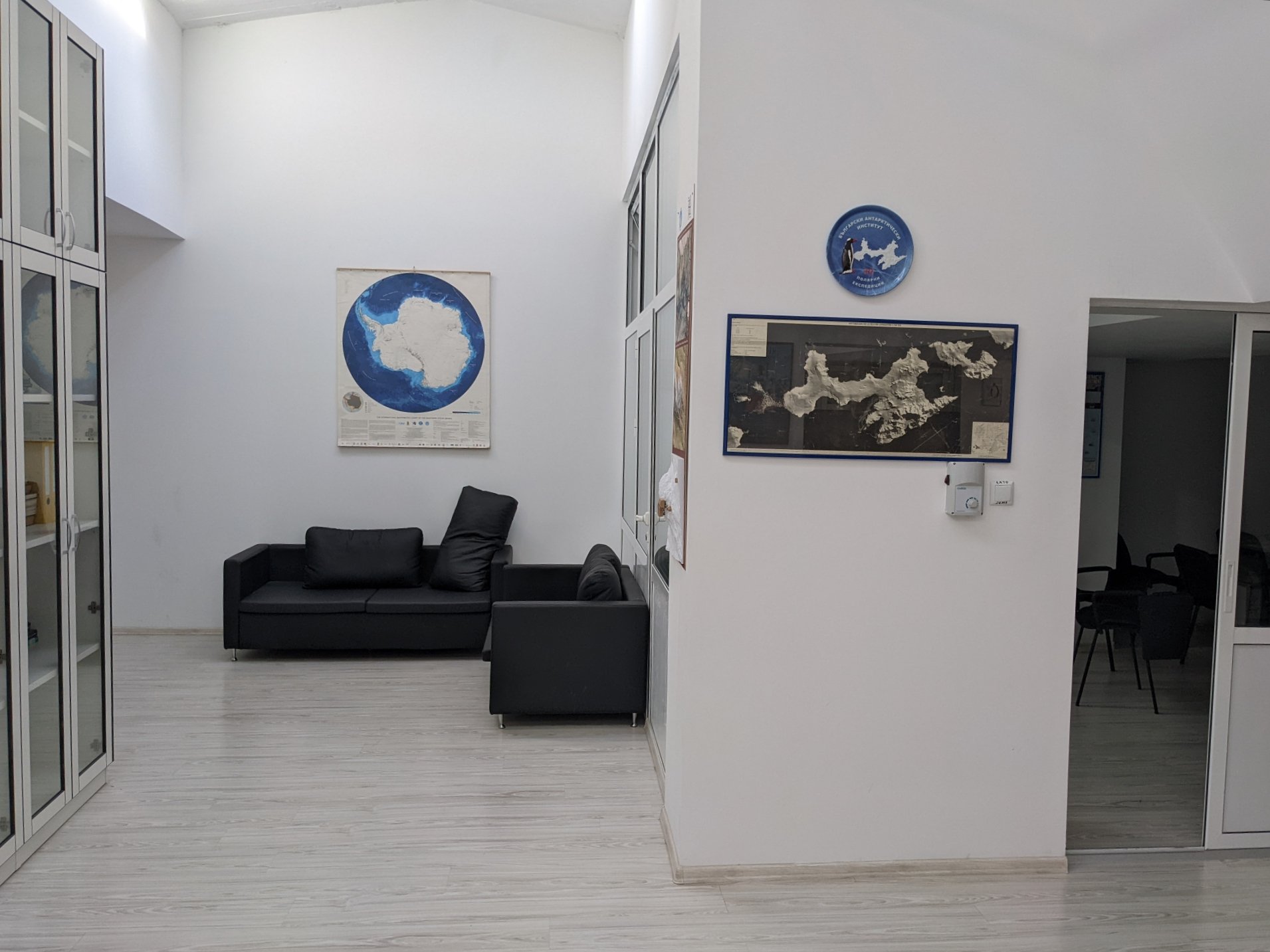
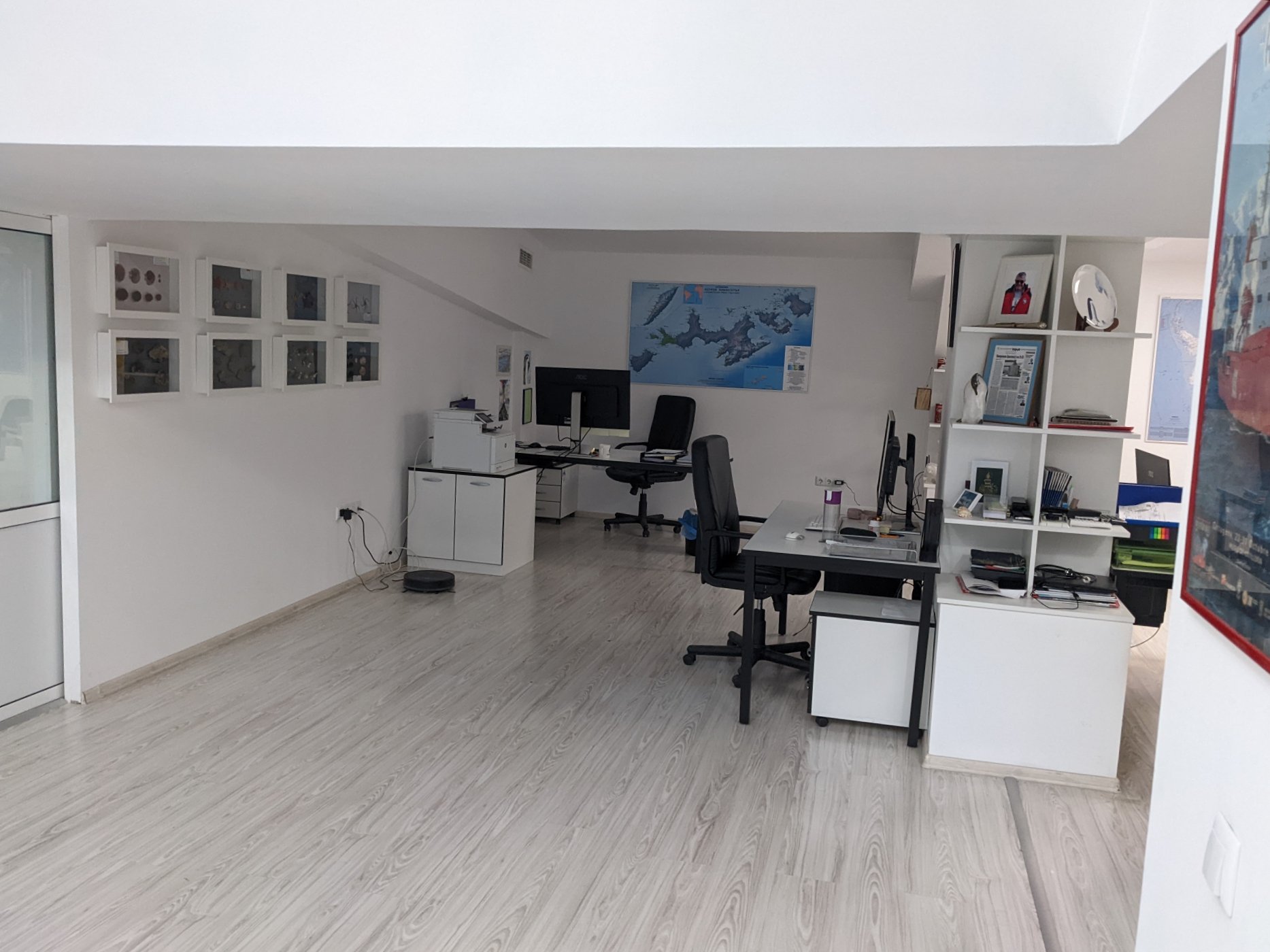
Fortunately the staff spoke English so I quickly apologised and explained the situation. It turned out that this wasn’t a museum, but actually the Bulgarian Antarctic Institute itself. They’d just been finishing off their lunch when I’d burst into their office unannounced.
Fortunately they were quick to forgive me and actually invited me to sit with them for a while to talk about their polar program! In a nutshell, I learned that they cooperate very closely with the British Antarctic Survey, that they’re celebrating their thirty year anniversary and that a dedicated Polar research ship has been constructed and will soon sail down from the Mediterranean to the Antarctic Ocean. Not bad for a small Eastern European country.
After about fifteen minutes or so of really interesting conversation they had a meeting to attend, so I took my leave. Before I left they gave me an impractically huge calendar that just barely fit in my suitcase and a booklet. If you’re reading this, Bulgarian Antarctic Survey staff, thank you so much for your kindness!!
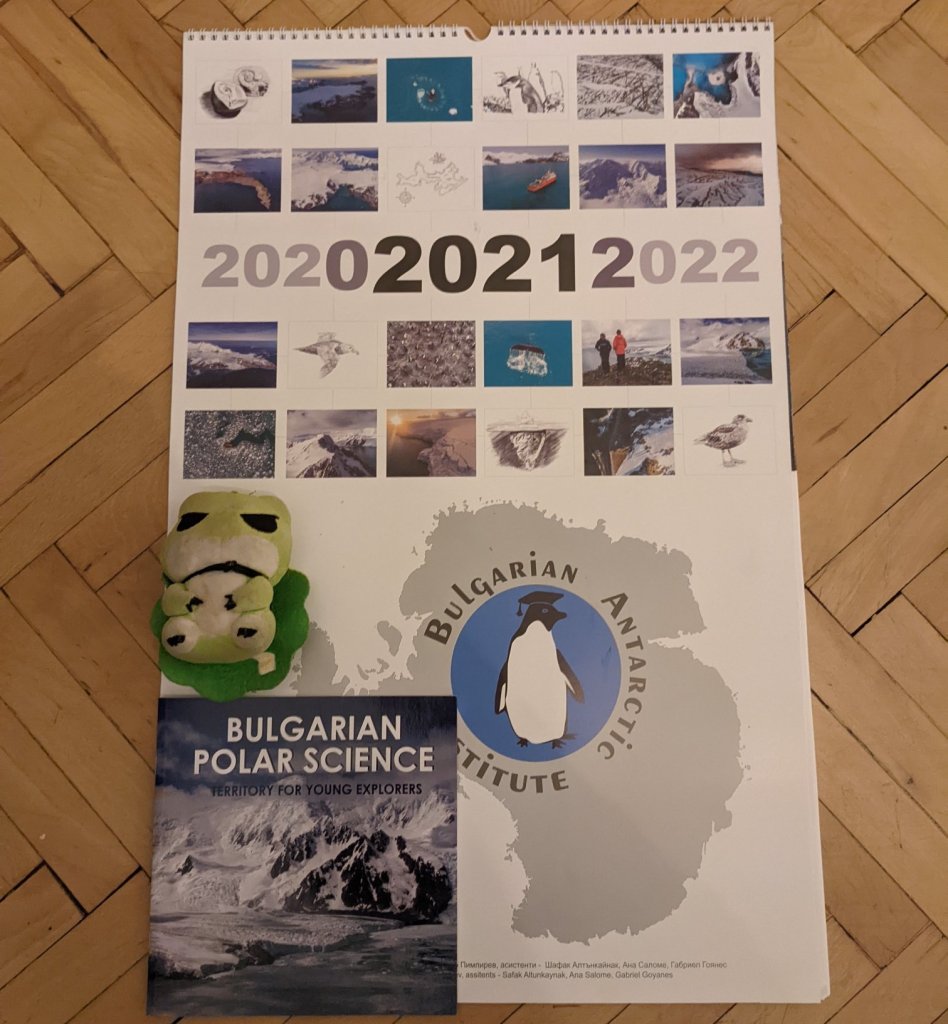
Anyway I never found the actual exhibition that I was originally looking for – the staff advised that it was actually in a separate museum somewhere else on campus and I couldn’t be bothered to find it. But the moral of the story is that, if you trespass, sometimes you’re rewarded with free stuff.
Anyway! Before Ieft the campus, since I was there I spent a bit of time exploring the Paleontology Museum – and I think it’s obscure for good reason.
What it’s like
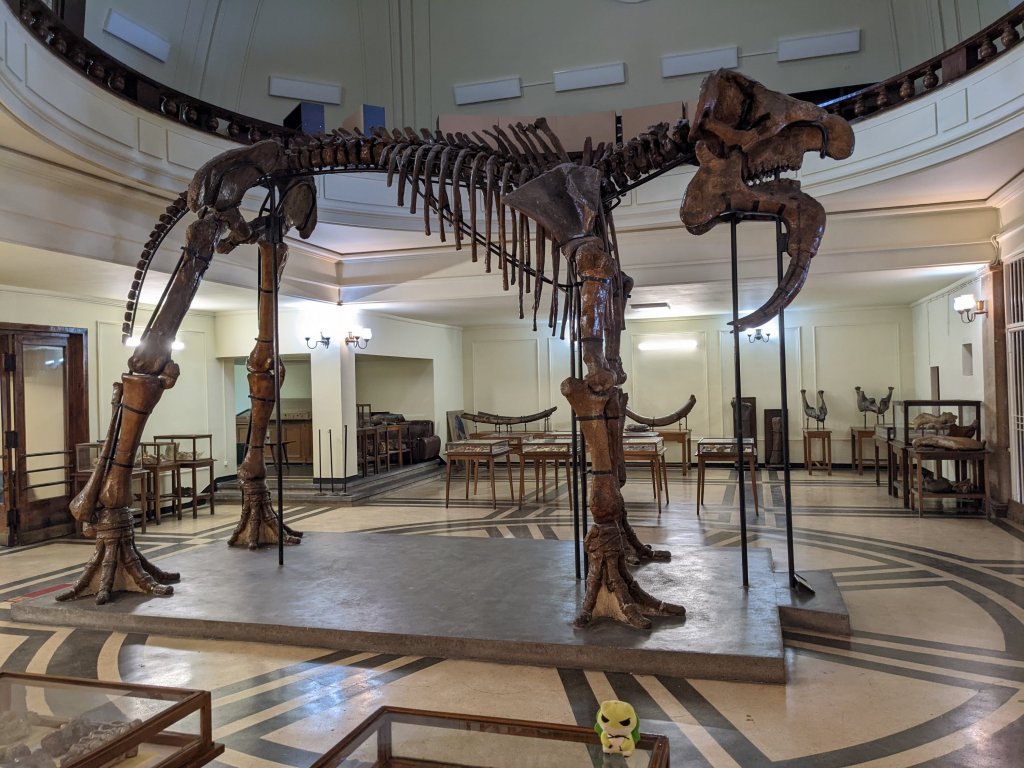
So, as we’ve established, if you’re looking for exhibitions on the Bulgarian Antarctic program (and let’s face it, who isn’t?) then this isn’t the museum for you. The University of Sofia Paleontology and Historical Geology Museum is dedicated to rocks and fossils. Much like the Plovdiv Natural History Museum there’s only one skeleton on display, although it’s definitely a cool one.
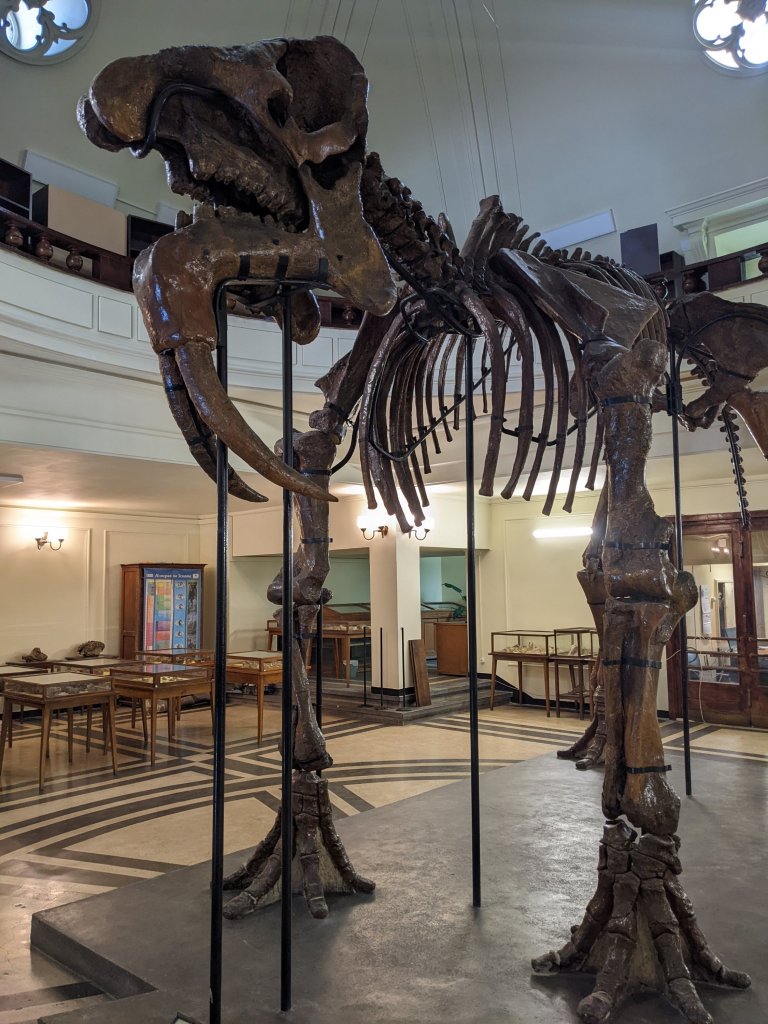
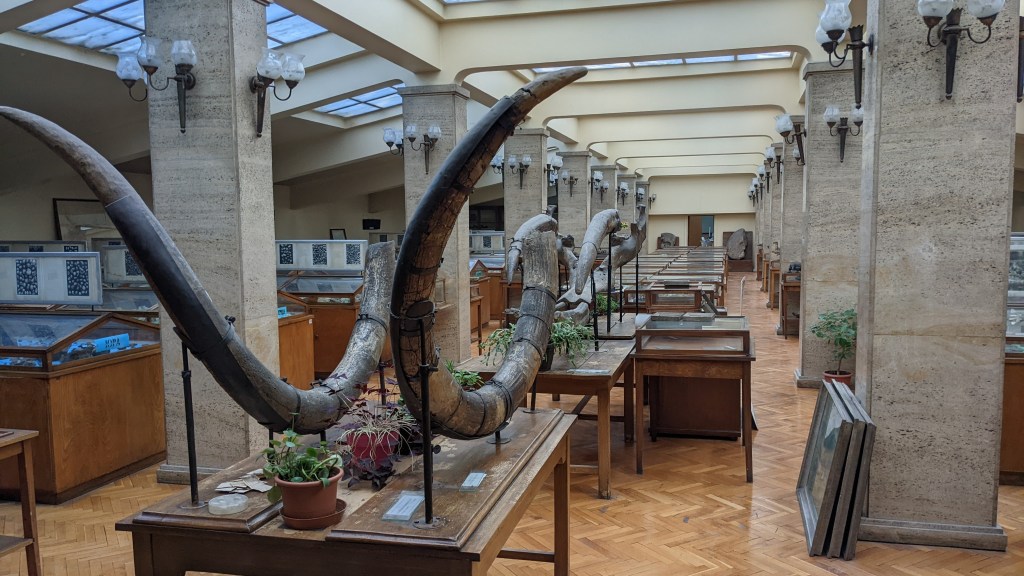
This Deinotherium skeleton was actually discovered in Bulgaria in 1965 – the skeleton was brought to Sofia and erected in the North Hall, where it’s remained ever since. Apparently it’s one of the most complete specimens in the world! It’s a really cool exhibit for an animal that, in my opinion, doesn’t get enough love. Woolly mammoths are great, yes, but did they have tusks facing backwards?? I was hoping for a lot more like this.
But my hopes were quickly dashed. While it’s a promising start… unfortunately the rest of the museum just isn’t very good – something I realised as I walked into the main hall. As a museum within a university I wasn’t expecting something on the scale of London’s Natural History Museum, but I was also hoping for more than… bare fossils in display cases.
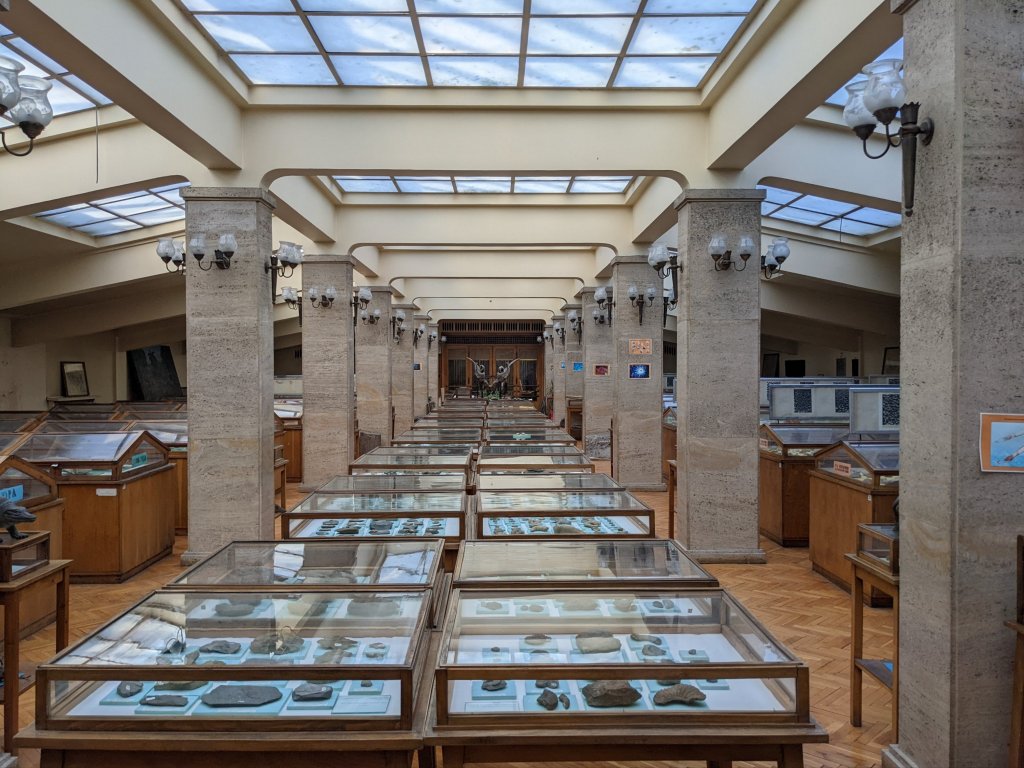
I could forgive the lack of English signage, but at times it just seemed like the department wanted to put their ENTIRE FOSSIL COLLECTION on display, regardless of whether they were interesting specimens or not. Yes, sea stars are sort of pretty, but did they need a cabinet with hundreds of them?
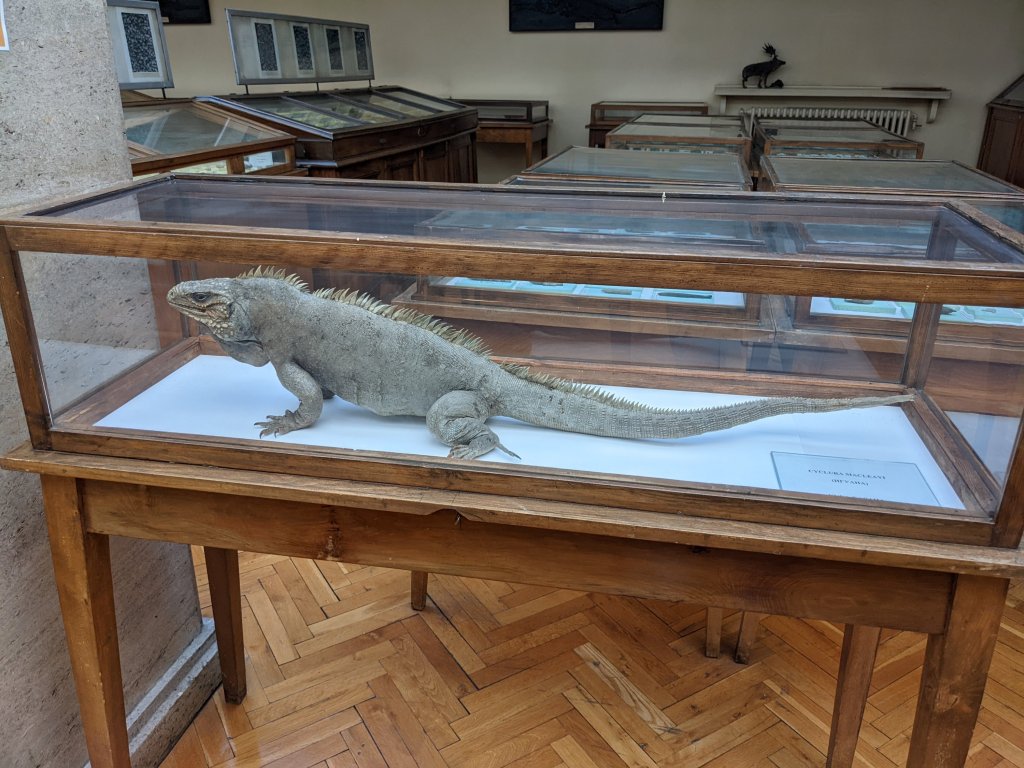
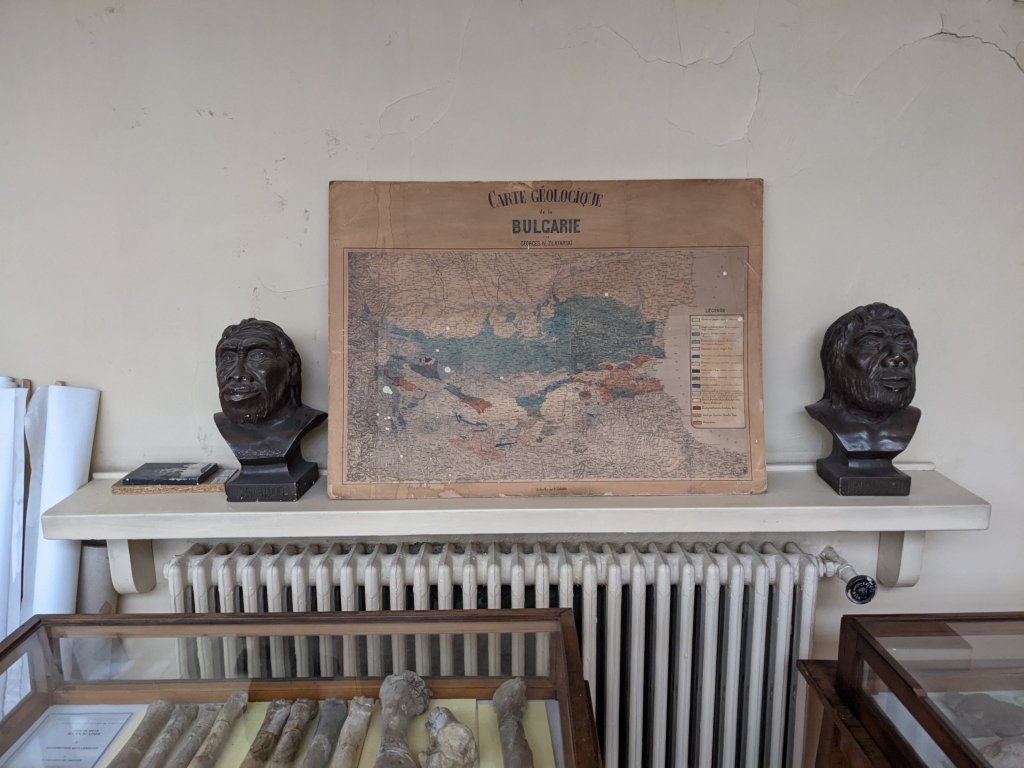
It’s one of the driest museum displays I’ve ever seen – everything is presented so clinically. Perhaps it’s a little more interesting if you can read the labels, but my interest rapidly faded as looked across the main hall and just saw… lots of grey stones. There’s only a handful of models around the building to add any sort of flair, but they’re sort of just… haphazardly placed on top of random counters.
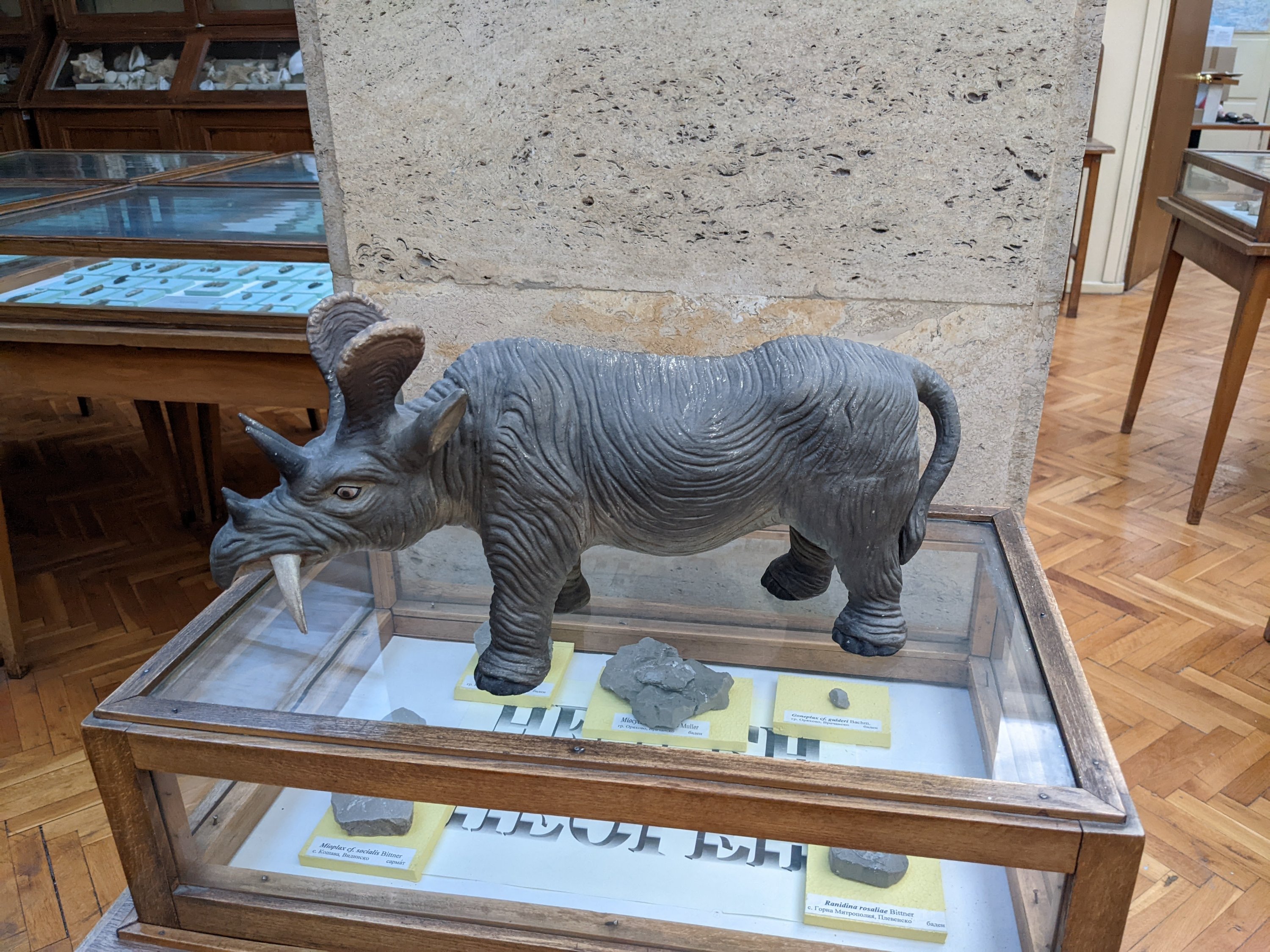
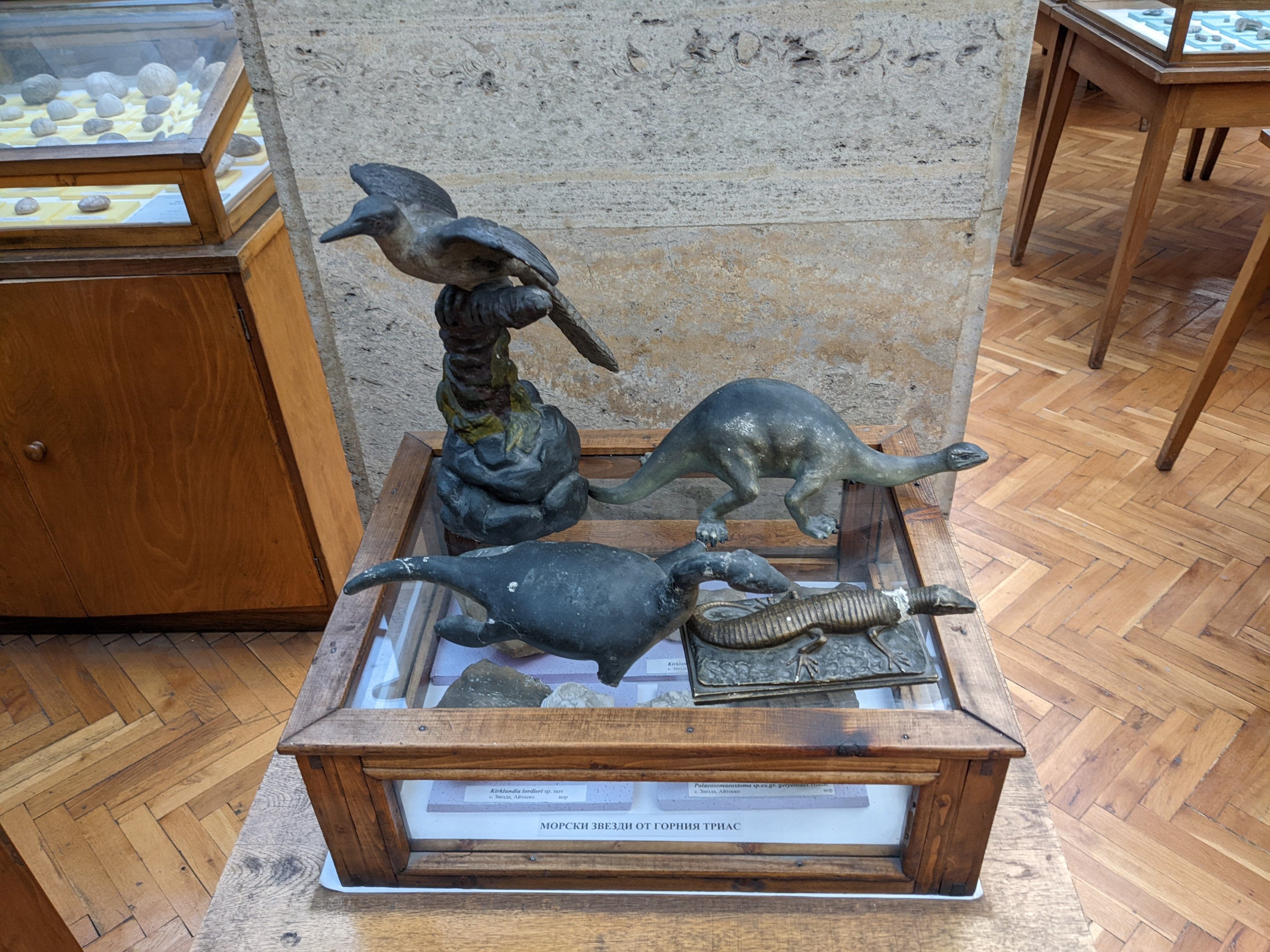
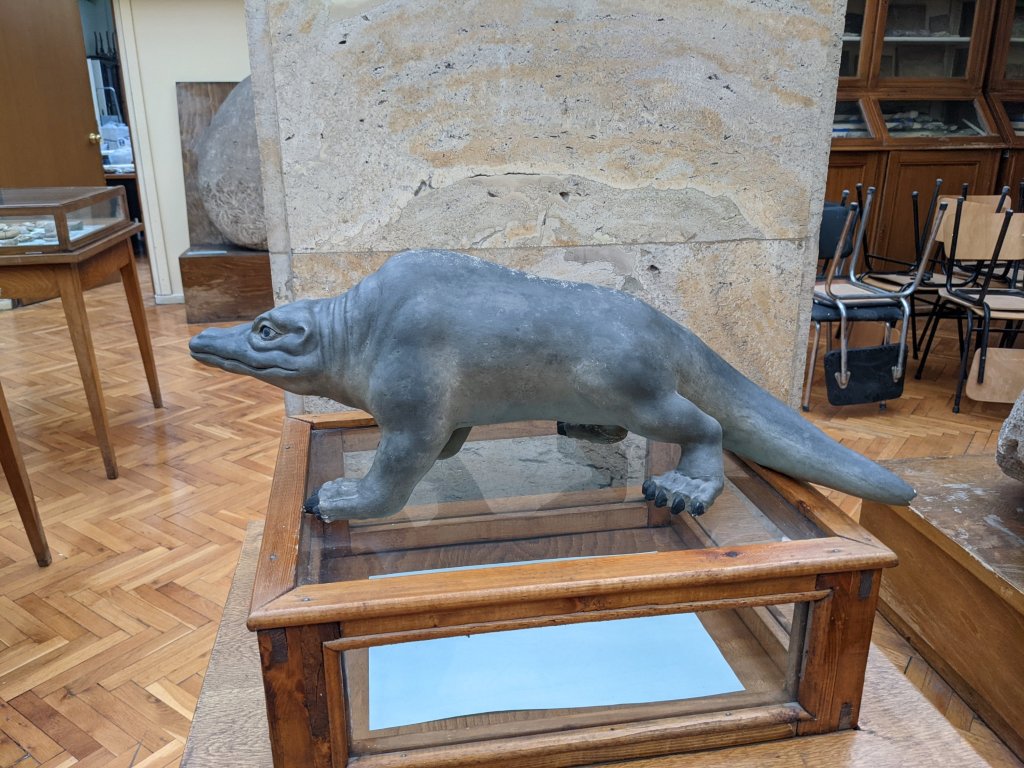
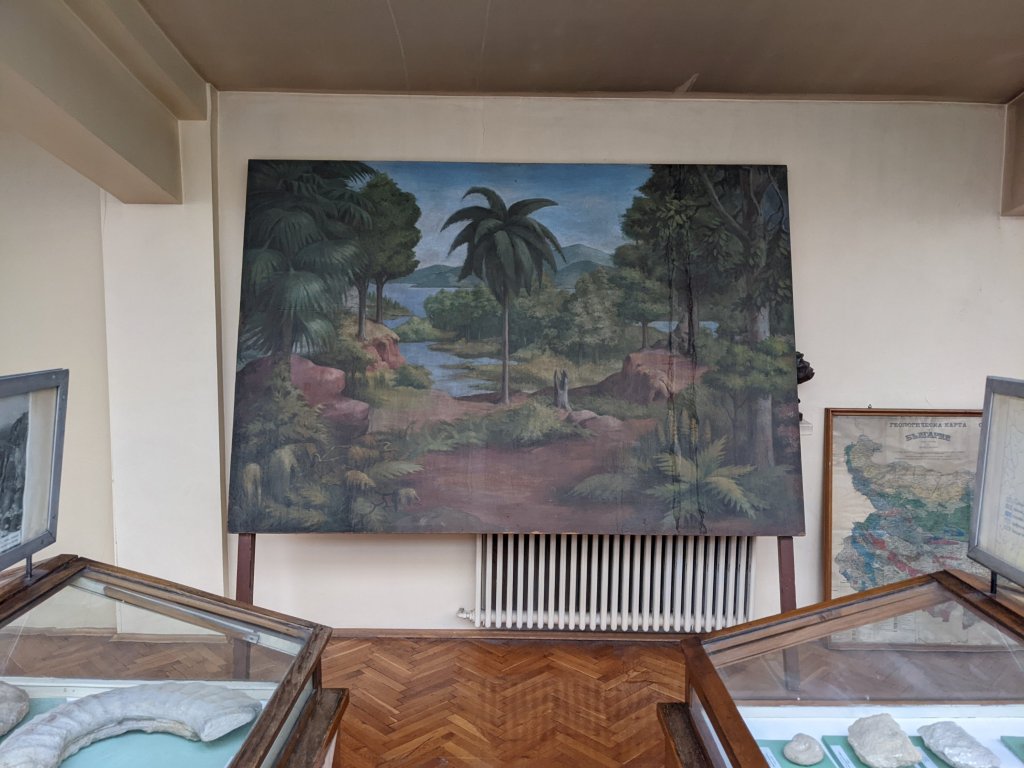
As I wandered around the… very similar displays, a couple of things caught my eye. The museum has some vintage paleo-art on display, although it looks like someone placed it there and forgot to actually frame them properly. I imagine the museum doesn’t have the highest of budgets, but it does feel very… amateur.
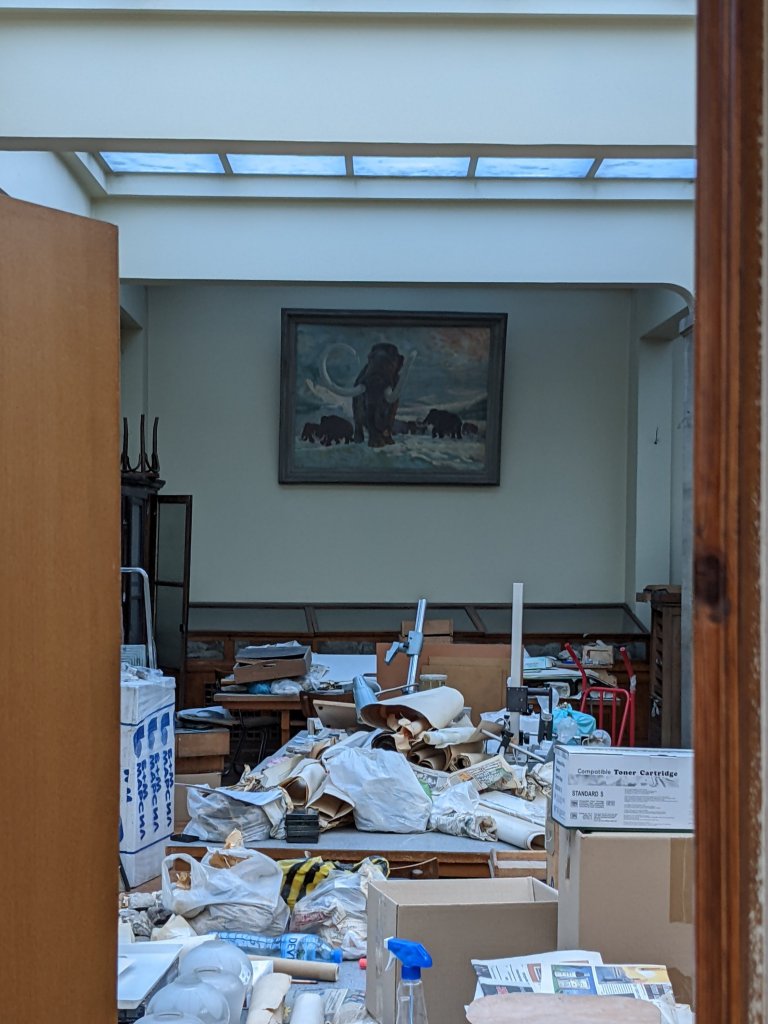
At times the museum feels more like a storage room than an actual exhibition. In fact the door to the storage area was open for some reason – I had a quick peek inside and saw boxes full of even more fossils, plus another awesome mammoth painting. I’d love to find a copy and have it framed in my living room.
I was alone aside from a very bored attendant who didn’t lift her eyes off her phone the entire time I was there, and a researcher who was using one of the corridors as an office for some reason. I didn’t spend long there – Antarctic calendar in hand, I left the University and headed to the Military Museum instead.
Final thoughts
If you’re researching somewhere to visit, and all the webpages you find have a photo of the same exhibit, be cautious – if there was more to see, they’d probably want to advertise that as well. That was the case for the Paleontology and Historical Geology Museum – from the limited English language info I could find, everything focused on the Deinotherium skeleton.
And it is a cool skeleton, don’t get me wrong! But the rest of the museum is just incredibly boring. While it’s free and very centrally located, the awkwardness of navigating the University of Sofia campus means that I can’t recommend this place even as a quick stop during a day in the Bulgarian capital. I’m not even sure if I was technically allowed to visit this place!
It’s a shame because a small, vintage museum on prehistoric life could be a neat little attraction, but everything aside from the elephant on display is so lacklustre that even for hardcore fans of prehistory I wouldn’t advise a visit. However the Plovdiv Natural History Museum is pretty good! Maybelline consider a visit there instead?
Final rating – 1/5 pachyderms
🦣
Useful information
- Entry to the museum is… free? I think? Nobody asked me to buy a ticket or show any ID.
- There’s no English signage at all so if you go then make sure you can identify your fossils lol
- I’m not sure if this museum is wheelchair accessible or not. Like I said, the university DOES have lifts, but I think you need keycards to access them and they did look incredibly snug.
- As previously mentioned, the staircase is separated from the museum by… iron bars? It’s really strange. There’s a door on the left hand side that I was able to open.
- The museum is open on weekdays, but closes from 12-1, presumably so the staff can get lunch.
- There’s no gift shops or cafés in the museum. I think there’s toilets around the campus though and there’s a little coffee machine downstairs.
 ☕🐸Coffee Frog Travel Blog🐸☕
Leave a comment