
I wrote most of this back in October, after coming back from my trip to London, but then forgot all about it – until today, when I found the draft I’d done that was 90% finished! Please enjoy sorry it’s a bit late 🙏
Context!
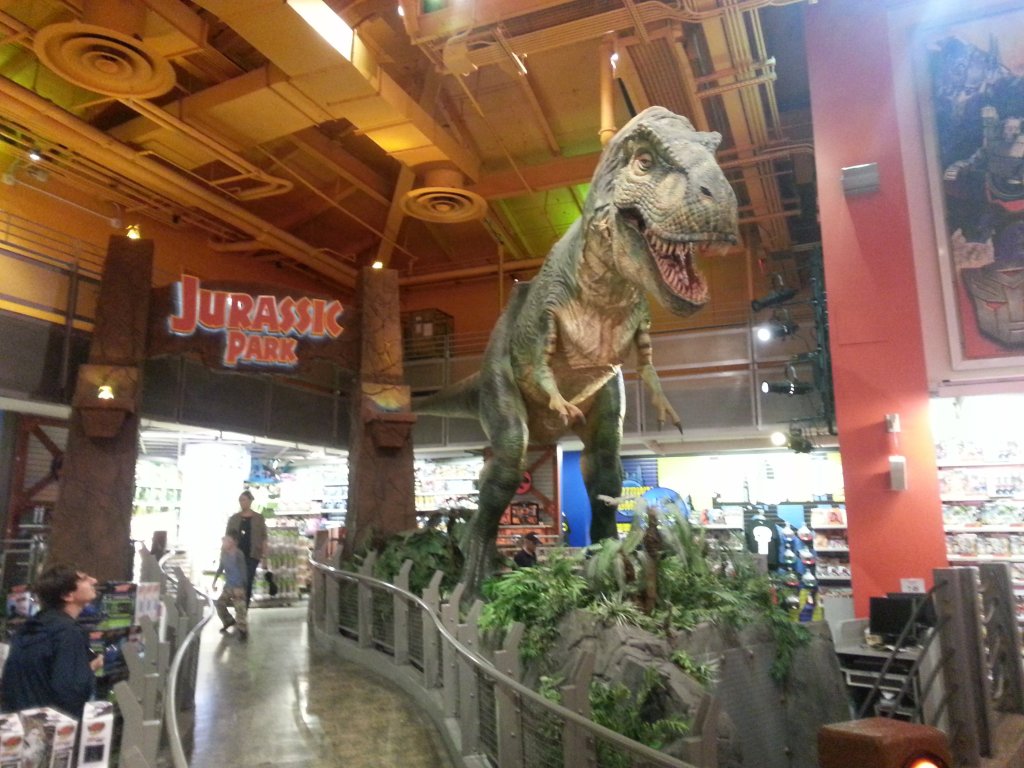
Back in 2014 I flew to the US, and for some reason only gave myself 72 hours for all of New York City befote heading elsewhere. And I didn’t spend my time super wisely. I spent an entire afternoon in Brooklyn Museum why? Why did I spend a good hour in the Times Square Toys ‘R’ Us?? Oh, the folly of youth.
I’ll return one day and actually visit places that are good. But one of the few genuinely interesting places I visited in 2014 was the Leslie-Lohman Museum of Gay and Lesbian Art. I don’t have any photos saved, but as a budding queer I remember finding the place pretty enlightening. I learned that female hyenas have incredibly long clitorises that are nearly indistinguishable from penises – a fact that’s been seared into my mind for eight years now. I think it was a commentary on trans issues or something. I don’t think that’s how human phalloplasty works though.

Anyway I bring this up because worldwide there’s surprisingly few museums dedicated to LGBT history. America has a few and there’s a handful in continental Europe (the first opening in Germany in 1985), but until recently the UK has lacked its own gay Mecca. There’s been lots of temporary exhibits at art galleries and other places, don’t get me wrong, but nothing permanent. UNTIL NOW.
“Queer Britain” is the UK’s first permanent museum dedicated solely to LGBT history, opening up properly earlier this year after a series of pop-up events. I’m not sure why it took so long – we’ve had equal marriage since 2014 and we have gay villages across the UK – but Queer Britain is the first place to actually stake a claim as an actual museum dedicated to non-straight people. But what is it like? I went to have a looksie myself 👀
What it’s Like
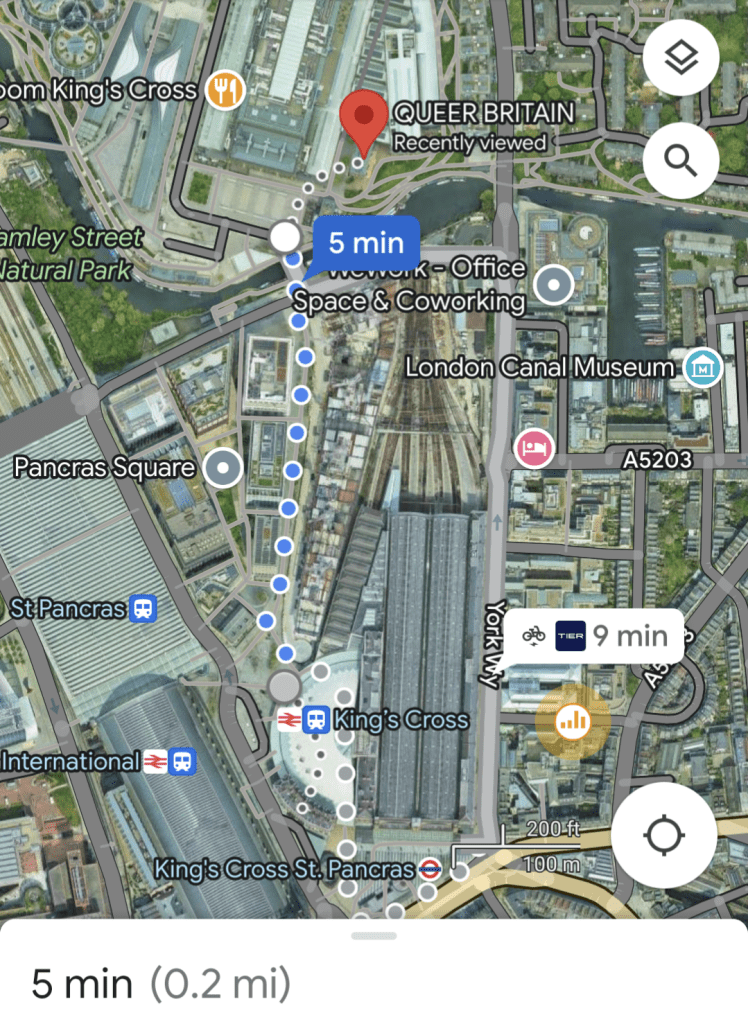
Queer Britain is so new that, when I tried to find it on Google Maps, the directions weren’t correct and I got a bit lost. Fortunately they’ve fixed it now – as you can see it’s very centrally located, literally right behind King’s Cross station.
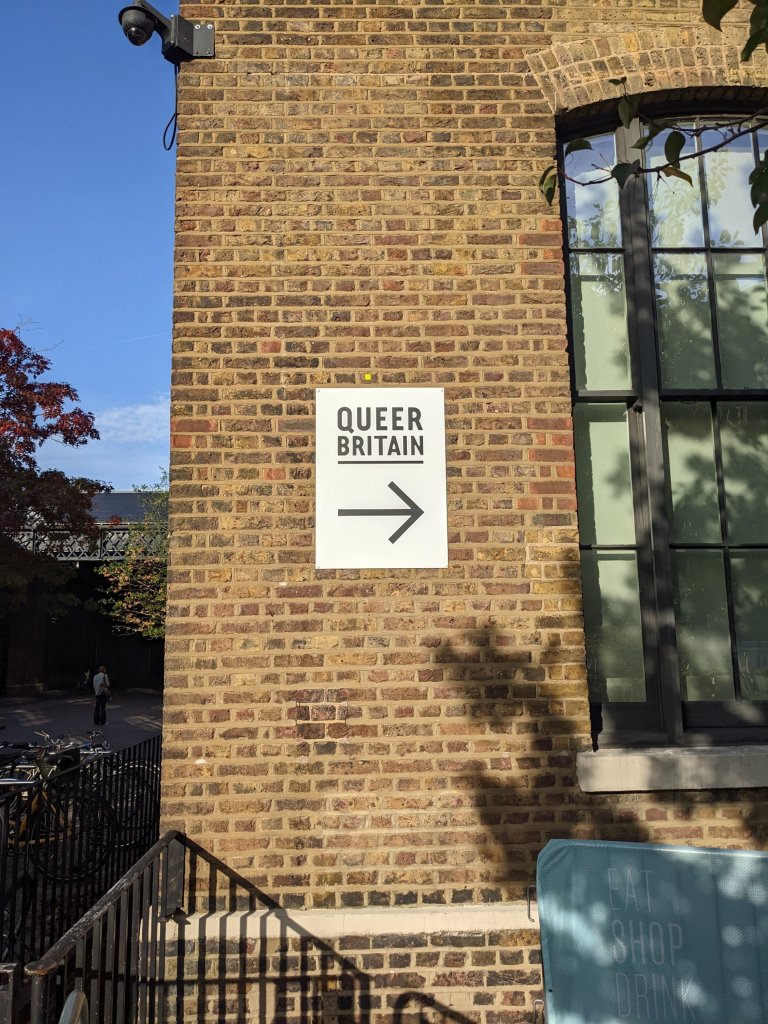
I wandered into the gentrified former warehouse area and was pointed in the right direction by some helpful signs. When I later went to tag my photos on Instagram to Queer Britain, I couldn’t because they weren’t yet registered or whatever. What I’m trying to say is Queer Britain is super new so it might take a minute to actually find the place.
So, Queer Britain advertises itself as having four galleries, and it does – but three of them are really small. I’ll mostly be talking about the main exhibition. The other three galleries are basically small rooms off to the side. The first one, for example, has a small exhibit on about how queer folk experienced the pandemic. There was another room showing an experimental film about lesbian bars, and a room with some photography on display.
To be honest I didn’t find any of these displays particularly interesting. In fact, I’m not sure if they can do much at all in the tiny rooms they have – I think I’d rather they just expand the main exhibition into these little areas? But then I’m also aware that floorspace in this area of London is limited so they’ve probably taken what they could get. Hopefully in future they’ll find a better use for these areas.
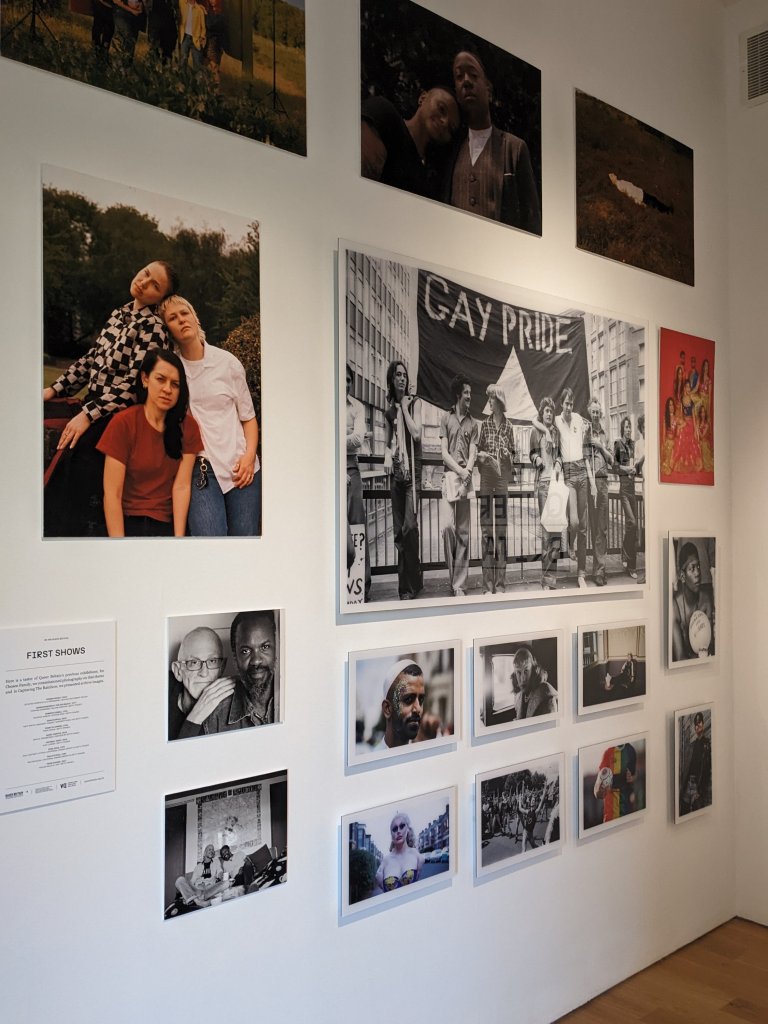
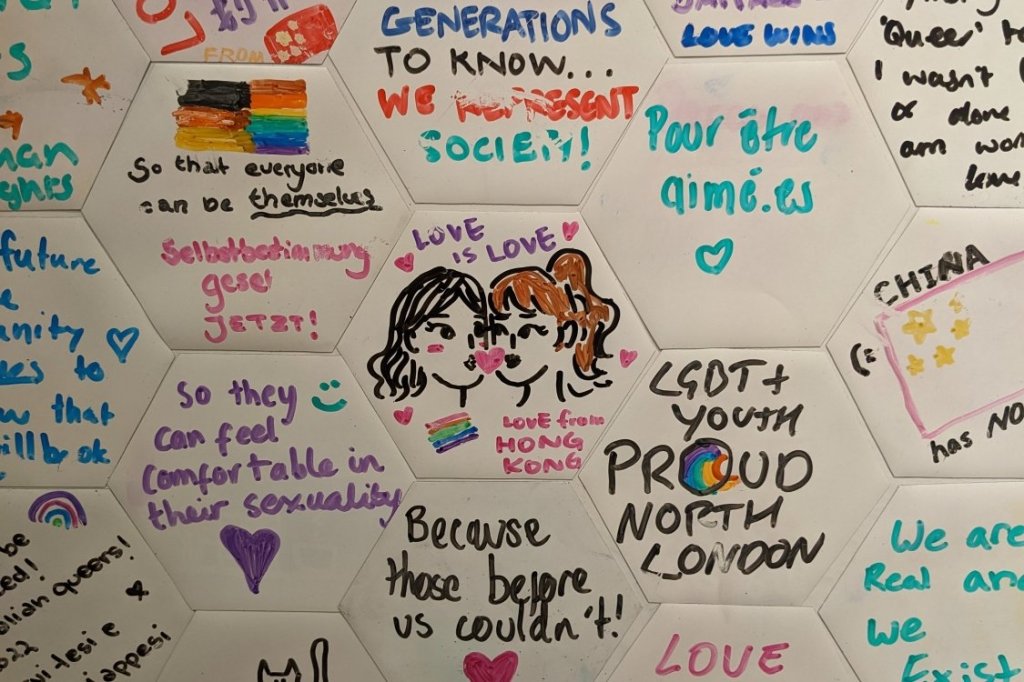
But the main exhibition is where things get better – it’s definitely the main thing they focus on in all the marketing. This, like the rest of the museum, is pretty small, but it’s big enough to have a cool array of exhibits on display!
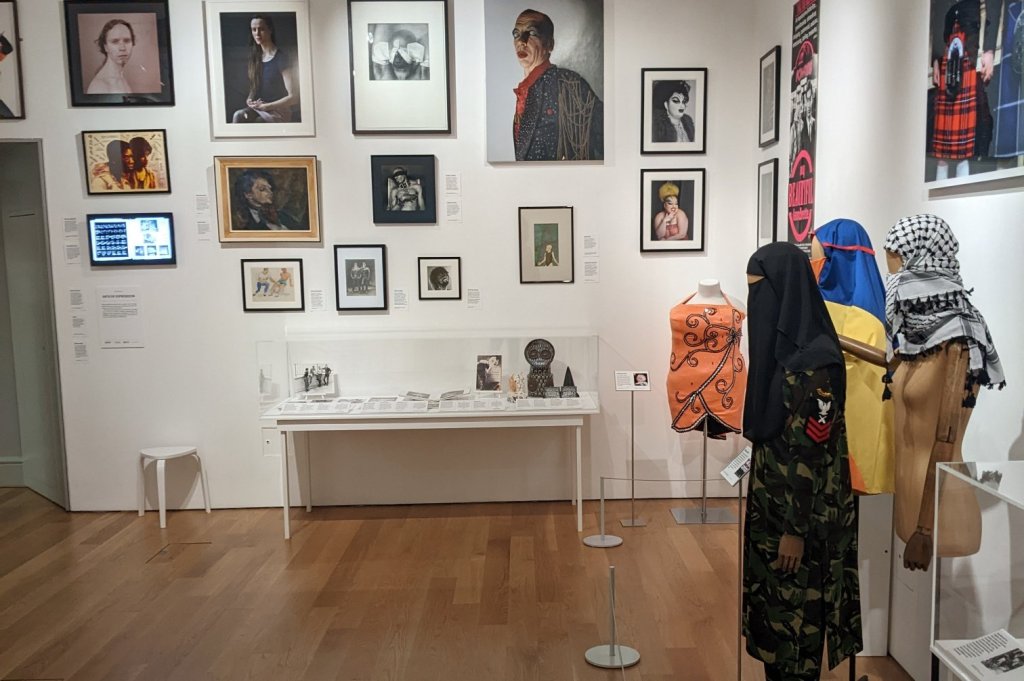
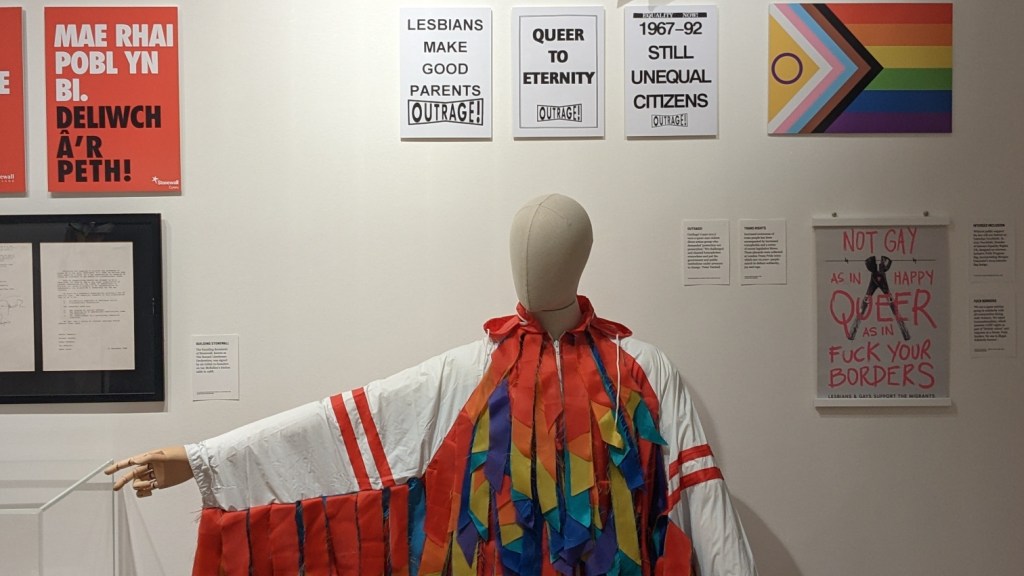
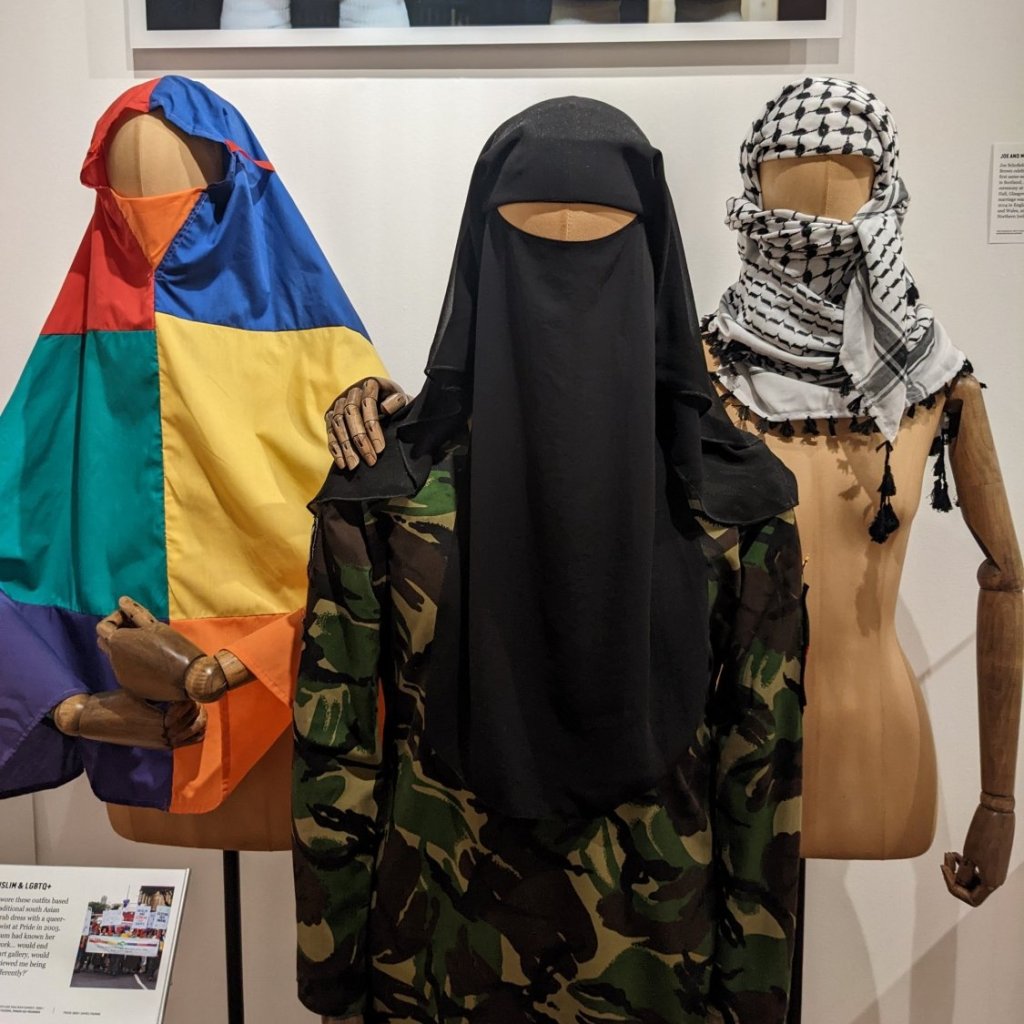
Much like the Vagina Museum – which I visited a few hours before Queer Britain – the exhibition focuses on covering as much ground as possible in the tiny space it has. My eyes were immediately drawn to this rainbow hijab – it’s a costume from a landmark 2005 pride parade for queer British Muslims.
The stuff they have on display varies wildlife and I spent ages poring over everything in the main gallery. They’ve really gone for quality over quantity – every single thing had some thought put behind it. One item I really found delightful was this lesbian comic book, “Dyke’s Delight“, published in 1993. Although it’s barely thirty years old, reading it today makes it clear just how insular the lesbian community was at the time. Today Twitter is full of web comics about LGBT issues (I’m subscribed to like forty of them) but in the 1990s it was a lot harder to find gay-friendly comics. I’d love to read a copy of this old lesbian comic someday.
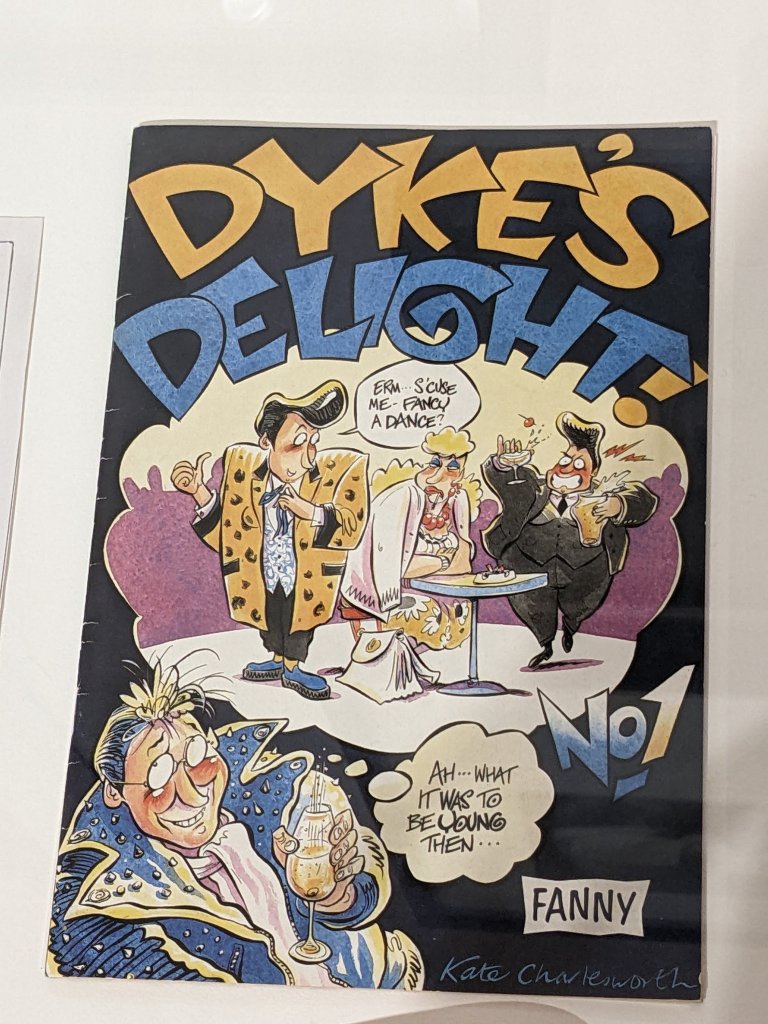
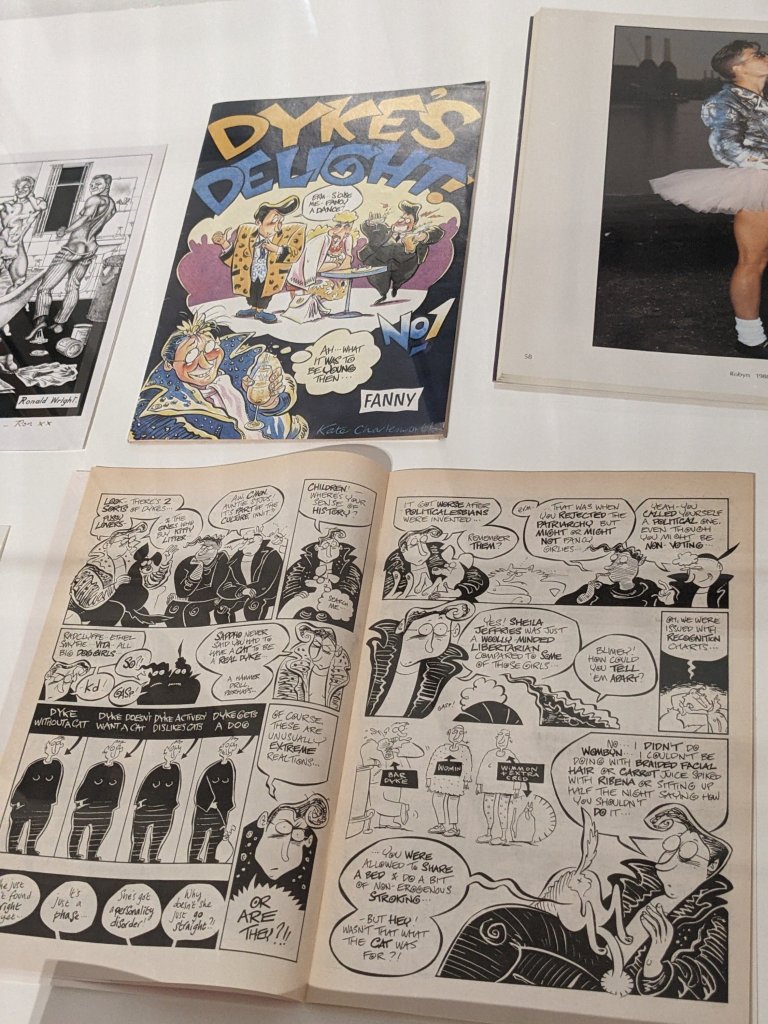
There’s some more traditional historical exhibits too. Probably the most impressive artifact Queer Britain has gotten ahold of is Oscar Wilde’s prison door, from when he was incarcerated after his famous obscenity trial. Most of the exhibits on display are fairly modern, but I appreciate the curators making an effort to emphasise that queer people aren’t a new invention.
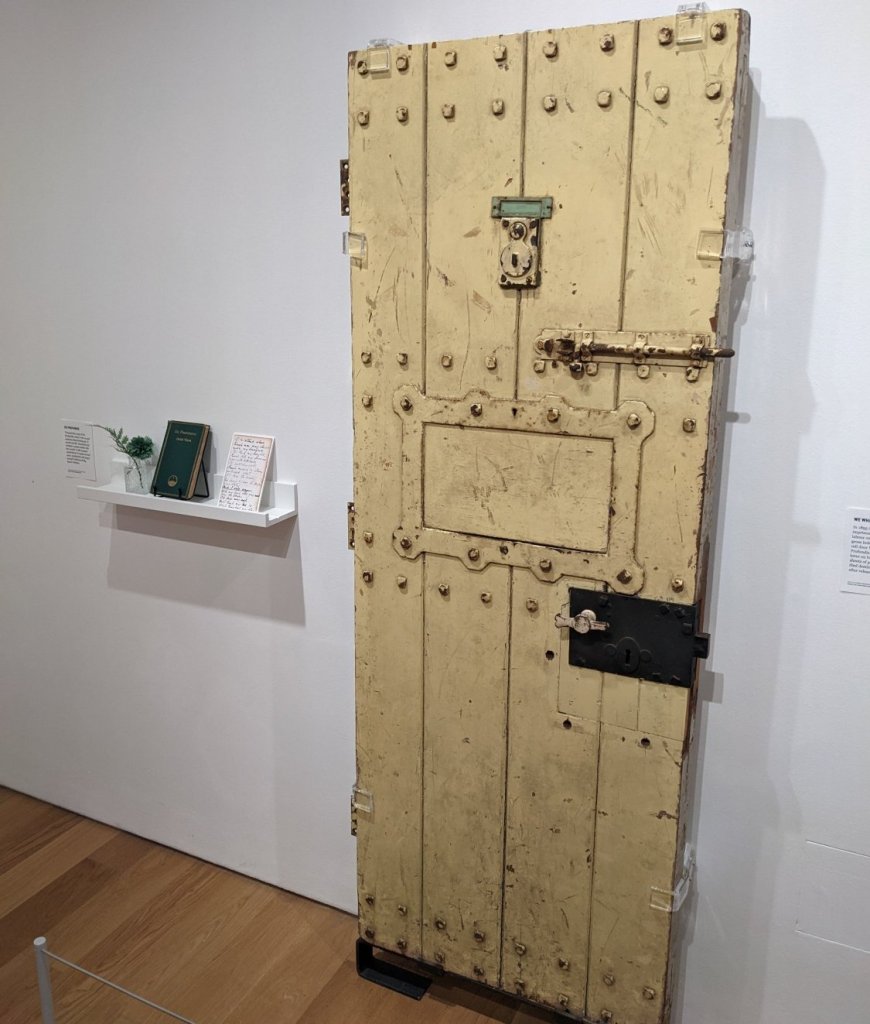
I did appreciate how explicitly political the museum gets. A lot of LGBT history content online tends to focus on America – Stonewall, the Lavender Scare and so on. Most of the exhibits focus on the British fight for equality, and focuses on the first British pride protests in the 1970s. It’s genuinely heartwarming watching footage of some of the very first pride protests, while also making it clear that doing so publicly was very risky. It took immense bravery to openly come out as a homosexual in 1972.
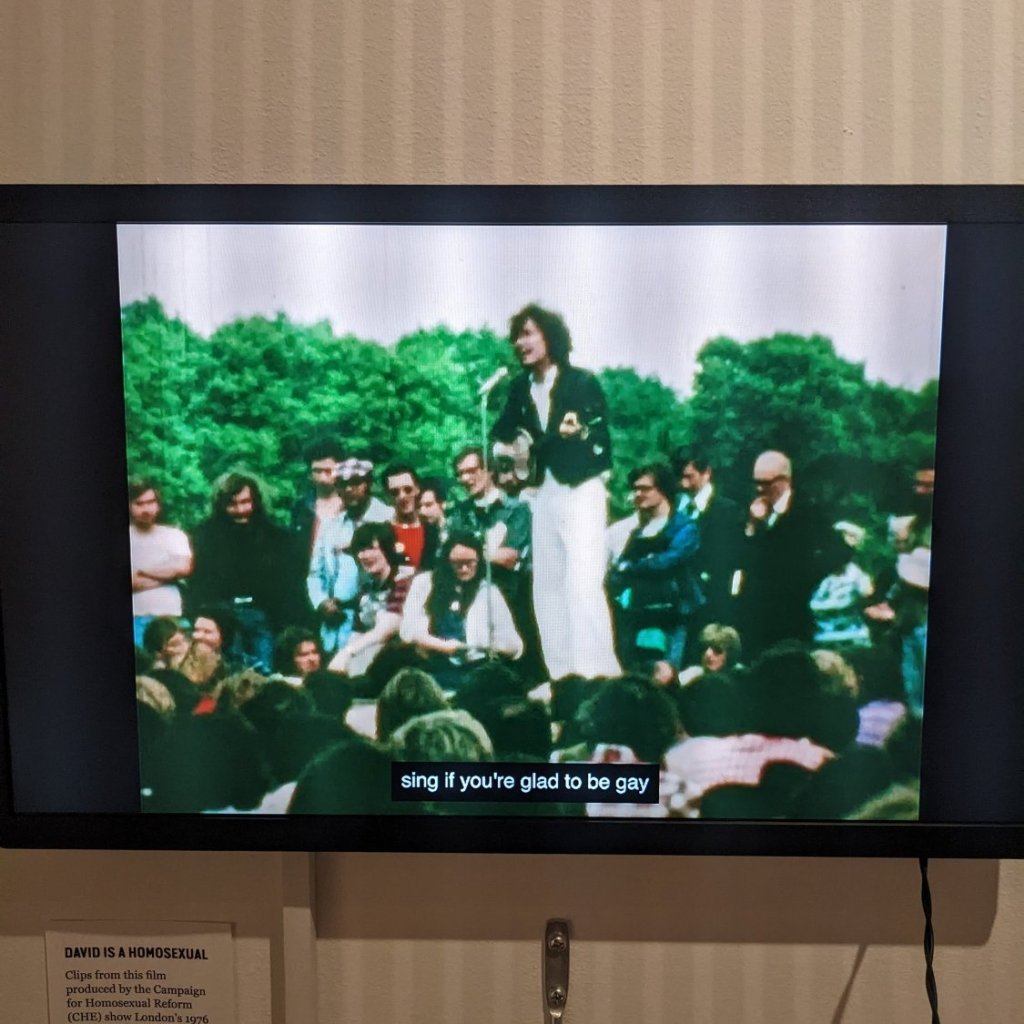
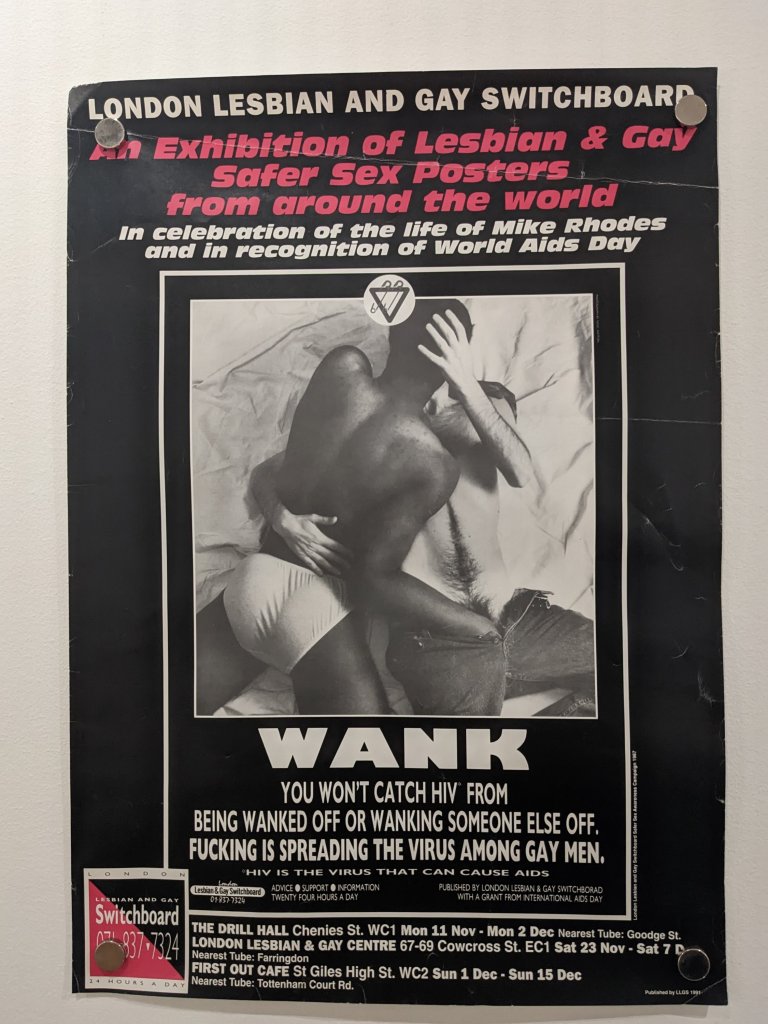
Being a history museum, a lot of the history covered is recent but still brutal – there’s ample warning if a particularly sensitive subject is covered, but it’s impossible to talk about queer history without the violence and discrimination the community has faced (and still does face). For example, there’s a display of safety posters from the AIDS crisis. Some of them are heartbreaking, while others have some pretty dark gallows humour in how blunt they are.
As I mentioned earlier, the exhibition is small, but it’s definitely one where I read EVERYTHING before leaving – I think I was in there for a good hour or so. I get bored by some museums that get bogged down in details, but not this one. It’s a museum that respects your time.
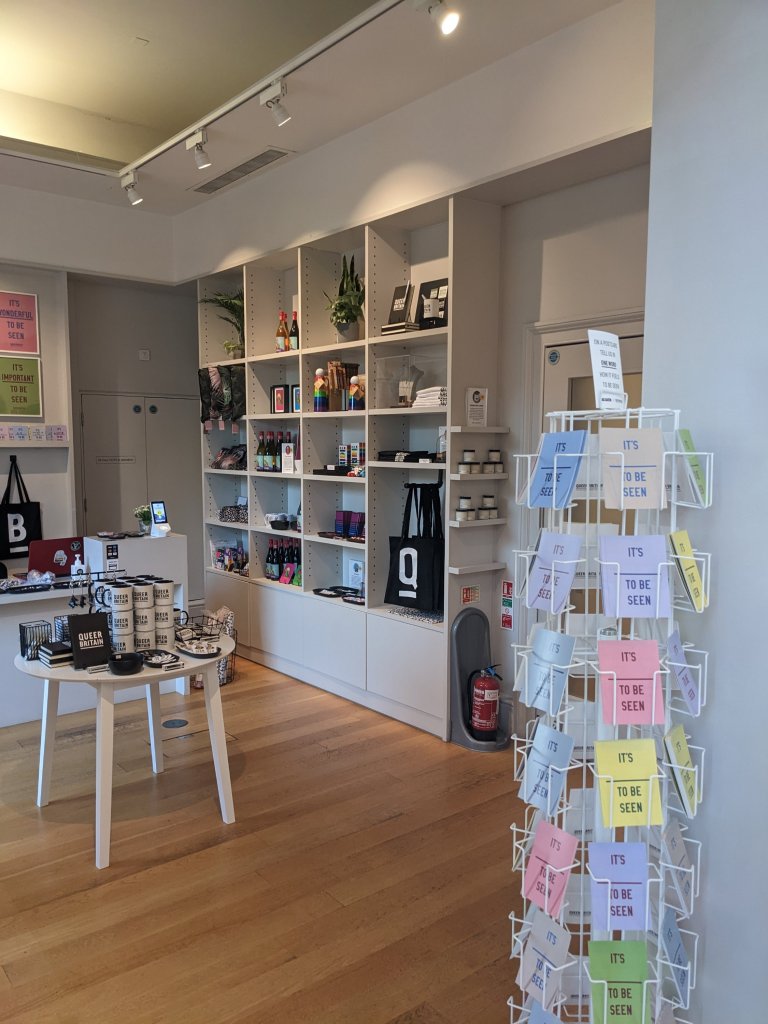
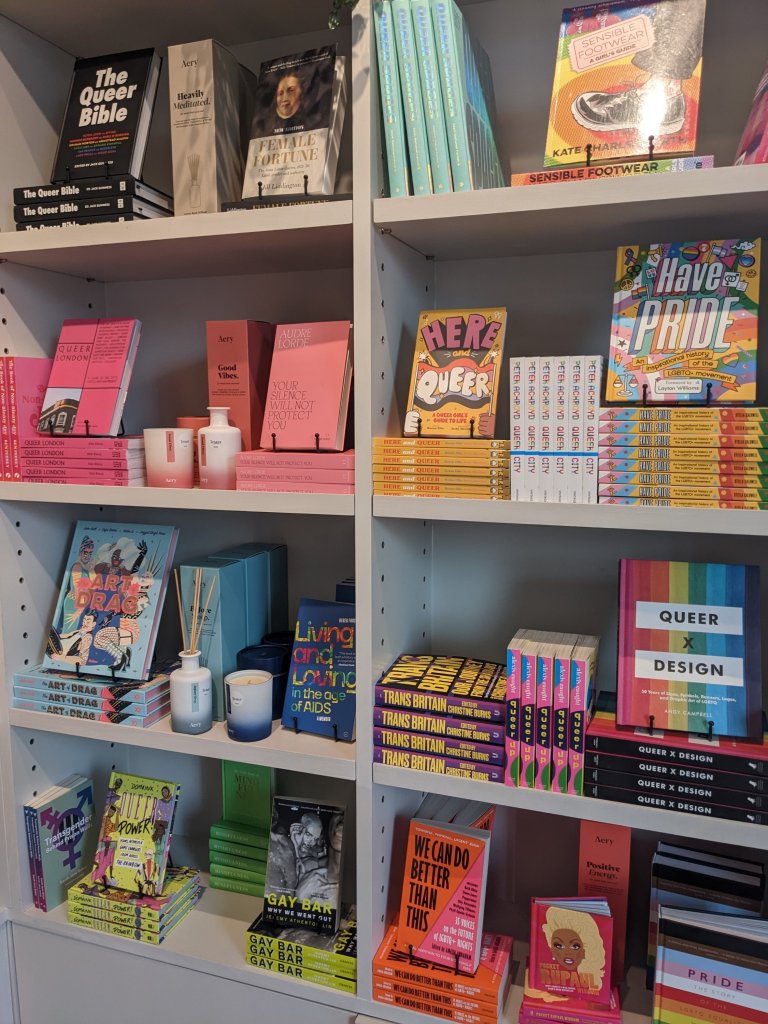
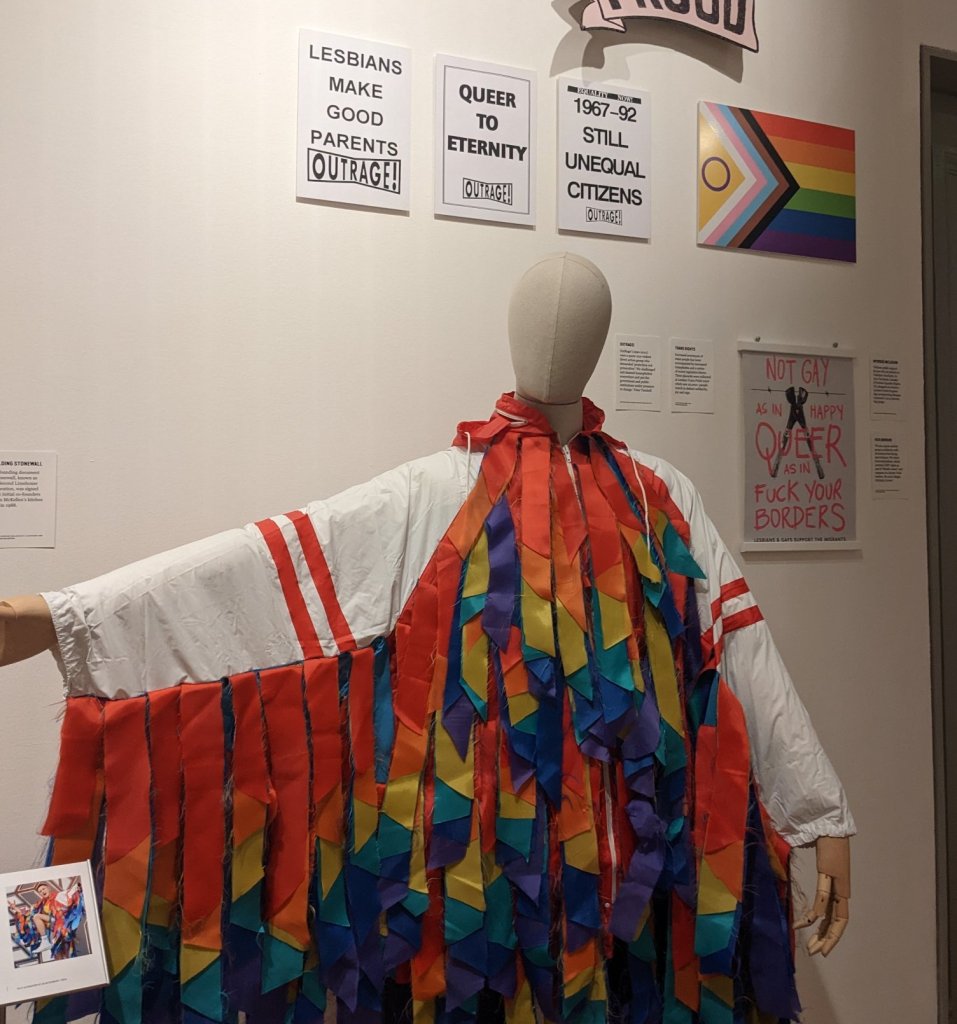
Similar to the Vagina Museum, the Queer Britain museum has a substantial gift shop with a lot of LGBT literature to buy. Inspired by the punk jacket I’d seen, I picked up some bands and badges. I’d seen a book about gay soldiers in World War 2 as part of an exhibit and they didn’t have it in stock, but they did point me towards “Gay’s The Word”, a nearby LGBT bookshop that’s absolutely wonderful but probably deserves its own blog entry. It’s my blog. I can write about bookshops if I want!!!
I left feeling more emotional than I do with most of the places I write about here. This will sound trite, but if I’m honest – it’s the sort of museum I didn’t fully appreciate we needed, until I saw it in person. It made me feel a genuine sense of pride. Which, I suppose in a museum about the gay rights movement, makes sense 🌈
Final thoughts
I’ll be honest and say that Queer Britain isn’t the British-Museum-but-for-gays that I want it to be, but it’s just starting out. The exhibition I’ve wrote about here is the inaugural one – from the website I get the impression they’re planning to expand. Perhaps one day we’ll get the sort of place you can spend a whole day immersed in exhibits about trans activists in Latin America or gay bars in Weimar Germany. But Queer Britain as it is now is a good starting point.
Still, if I had any misgivings about Queer Britain, I’d say that at times it felt oddly… corporate. The museum signed a two year sponsorship deal with the beer company that owns Guinness before it even opened. Its lead sponsors are an insurance company and Facebook’s parent company Meta. Between that and its location in a very gentrified area of London it does all feel a bit commercial. There were no RuPaul branded exhibits about how fracking’s actually great for the environment or whatever but it does make me worried for Queer Britain’s future.
But I should also add that the museum is free, and according to its founders, always will be. It does have a bit of a “rainbow capitalism” feel to it, but as it stands Queer Britain is still a cute and powerful resource for learning about British LGBT history. I’d strongly recommend a visit and I fully expect it to become super popular in a few years – so visit now, just so you can say you visited in its early days.
Helpful Info
- Queer Britain DOES have gender neutral toilets!!! Imagine if it didn’t lmao
- The museum’s free to get in and there’s no paid temporary exhibits yet. Their website implies that they’ll change exhibits around from time to time – this blog post reflects on what they had on display in October 2022.
- As mentioned previously the museum is super close to King’s Cross St Pancras station, so you could definitely have a quick look round before your train.
- It’s small so there’s no café but you’re in central London there’s 10000 places to get a latte come on
- I don’t recall there being anything too explicit on display but bear in mind that LGBT history is pretty un-family friendly at times. Grandad might get a bit flustered.
 ☕🐸Coffee Frog Travel Blog🐸☕
Leave a comment