
Context!
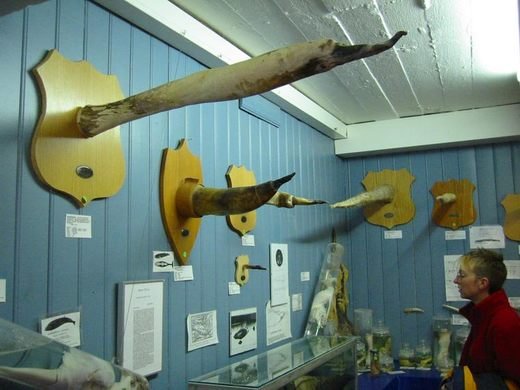
I read a book earlier this year – The Museum of Whales you Will Never See, by A. Kendra Greene – about unusual museums in Iceland. The first chapter is dedicated entirely to the Iceland Phallological Museum, which as you may have guessed is dedicated entirely to the penis. At first glance, you’d naturally assume it’s a gawdy tourist trap, like the Sex Museum in Amsterdam or the Sex Machines Museum in Prague that we may or may not be planning a visit to soon.
But A. Kendra Greene emphasised that the Phallological Institute is genuinely there to educate. There’s a display with the male genitalia of every animal found in Iceland. The curator has spent decades collecting penis-related crafts from around the world. There’s an entire documentary on the curator’s quest to obtain a genuine human penis specimen. The museum is definitely on my list if I ever end up in Reykjavik.
One point Greene in her book made was a lack of an equivalent Vagina Museum anywhere in the world. She points it out as an example of the hypocrisy between how we treat (typically) male and female genitalia. Teenagers draw dicks on their school desks, but how often will they scrawl a vulva on someone’s forehead? Hen dos will bring out inflatable willies, but it’s hard to imagine even the crassest stag do from planting a plastic vulva on the soon-to-be groomsman. But now there’s a saviour.

Helping to correct this societal imbalance, the Vagina Museum opened in London in 2019 (moving to their current premises earlier this year). This isn’t editorialising on my part – their official website names the Iceland Penis Museum as their inspiration. Naturally, I popped down one morning to have a look.
What it’s like
London’s Vagina Museum is a short walk from Bethnal Green tube station, down an unassuming alleyway. The park nearby is really cute by the way – look out for the parakeets 🦜
Something I found a bit strange is that facemasks are still required – not recommended, but mandatory – in the museum itself. I had one on me, and they’ll give you a free mask if you don’t have one – but it’s the only place I’ve visited in months that literally required you to mask up. It hid my lack of make-up though so it worked for me 🤷🏻♀️
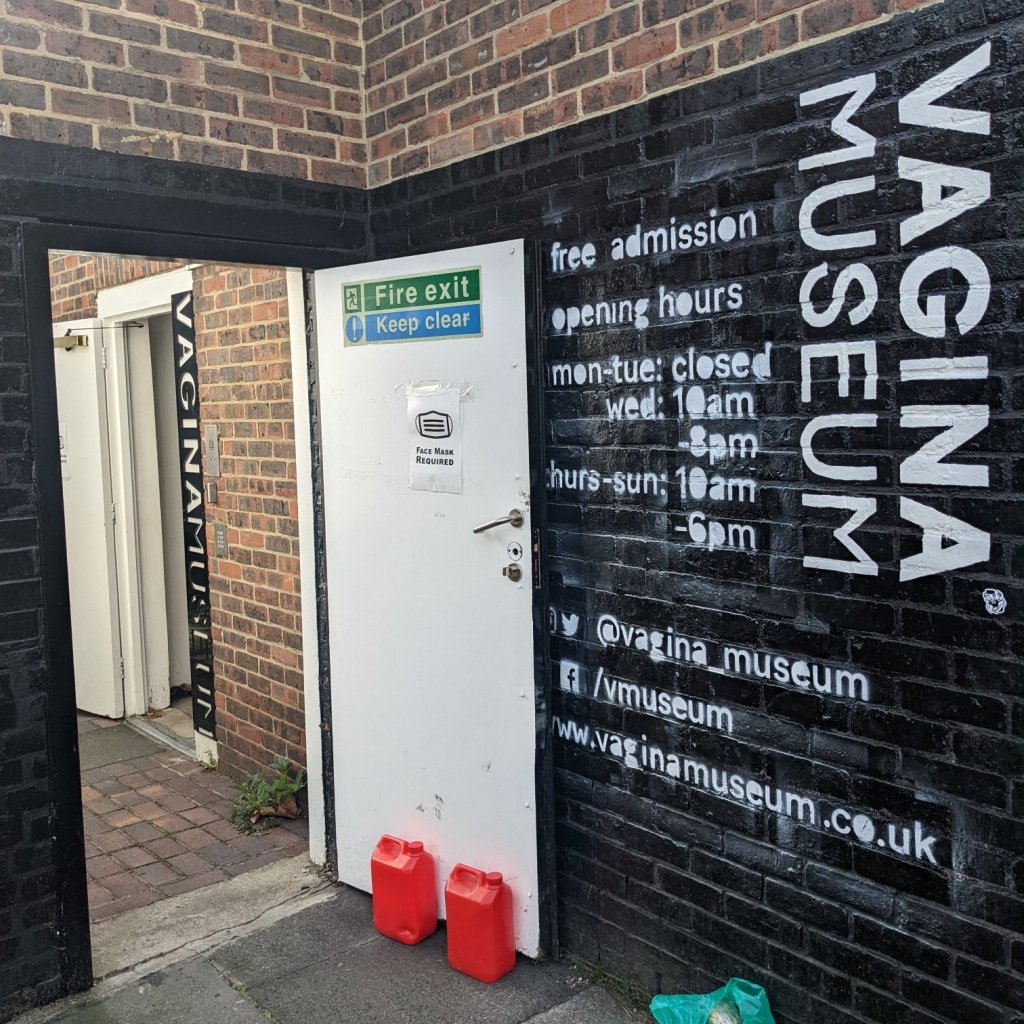
From the second I walked in, it was clear that the Vagina Museum is on the small side. This isn’t the Smithsonian. There’s a few of these ’boutique’ museums in London – where space for a huge institution just isn’t feasible – that take up a tiny space instead and dedicate it to a niche subject, like queer history or anti-neoliberalism.
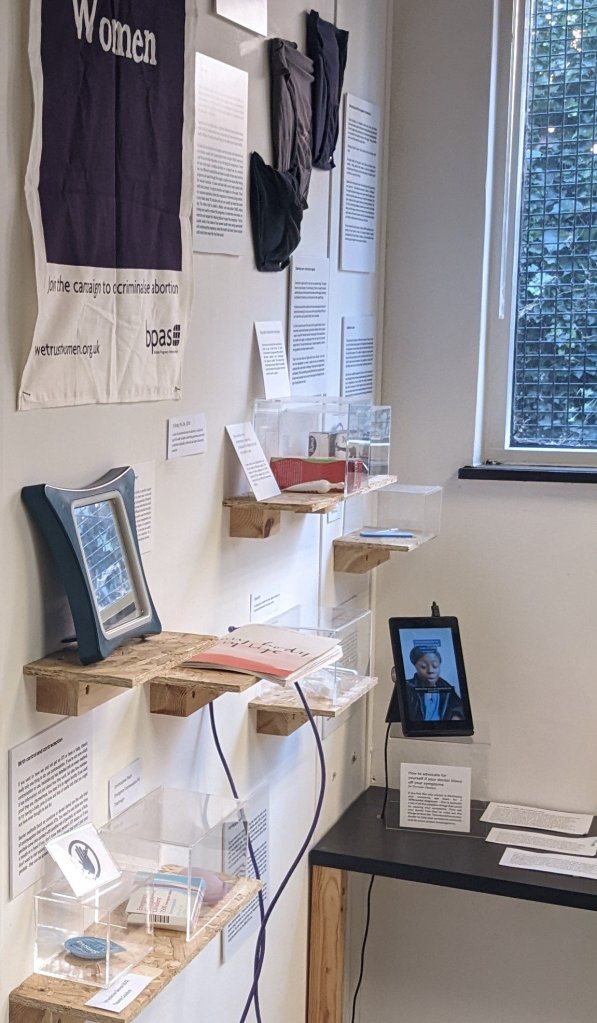
A really strange thing about the Vagina Museum permanent exhibition is tiny – it’s a single cupboard-sized room off to the side. It’s dense though – the micro gallery covers a lot of topics related to “gynaecological anatomy” (as they put it). There’s a looping video talking about how to get doctors to take your vagina problems seriously. I was fascinated by the vagina cleaning products on display, alongside signs REALLY encouraging you not to use them if you don’t absolutely need to. They pack a lot into a very small space.
The most striking feature is the “Wall of Vulvas”, a photo display of dozens of genitalia that’s meant to destigmatize variation in how your privates might look. It’s actually pretty powerful and gives an instant impression of just how… varied they can be. Yours is probably normal! The display is a lovely idea and it’s great that so many young people will see it, although posting a photo would probably break WordPress’s content guidelines so you’ll have to take my word for it.
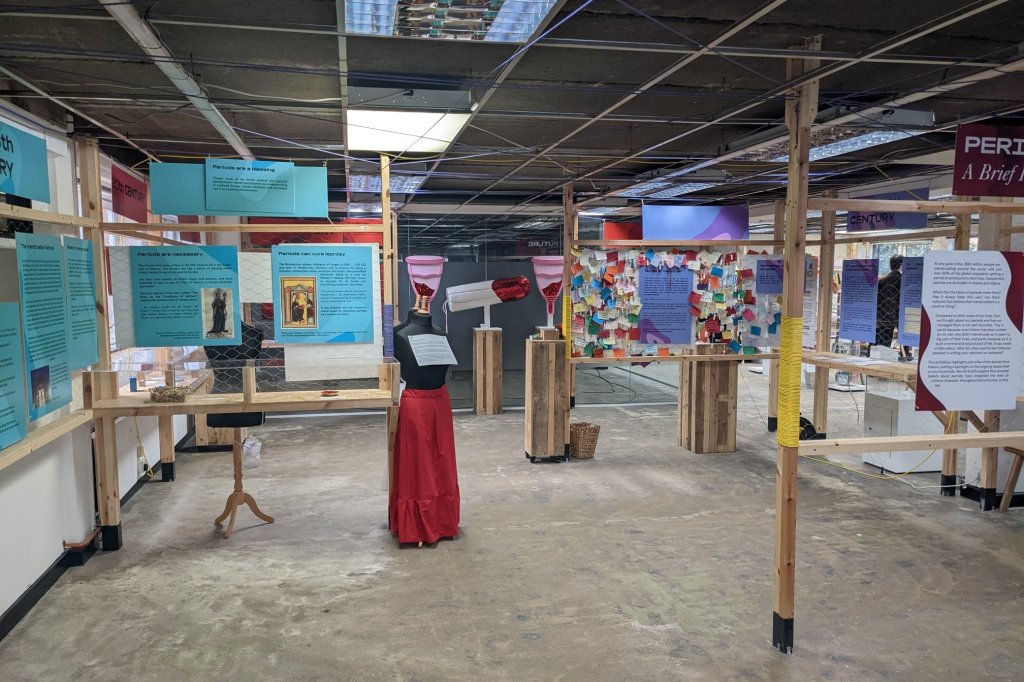
But let’s get to the meat of the exhibition. For some reason, most of the Vagina Museum is taken up by its temporary exhibition. I visited in October 2022, and was able to visit “The History of Periods”. It might have changed by the time you get there so this whole blog post could be useless sorry!!
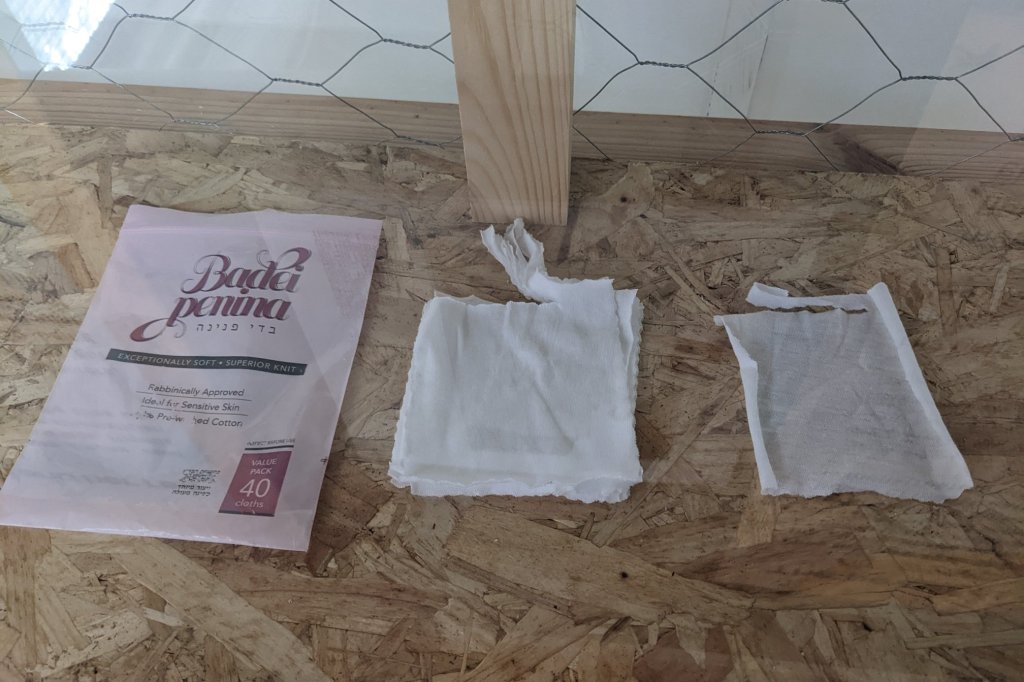
So let’s talk about menstrual history! The exhibition is displayed like a timeline, starting in the stone age and ending with new developments like the “Free the Period” movement. If you’re looking for ancient historical artifacts and the like, the Vagina Museum… isn’t really that. But what they do have is actually really insightful. There’s a booklet on display from the 1920s, “Marjorie May’s Twelfth Birthday”, which delicately tried teach girls about periods while not using words like ‘vagina’ or ‘blood’. Later on I learned about ‘bedikah cloths’, used by some observant Jews to determine if they’ve finished menstruating or not.
And as with anything involving our gender and history, there’s a lot about the patriarchy made it worse. I was dumbstruck to learn that as recently as the Victorian era, some (male) doctors viewed menstruation itself as an illness. There’s a photo from only a few decades ago claiming to show how menstrual blood specifically is so toxic that it can kill flowers.
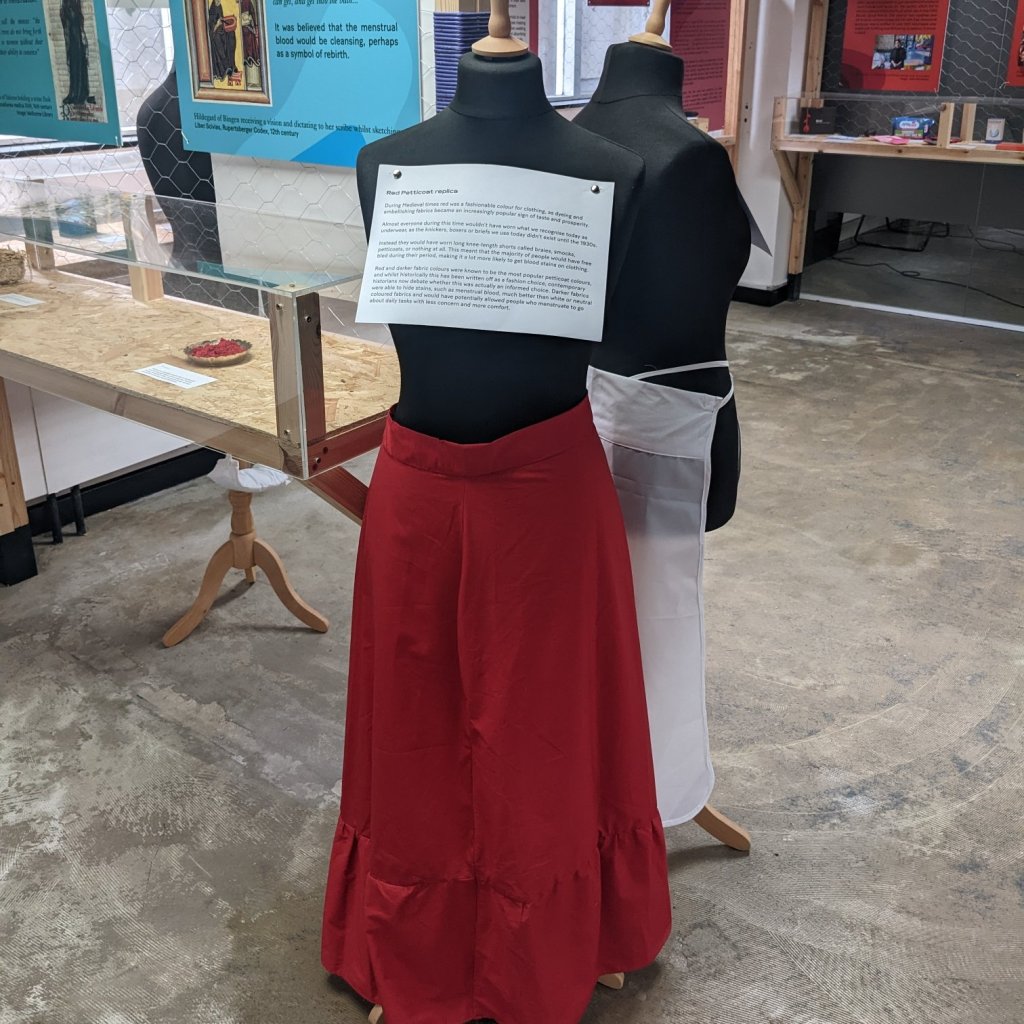
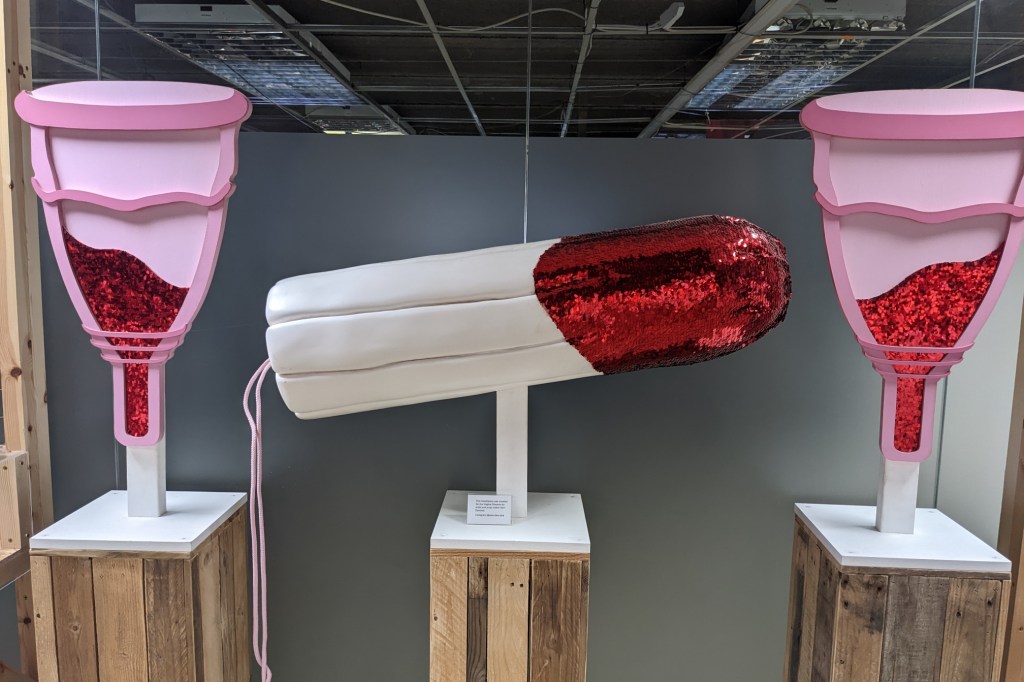
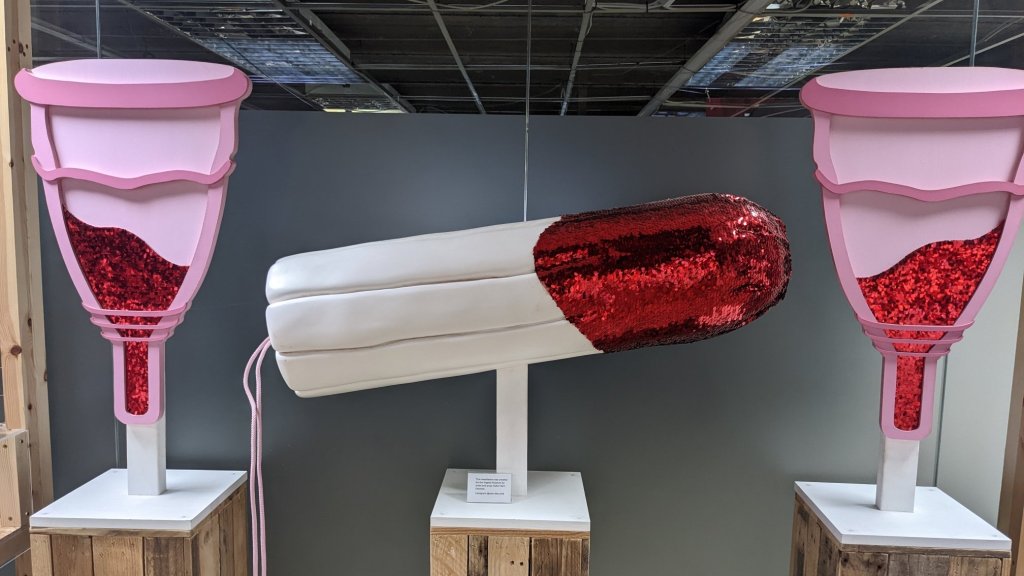
There’s a lot of info-boards, but despite everything the museum is trying to cover it’s not overwhelming. I learned so much! Did you know that a 22,000 year old bone carving found in the Congo is believed by some archaeologists to be a menstrual calendar? Or that in the 18th century a woman used her menstrual cloth to prove she couldn’t have murdered someone? It’s wrapped up with some insightful discussion about the modern movement to make periods less of a taboo subject. Oh and there’s a huge used tampon and a pair of menstrual cups. It’s small but I spent ages reading all the information, something I never do these days.
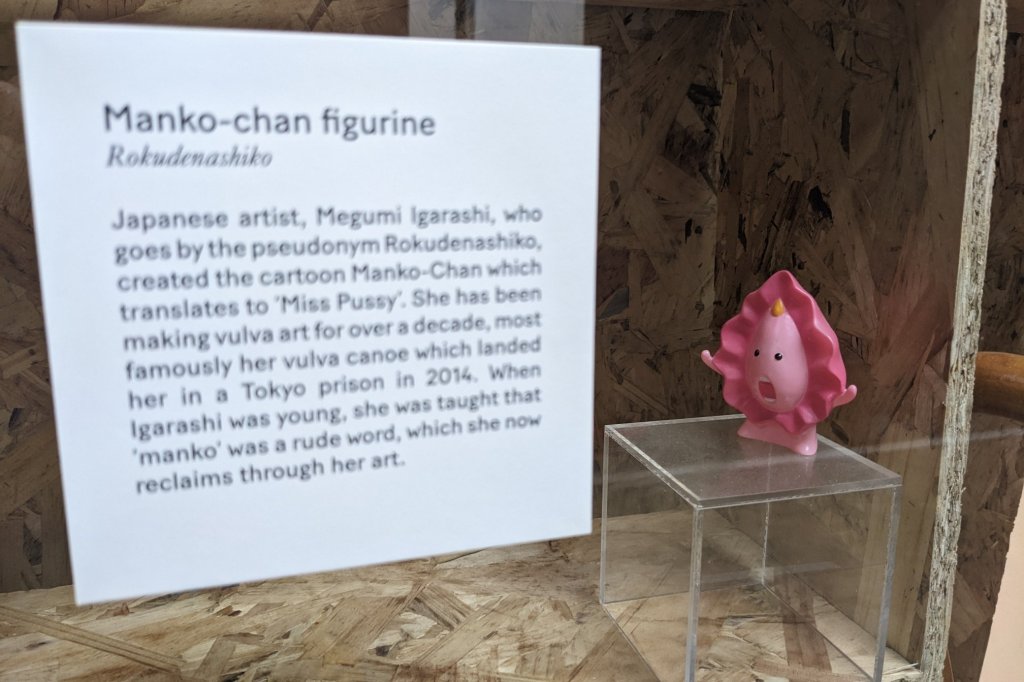
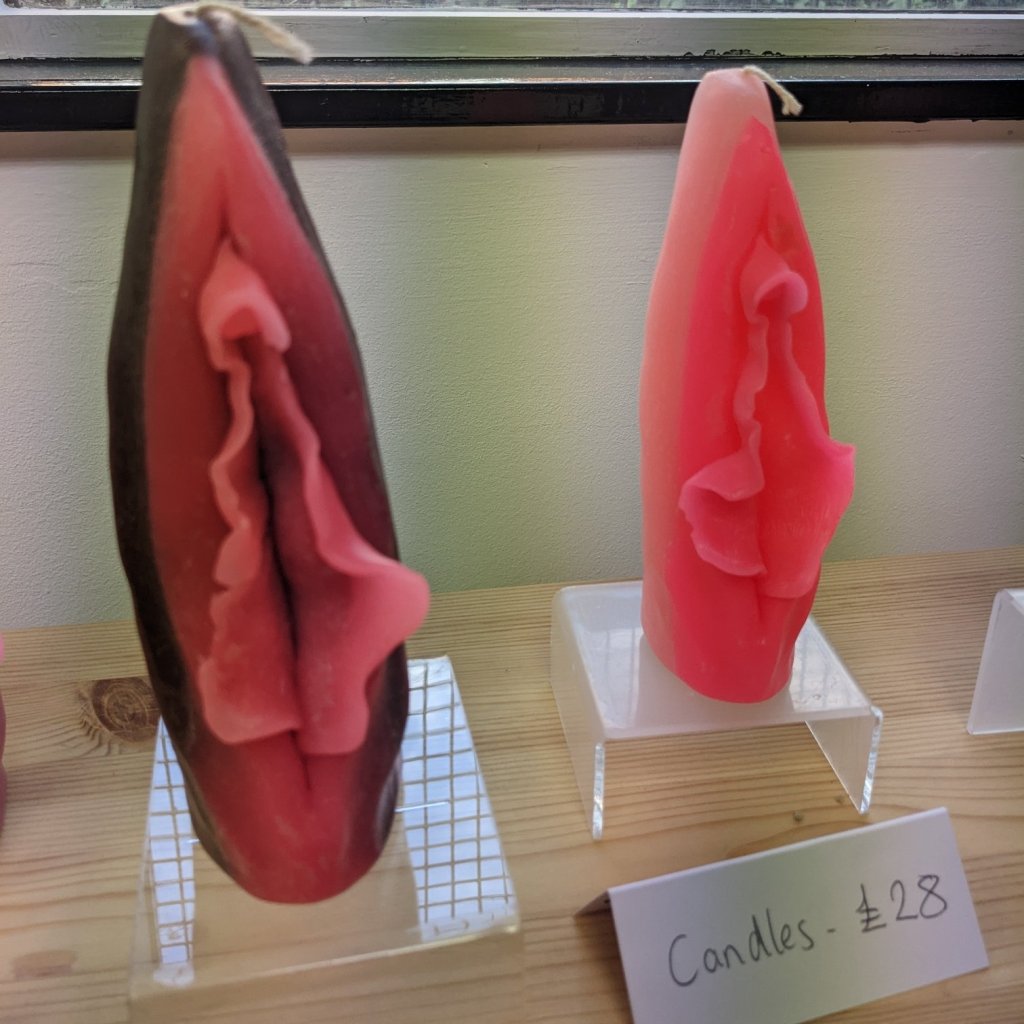
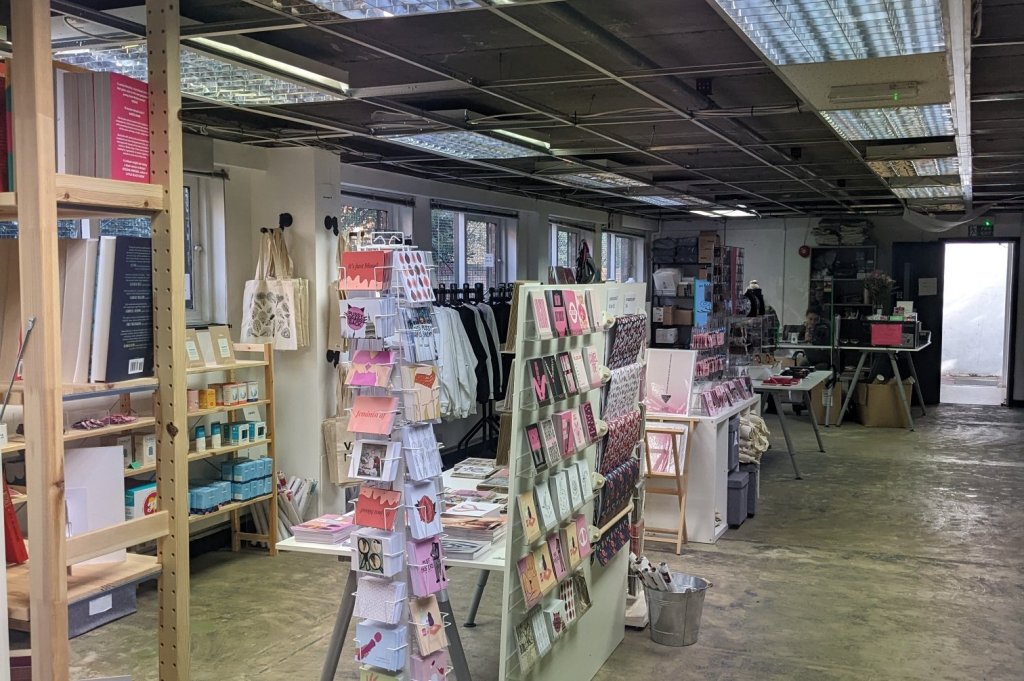
As mentioned previously, the museum is very small – half an hour is plenty of time to see everything I mentioned. But that’s not all though! The museum is accompanied by a substantial gift shop – there’s the typical girlboss™ feminist patches and books about suffragettes, but it’s overshadowed by the Aladdin’s cave of gynecological merchandise available to purchase. Vagina earrings! Used tampon stickers!! Handmade vulva candles!!! I respect that they got weird with the stuff in the shop. It’s like if Ed Gein had an Etsy page.
Final thoughts
The Vagina Museum itself is a bit threadbare, to be honest, but I do get the impression that there’s plans to expand. There’s a currently empty room that’s earmarked as a ‘community gallery’. I saw plenty of people coming and going, mostly students with better eyeliner than I will ever achieve. The museum staff seem eager to start conversations, too. There’s lots of opportunities to leave your own thoughts about issues involving vaginas – I really liked this display board that provides a box of tampons, and encourages visitors to incorporate them into their message. It’s a really cool idea to destigmatize menstrual products in this way.
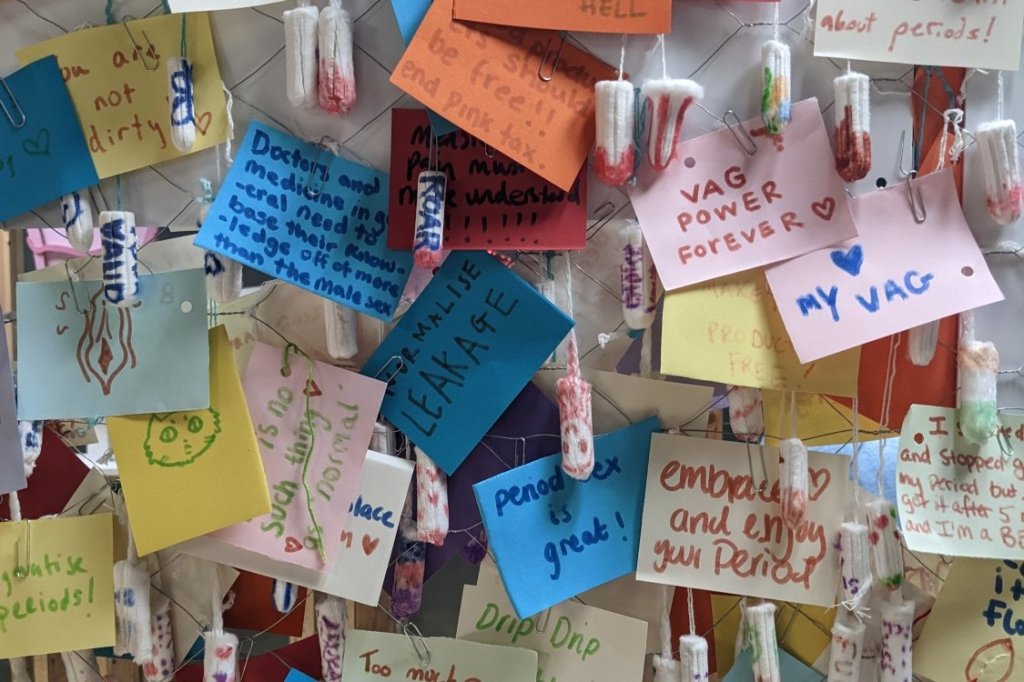
In fact I think destigmatization is the main reason the Vagina Museum exists. While its Icelandic equivalent is mostly an amusing distraction for foreign tourists (regardless of the curator’s intentions), the Vagina Museum seems dedicated to educating the general public about everything from consent to hygiene to how to talk to your doctor if they’re being dismissive about your health concerns. There’s a specific display on why vagina (probably) doesn’t need douching. And everything’s trans-positive too! I saw a few appreciative comments from trans-men and women about this.
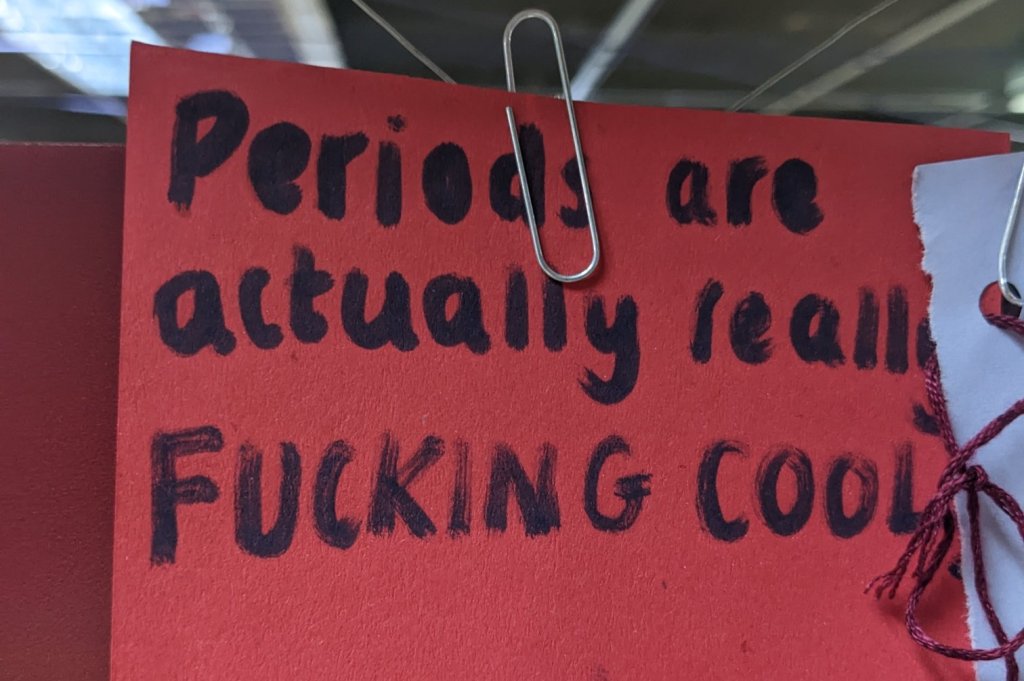
While it’s tiny and mostly getting attention from its name, the Vagina Museum genuinely has a purpose beyond its unusual premise. I’ve not seen many museums genuinely dedicated to sex education – although a lot of progress has been made in the last few years, there’s still so much stigma around things like menstruation! Providing you’re not too squeamish I’d honestly recommend a visit – I hope to see it expand into something even cooler in the future.
Useful Tips
- Entry is free. As mentioned earlier, at time of writing facemasks are still mandatory. They’ll give you one if you don’t have one on you.
- There’s gender neutral toilets – they’re just labelled “unisex toilets with urinals” and “without urinals”. I’ve actually never that specific wording before.
- There’s a cafe on site but tragically they don’t do labia lattes or any other fun drink names. If the museum staff are reading this please fix this ASAP!!!
- Unsurprisingly a place called “The Vagina Museum” is pretty explicit! Nothing’s really censored so maybe don’t bring anyone who’s offended by the human body. Or maybe you should actually.

 ☕🐸Coffee Frog Travel Blog🐸☕
Leave a comment